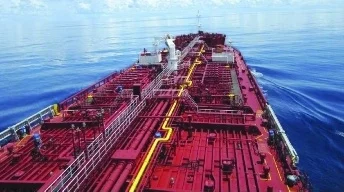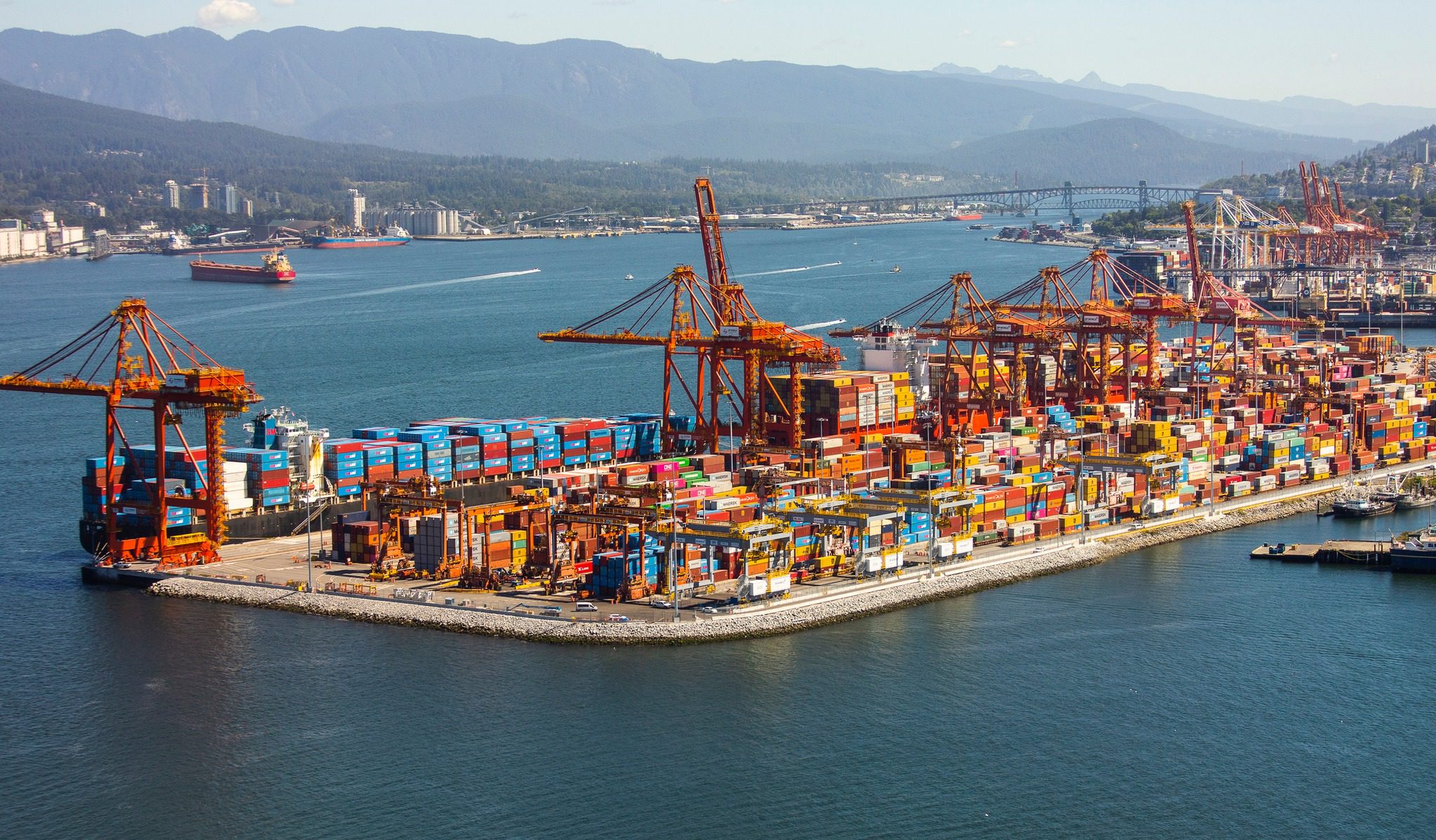
The Port of Vancouver handled about 50% of Canada's total canola seed exports last year.
Foreign breakbulk volumes, mainly comprising woodpulp exports and metals imports, were stable in 2025.
Vancouver, B.C.: The Port of Vancouver handled a record volume of cargo last year, including exports. Terminals and supply chain partners enabled Canadian businesses to connect with overseas customers, growing access to non-U.S. markets and supporting national trade priorities. Exports of grain, crude oil, and potash led the way, setting new records, and containerized and auto trade also had record years. In 2025, the Port of Vancouver set a new record for the handling of cargo, processing 170.4 million metric tons of goods, marking an 8% increase compared to the previous record set in 2024.
Double exports to non-U.S. markets in the next decade,
“I want to recognize the entire port community for stepping up to support Canadians and their businesses during what are very challenging times for our country—we are stronger together,” said Peter Xotta, President and CEO of the Vancouver Fraser Port Authority. “As Prime Minister Mark Carney looks to double exports to non-U.S. markets in the next decade, the Port of Vancouver is playing an outsized role in delivering more made-in-Canada products to more customers globally. We are uniquely poised to support Canada’s bold trade goals because of decades of strategic investments in terminal and rail capacity. With nation-building projects like Roberts Bank Terminal 2 and Second Narrows dredging on the horizon, we’re showing the world that Canada is open for business.”

The Port of Vancouver
The Port of Vancouver is Canada’s largest port and the most diversified in North America. It moves more cargo than the next five largest Canadian ports combined. The port connects Canada to more than 170 international markets and is a critical gateway for Canadian trade. In 2025, over 85% of the cargo handled by its 29 major terminals and 1,000-plus tenants supported commerce beyond the U.S.
International trade surged by 11% in 2025
.Meanwhile, international trade surged by 11% in 2025, hitting a record 147 million metric tons (MMT). More than three-quarters of international trade volumes passing through the port went to or came from Indo-Pacific countries. China was the port's top trading partner in 2025, accounting for 36% of total international volumes, followed by Japan (13%) and South Korea (9%).
Record volumes of key commodities exported

Strong cargo volumes moving through the port last year were underpinned by banner performances across the bulk sector, which is 98% export driven. Overall bulk volumes grew 11% to reach a record 130.7 MMT in 2025, including:
- Bulk grain exports hit a new record of 30.3 MMT on the back of strong wheat exports, which were up 20% compared to 2024 to hit a record of 15.9 MMT. Wheat grown in Western Canada was delivered to 35 countries last year, including communities throughout the Indo-Pacific, Europe, Central America and Middle East regions.
- Fertilizer exports through the port surged 21% in 2025, as Western Canadian potash (up 28% compared to 2024) and sulphur (up 5%) reached diverse world markets including Brazil, China and Indonesia. Potash exports hit a new record of 10.5 MMT last year, breaking the previous record set in 2020.
- Crude oil exports doubled in 2025 to reach a record 24.4 MMT, as the Trans Mountain expansion enabled Alberta oilsands producers to grow exports to markets in China and South Korea. Crude oil is now one of the single largest export commodities moving through the port
- Canola oil exports reached new and growing overseas markets in 2025, as the port enabled Western Canadian farmers and crushing operations to diversify beyond traditional trading partners China and the U.S. This growth was led by South Korea (up 37%), Peru (up 217%) and included nine other countries that saw no canola oil exports in 2024. Exports to China and the U.S. accounted for two-thirds of 2025’s volume, despite a combined decrease of 2%.

The strong performances across most bulk products offset a fall in bulk exports of coal and canola seed, with canola seed falling sharply from August onwards following Chinese tariffs to end the year down 23% at 6.6 MMT.
“We are already seeing encouraging signs that canola seed exports through the Port of Vancouver are recovering following a trade deal signed by Canada and China in January, and are optimistic early year data will show a rebound in volumes,” said Xotta.
The Port of Vancouver handled about 50% of Canada's total canola seed exports last year.
Record year for container sector, as long-term growth continues
Containerized cargo hit a new record in 2025, with the Port of Vancouver’s four container terminals handling 3.8 million 20-foot equivalent units (or TEUs)—9% higher than 2024 and 3% higher than the previous record set in 2021 (3.7 million TEUs). The results were underpinned by Canadian demand, with record containerized imports (laden inbound up 5%) and containerized export volumes continuing their post-pandemic recovery (laden outbound up 3%).
Containers moved everything from exports of high-quality Canadian grain, food and forestry products to imports of household goods for Canadian families as well as machinery and manufacturing inputs destined for businesses across the country.

“Containerized trade through the port remains strong and continues to be driven by resilient Canadian demand,” said Xotta. “As Canada prepares to double non-U.S. exports, the container sector has a vital role to play as the preferred method for delivering high-value Canadian goods securely and reliably to international markets. Roberts Bank Terminal 2 remains the nation-building project Canada needs to thrive in today’s dynamic geopolitical climate.”
Strong year for auto sector, while cruise and breakbulk ease
Auto volumes moving through the port reached a new record in 2025 at almost 480,000 vehicles, up 2% compared to the previous record set in 2024. Nearly 100% of Canada’s Asian-manufactured vehicle imports arrive via the Port of Vancouver, with recent work at the Annacis Auto Terminal increasing its capacity and ensuring the port is well-placed to handle future market growth.
Vancouver’s cruise sector also had a strong season despite easing following 2024’s record year, with 300 cruise ship calls and 1.2 million passenger visits between March and October 2025. Each cruise ship visit to the Canada Place terminal injects an average of $3 million into the economy.
“We continue to see strong demand for Alaska as a premier cruise destination and Vancouver as a premier cruise homeport,” said Xotta. “Cruise operations at the Port of Vancouver help power the Canadian economy and last year was no different, with cruise lines and their passengers delivering a welcome boost to local restaurants, retail shops and tourist attractions.”
Foreign breakbulk volumes, mainly comprising woodpulp exports and metals imports, were stable in 2025.
Background
- Overall cargo volumes increased 8% to 170.4 MMT, compared to 2024. International volumes were up 11% to 147.0 MMT—including exports growing 12% to 127.5 MMT—while domestic volumes were down 12% to 23.4 MMT.
- Container quantities increased 9% to 3.78 million TEUs, including imports (laden inbound) up 5% to 1.91 million TEUs and exports (laden outbound) up 3% to 816,000 TEUs.
- Bulk liquid tonnage increased 54% to 33.7 MMT. Petroleum products increased 59% to 30.6 MMT including crude oil exports growing 95% to 24.4 MMT. Canola oil exports increased 26% to 1.2 MMT.
- Bulk dry cargo increased 1% to 97.0 MMT, including grain up 4% to 30.3 MMT and coal down 5% to 39.9 MMT. Fertilizer was up 21% to 14.0 MMT, including potash up 28% to 10.5 MMT and sulphur up 5% to 3.5 MMT.
- Auto volumes increased 2% to almost 480,000 units.
- Cruise passenger visits decreased 11% to 1.2 million, while cruise ship visits were down 8% at 300.
- Breakbulk cargo was down 15% to 12.9 MMT, with foreign breakbulk up 1% at 1.9 MMT and domestic breakbulk down 18% at 11.0 MMT.
Related : Vancouver Fraser Port Authority activates full coverage of centralized marine traffic scheduling
Source : Press - Release
#Port of Vancouver # cargo in 2025 #Annacis Auto Terminal #Vancouver’s cruise sector#Mark Carney #Peter Xotta #canola seed #Canadian businesses #China Tariff
You Might Also Like
Recommendation News

Marine News Room
Exclusive : Emirati swimming champion Omar Al-Shami knows no impossible meaning 17 December 2025
Marine Tech
Fincantieri begins construction of the Navy’s first Fremm Evolution 11 October 2025
Shipping Lines
New ro-ro line to Libya from the Vado Ligure Reefer - Italy 02 November 2025
Ports
SCA reassures international shipping lines: "Safe transit continues to increase." 05 November 2025
Shipping Lines
Rabie discusses future Navigation plans with CEO for Southern Europe of the shipping line Hapag-Lloyd 16 February 2026