The WWF cautions that the economies of the Pelagie Islands in Malta, which depend on fishing and tourism, will face significant consequences if a cargo leak occurs.
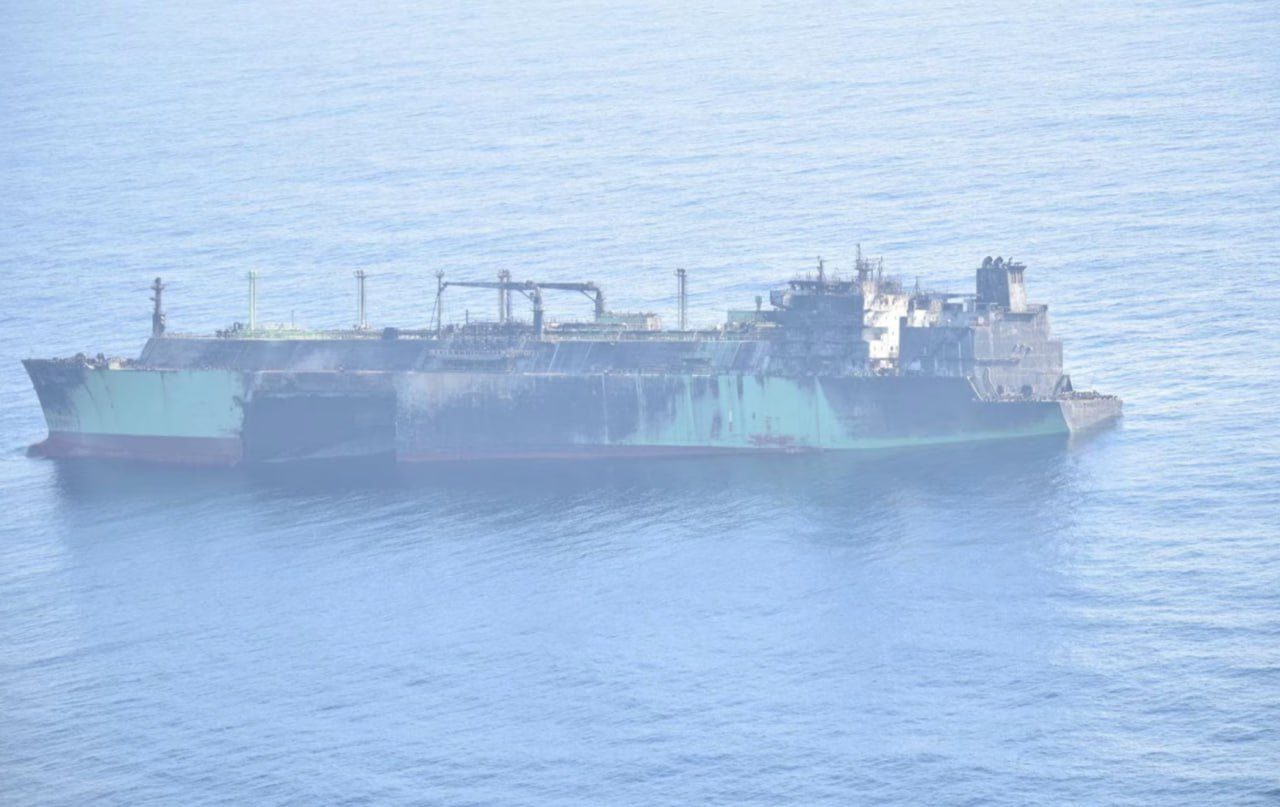
A remote-controlled drone presumably operated by Ukrainian forces hit the Russian LNG tanker Arctic Metagaz (IMO 9243148, MMSI 273262840)at sea. The ship is still drifting in the center of the Mediterranean Sea, and the Maltese government has activated an emergency plan to prevent a "catastrophe on land" in the event of an explosion near the coast.
An intervention plan
According to sources, Transport Malta has hired an international salvage company to develop an intervention plan to protect Malta's interests in case the situation worsens. Tugboats have been placed on standby, and the Armed Forces of Malta have been conducting regular surveillance flights over the vessel to monitor its movements.
Possibility of changing wind conditions
Due to the possibility of changing wind conditions pushing the tanker towards the west coast of Gozo, authorities in Malta and Italy are coordinating closely. Transport Malta is leading the Maltese response in collaboration with the Ministry of Foreign Affairs, the Armed Forces of Malta, and the Civil Protection Department. Officials have also been in contact with the European Commission as they assess possible next steps.
Currently, the storm is located less than 50 nautical miles southwest of Malta, and winds are pushing it toward the western coast of Gozo. "If it continues like this, it could arrive between Sunday night and Monday morning, but everything depends on the wind direction," a source told the Times of Malta.
Towing the vessel farther out to sea
.One option under consideration is towing the vessel farther out to sea to prevent it from entering Maltese territorial waters. However, sources cautioned that no final decision has been made due to the risks involved. It is still considered unsafe to board the tanker because explosions reportedly continued until Friday.
.One option is to try to sink the ship.
Since Friday, Maltese authorities have been collaborating with Italian authorities and have deployed three tugboats to prevent the wreck from entering the archipelago's territorial waters. Over the past week, the Maltese Armed Forces have monitored the wreck's movements three times a day and estimate that the vessel still has 700 tons of liquefied natural gas on board. "We don't know if we can board and secure the wreck to the tugboats. Nor has it been determined where it could be towed. However, we are trying to identify a sufficiently deep location," Maltese sources revealed. The plan is to sink the ship, which despite severe damage still has two intact gas tanks and is afloat.
The Valletta authorities are mainly concerned about the risk of water contamination, which could endanger the water supply of the entire archipelago. The archipelago relies on marine desalination plants for its water supply.
The Arctic Metagaz
Arctic Metagaz was carrying around 140,000 cubic meters of LNG, and the explosion left two of its four gas tanks intact. The ship is believed to be carrying between 700 and 900 tons of diesel fuel, raising concerns about the potential environmental impact should the situation worsen.
Related :Reuters : Drones hit two tankers in Black Sea as Kazakh oil production plummets
The Ports and Yachting Directorate of Transport Malta has issued a notice instructing mariners to keep their vessels at least five nautical miles away from the tanker.
Further legal and logistical complications are added by the vessel's sanctioned status. The European Union and the United States have both sanctioned the Arctic Metagaz as part of Russia's shadow fleet. This fleet is used to transport oil and gas outside of normal Western insurance and ownership structures.
The World Wide Fund for Nature (WWF)
The WWF also got involved in the issue, stressing that a cargo leak could lead to fires, cryogenic clouds that are harmful to marine animals, and significant and long-lasting water and air pollution. The affected area is of exceptional ecological value, with fragile deep-sea ecosystems and some of the highest biodiversity in the Mediterranean basin. Therefore, the environmental risk is extremely high and potentially irreversible, with serious repercussions for the economies of the Pelagie Islands, which rely on fishing and tourism."
Notably the World Wide Fund for Nature (WWF) is the world's largest independent conservation organization, founded in 1961 to protect nature and biodiversity, reduce human impact, and combat climate change. It supports over 3,000 projects globally, focusing on wildlife conservation (e.g., pandas, tigers), habitat protection, and promoting sustainable resources.
#The WWF #Arctic Metagaz #Transport Malta #The Russian Carrier LNG #Maltese government# coast of Gozo, #catastrophe #Explotion #Pelagie Islands,
You Might Also Like

Recommendation News
Shipping Lines
MOL secures $1.6bn loan for LBC Tank Terminals acquisition and Names New Board of Directors 28 December 2025
Marine Tech
Amasus doubles down on bound4blue eSAILs® 17 December 2025
Incidents
Container MSC carrying “hazardous cargo” Sunk off Kochi coast 17 October 2025
Ports
Green Ports Are Becoming India’s Competitive Advantage 29 December 2025
Marine Tech
Fincantieri is poised to capitalize on Trump’s openness to foreign shipbuilding 18 August 2026