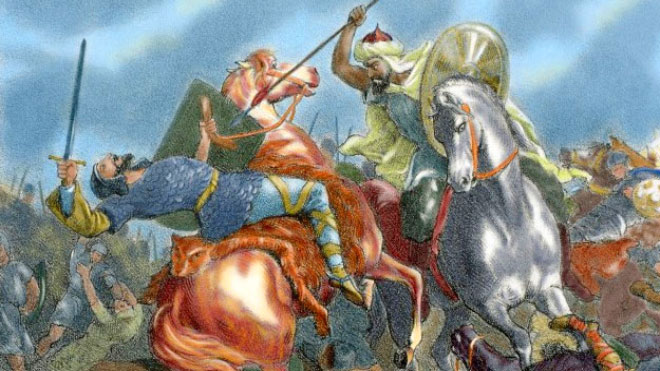
Khalid ibn al-Walid returned to duel with Hormuz, displaying great fighting skill in the process. and within minutes, he was standing with his sword dripping with Hormuz's blood, leaving the Persians severely shocked by the death of their leader.
Dr. Islam Abu Zeid,
member of the Union of Historians
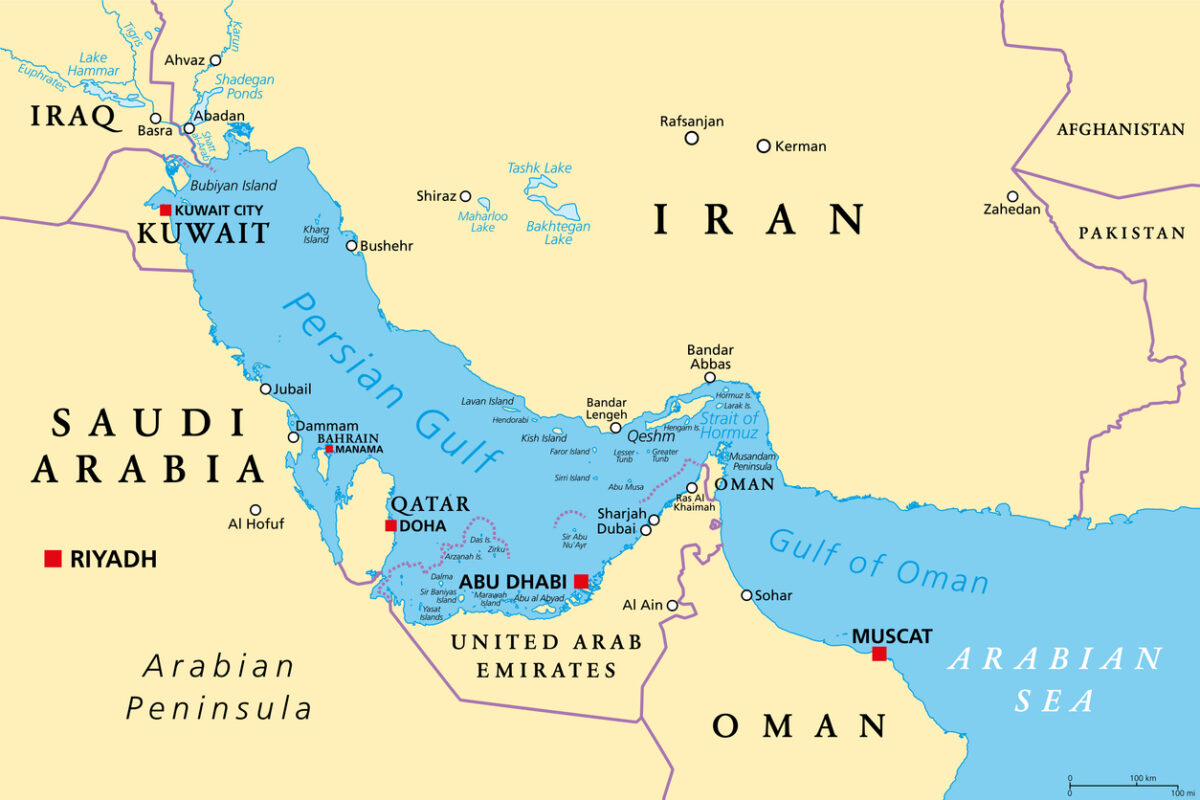
The Strait of Hormuz has several names, and the reason for this is historical and linguistic. The most important reason is its association with an ancient island and kingdom that bore the same name. As for the most important hypotheses about the origin of the name...
The majority of historians are of the opinion that the strait is named after "Hormuz Island", which is situated at its entrance, around 2 kilometres from the Iranian coast. This name is associated with the historical Kingdom of Hormuz, which flourished in the 10th century AD and exerted significant commercial influence over areas stretching from Bahrain and Al-Ahsa to Oman and regions overlooking the Gulf. It was known as 'the mistress of the seas'.
In terms of its linguistic origin, the word 'Hormuz' in ancient Persian goes back to the name of the Zoroastrian god 'Ahura Mazda', meaning 'wise god'. The Persians also gave this name to the planet Jupiter. Many Persian kings bore the name 'Hormuz', making it common in ancient regional culture. The Arabs used the term 'Hormuz' to refer to the great Persian kings.
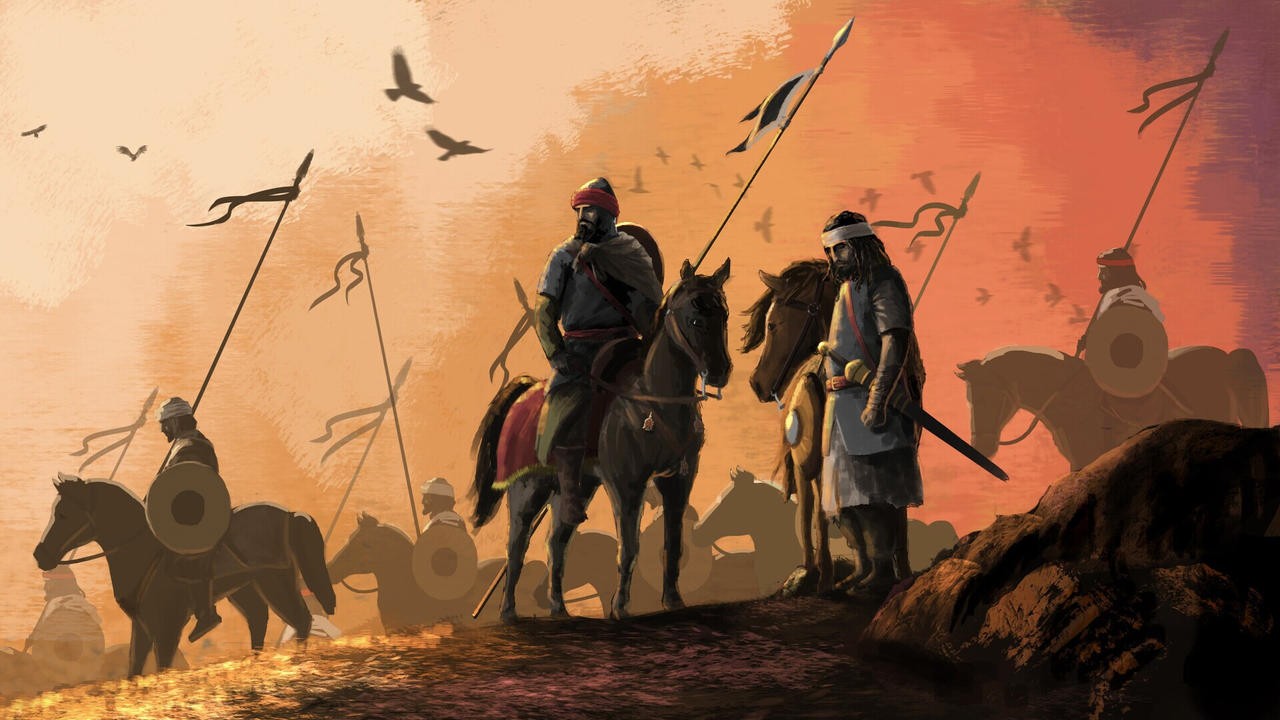
At the outset of the Islamic conquest of Iraq, the Muslim army clashed with the Persian army at the Battle of the Chains in 12 AH/633 CE, in the Kazma region near Kuwait. As was customary in wars at that time, the leaders went out first to duel the two armies. Khalid ibn al-Walid, may God be pleased with him, the commander of the Muslim army, emerged, as did Hormuz, the commander of the Persian army.
The two commanders rode towards each other until they were closer to the Persian ranks than the Muslim ones. Then Hormuz dismounted and challenged Khalid to fight him on the ground. Khalid accepted the challenge, dismounting as well, and they both returned their horses to their respective armies.
In a state of heightened anticipation, the two armies observed the unfolding scene. A rare occurrence in the history of warfare, the supreme Muslim commander was duelling with the supreme Persian commander. Fighting on foot meant survival was difficult and one of them was almost certain to die.
However, before the duel began, Hormuz had devised a trick. He had prepared five of his strongest knights to attack Khalid at the start of the fight. As soon as the two leaders' swords clashed, Hormuz gave the signal and the five knights set off towards Khalid with the intention of killing him treacherously.
Related : Pablo Rodas-Martini writes : The 'topography' of the Strait of Hormuz
At that moment, Khalid — may God be pleased with him — realised the seriousness of the situation. The Muslims were far away, and the horsemen would reach him before anyone could come to his aid. However, divine providence was closer still. The movement of the knights was noticed by Al-Qa`qa` bin Amr Al-Tamimi, and it was immediately realised by him that an attempt to betray Khalid was being made. He galloped his horse towards the duelling arena like an arrow.
After escaping the treachery, Khalid ibn al-Walid returned to duel Hormuz, displaying great fighting skill in the process. Within minutes, he was standing with his sword dripping with Hormuz's blood. The Persians were severely shocked by the death of their leader; they had considered the Arabs to be inferior to their great state and organised armies. However, Khalid did not give them time to recover from the shock and ordered his army to launch a general attack.
The killing of the commander and the resulting disarray in the ranks meant that the Persian army could not hold out for long. Their formation broke down and the Muslims broke through their lines. The battle ended with a Muslim victory at the Battle of Chains, led by one of the greatest military commanders in history.
Source : Gate -Ahram
#Islam Abu Zeid # Strait of Hormuz#Drawn Sword of God #supreme Muslim #'Ahura Mazda #Kazma region #Battle of Chains#The Persians # Bahrain #Gulf #Al-Qa`qa`
You Might Also Like

08 October 2025
16 October 2025
Recommendation News
Shipping Lines
Negotiations for the sale of the Israeli company Zim 28 November 2025
Shipping Lines
Scorpio Tankers sells two 2016 LR tankers and buys two newbuildings 18 December 2025
Ports
Egyptian-led investment alliances with Djibouti to boost cooperation in ports, logistics 29 December 2025
Marine Tech
DNV and WMMF publish guide to support shipowners' path to net-zero 19 November 2025
Ports
LR and Mawani partnership to enhance skills and operational performance across Saudi Ports 24 December 2025