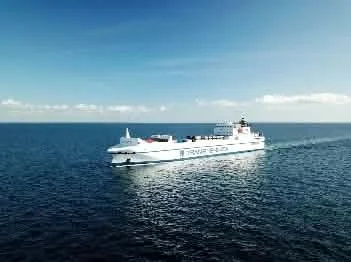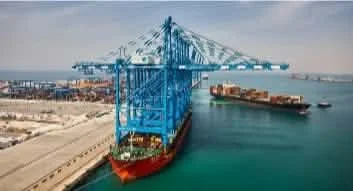
A total of 309 MW of electricity is already being generated by 51 European ports.
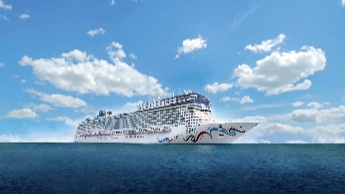
More than half of cruise ships are already equipped to connect to the shore-side electricity grid. They can also turn off their engines once docked. This is the case for 166 units. That is 58% of the fleet. By 2028, 239 ships will be in service. This figure will exceed 75%.
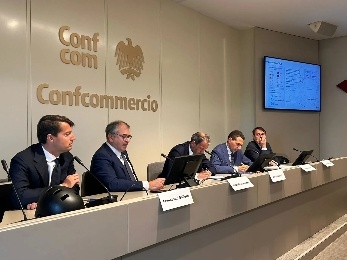
A statement from CLIA (Cruise Lines International Association) has revealed that companies are anticipating a transformation with respect to regulatory requirements, and that ports are also gradually adapting to this. This statement was made following a meeting dedicated to the state of implementation of dock electrification in Italian ports. The meeting was organised in Rome by the association and attended by the following people: Donato Liguori, Director General for Ports of the Ministry of Infrastructure and Transport; Roberto Ferrarini, Vice President of Port & Terminal at Costa Crociere; Michele Francioni, Senior Vice President and Head of Energy Transition at MSC Cruises; and Filippo Gozzi, Partner at McKinsey & Company and Head of Blue Economy for the Med Office.
€800 million in European funds
A total of 309 MW of electricity is already being generated by 51 European ports, including cruise ships and ferries. In Italy, ports are expected to see rapid acceleration, supported by €800 million in European funds, reaching 52 connections and a total capacity of 700 MW by the end of 2027 (including cruise ships and ferries).
Decarbonisation opportunity
To make the most of this decarbonisation opportunity, it is important to tackle several key issues together, encouraging close cooperation between companies, port authorities, institutions, energy suppliers and terminal operators. Alongside infrastructure development, it is crucial to clearly define roles and responsibilities, identify management entities, establish shared operational criteria, and develop consistent tender models.
Establish priority criteria
It is also strategic to establish priority criteria for access to connections, particularly in contexts where there are fewer connection points than docked ships. It is also crucial to define a sustainable tariff framework and to efficiently manage any additional charges on top of energy costs in order to ensure competitiveness compared to onboard self-generation. At the same time, defining technical specifications helps to ensure the efficiency, continuity and safety of the system, as well as full compatibility between ships and quayside infrastructure, as commented on by CLIA.
Accelerating the energy transition in Italian ports in anticipation of the 2030 deadline
Liguori also stated that Italy, thanks to European NRRP funds, is accelerating the energy transition in ports in anticipation of the 2030 deadline, with over €800 million between the NRRP and the NCP allocated to the development of cold ironing. 52 projects have already been funded and over 740 MW of installed capacity has been achieved. I am also proud to add that, alongside these investments, the Ministry of Transport has recently demonstrated strong commitment to developing shared national guidelines, achieved through collaborative work with stakeholders in the maritime cluster and ongoing consultations."
Related: CLIA announces Hall of Fame 2025 inductees
This work is enabling Italy to take a quantum leap forward. Soon, the vast majority of ports will be able to connect ships to their cold ironing facilities. Twenty-eight of these will be dedicated to cruise ships and supply vessels, making the energy transition of the port system a reality and representing a decisive step towards more sustainable and competitive ports.
The role of cruise lines
"It is vital to acknowledge the role of cruise lines in leading the way when it comes to innovation and sustainability in the maritime sector. However, it is equally crucial to recognise that they cannot act alone. This is why we are very pleased with the work done with the Ministry, which has significantly accelerated the implementation of the OPS systems for defining criteria and rules. Francesco Galietti, Director of CLIA Italy, added: "Numerous projects are currently underway that, thanks to collaborative efforts among all operators, can help Italy become one of the most virtuous countries in Europe."
About: CLIA
The Cruise Lines International Association (CLIA) is the world's largest cruise industry trade association, representing 95% of global cruise passenger capacity. It unites ocean, river, and specialty cruise lines, maritime partners, port authorities, and over 70,000 travel professionals worldwide
Source: Shipping Italy
#CLIA #Francesco Galietti #Donato Liguori #European NRRP funds #Filippo Gozzi #MSC Cruises # cruise fleet
You Might Also Like

14 October 2025

26 January 2026
Recommendation News
Incidents
MIDVOLGA-2: A third Russian tanker attacked in the Black Sea 02 December 2025
Marine Tech
ABS Joins Hanwha Shipping for Naming Ceremony of First VLCC in New Fleet 29 August 2026
Incidents
Cocaine seized in the ports of Gioia Tauro and Vado Ligure -Italy 15 October 2025

More
3 year :Abandoned Russian and Ukrainian fishers receive wages 29 October 2025