DNV’s Energy Transition Outlook, Europe’s power system is set to transition considerably, with solar becoming the continent’s largest source of electricity
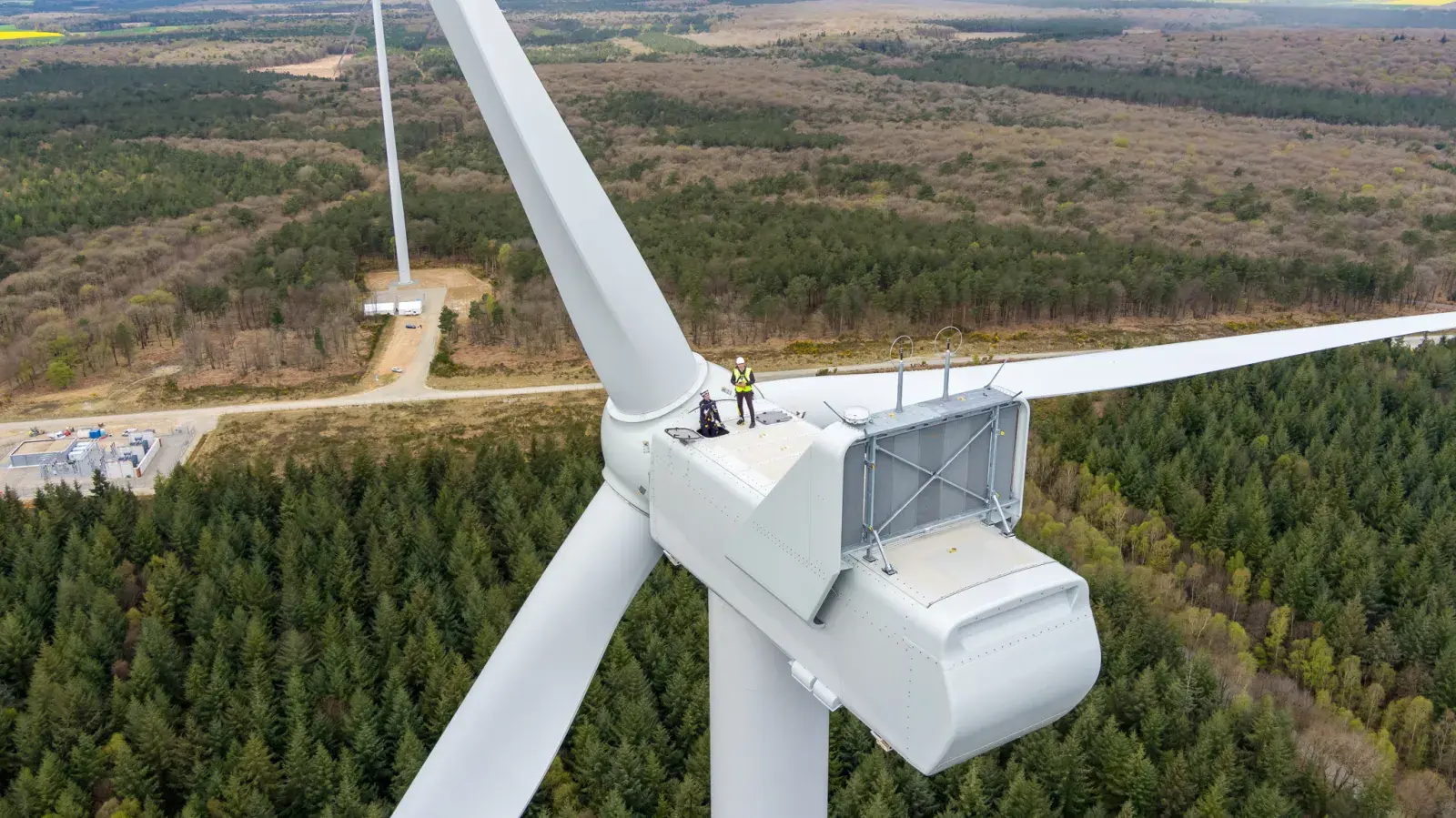
Paris, France - – DNV, the independent energy expert and assurance provider, has completed a climate-impact assessment for independent renewable energy producer Boralex in France, evaluating how a changing climate could influence the long-term energy yield of a 1.3 GW operational portfolio of 76 wind and solar assets.
The assessment applied DNV’s “Climate change impact on energy production” service to provide projections at asset level over 10-, 20- and 30-year horizons. The outputs support operational and financial planning by helping quantify how future wind and solar resource conditions may differ from historical patterns.
Renewable generation
Renewable generation depends directly on weather conditions, and climate change is altering the distribution of wind, temperature, and irradiance. For asset owners, lenders or investors, this creates a growing need to stress-test production assumptions, understand uncertainty, and identify where risks may be concentrated across a portfolio.

Practical metrics for energy yield
DNV combines climate science with energy modelling to turn projected changes into practical metrics for energy yield, enabling asset or portfolio-level comparison. Its scenarios highlight both the spatial variability of projected changes and the sensitivity of resources to future site conditions under different climate pathways. The resulting maps underline why asset-level assessment matters: while broad regional trends are visible, the scale and even direction of change can vary significantly from one location to another, making localized modelling essential to evaluating long-term performance and risk exposure.
Historical weather patterns

Related : DNV Approval in Principle propels ABB Dynafin™ efficiencies to market
“Most yield assessments are still anchored in historical weather patterns, but as renewables carry a growing share of the power system, we must account for a shifting baseline”, said Brice Le Gallo, Vice-president and regional director for Southern Europe, MEA & LATAM, Energy Systems, DNV. “By integrating climate projections into the same analytical framework as production modelling, this work allows us to put numbers around uncertainty and identifies where the biggest changes may sit across a portfolio, giving investors and operators the confidence to make long-term decisions on performance, maintenance, and system-wide resilience.”
Identify long-term assumptions
Boralex added that “This forward-looking approach gives us a more robust basis for understanding how climate change is likely to affect our sites, rather than relying solely on past performance. It helps us identify which long-term assumptions need to be revisited, ensuring we can anticipate change and adapt our operational strategy in a context where weather patterns are becoming increasingly unpredictable.”
2025 WindEurope Technology Workshop
The service was introduced at the 2025 WindEurope Technology Workshop and is designed for application across both single assets and multi-site portfolios. It supports renewable energy owners, developers and investors seeking forward-looking insight as climate-driven uncertainty becomes a material factor in long-term asset performance.
DNV’s Energy Transition Outlook, Europe’s power system
According to DNV’s Energy Transition Outlook, Europe’s power system is set to transition considerably, with solar becoming the continent’s largest source of electricity in the 2030s as costs stay low and deployment accelerates. By 2038, wind and solar together will supply half of Europe’s grid-connected power. Over the longer term, solar rises to 47% of European generation by 2060, while wind remains the second-largest source at around 32%, making variable renewables the backbone of the system. By the 2040s, wind and solar together will generate more electricity than all other sources combined. Even so, DNV projects Europe will miss its specific EU renewable targets for 2030 unless deployment speeds up further.
About : Boralex
Boralex is a leading Canadian renewable energy company and the top independent onshore wind power producer in France. With over 79 wind and solar sites, it operates around 1.4 GW of capacity in the country, focusing on developing, building, and operating wind, solar, and storage projects
About : DNV
DNV (Det Norske Veritas) is an independent assurance and risk management provider operating worldwide, specializing in testing, certification, and technical advisory services. Founded in 1864 to safeguard life, property, and the environment, it is the world's leading classification society for the maritime industry and a major advisor in the energy sector
Related :DNV and WMMF publish guide to support shipowners' path to net-zero
#DNV #Boralex #2025 WindEurope #France #Brice Le Gallo #DNV combines climate science #Europe’s power system #climate impact assessment
You Might Also Like

Recommendation News

Shipping Lines
APM Terminals and Hateco Group continue a successful partnership with new terminal in Da Nang 27 April 2026
Marine Tech
ABS : Appointment of Ronald J. Rábago as Senior Vice President of Government Services 04 May 2026
Incidents
Oman-flagged QENDIL strands off Çanakkale Coast 05 January 2026
Shipping Lines
MSC is back to handling over a third (34.1%) of container traffic to and from Italy. 26 June 2026
Yachts&Cruises
Carnival’s Fun Italian Style to Debut in More Destinations in 2027 28 December 2025