Over the years, digital tools have evolved from basic spreadsheets to standalone terminal systems. INFORM’s decision intelligence
By : Pablo Rodas-Martini
Former Chief Economist and Op-Ed writer. Maritime and LinkedIn expert.
Imagine running a busy RoRo terminal where every car has a GPS/RTLS tag, yet nothing connects the dots. You know the location of every car, but teams are still roaming the yard trying to match pings to real vehicles. Some zones are overloaded, while others are empty. Without a truly intelligent system, it all ends in improvisation.
Standalone terminal systems.
Over the years, digital tools have evolved from basic spreadsheets to standalone terminal systems. INFORM’s decision-intelligence approach takes this a step further. Its Vehicle Logistics Suite, used at Zeebrugge (the world's largest RoRo terminal) and other major terminals, treats the entire operation as a unified system — almost like a living organism — rather than a series of disconnected tasks.
Finished vehicles
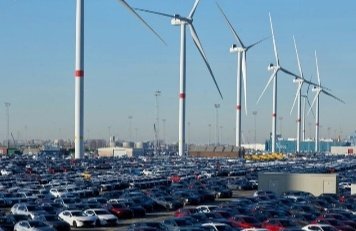
The solution tracks finished vehicles from the OEM’s factory gate to the retailer in the importing country, with every stage leaving a clear digital footprint. Today, I will summarise what the solution does at RoRo terminals:
Space utilisation is planned proactively.
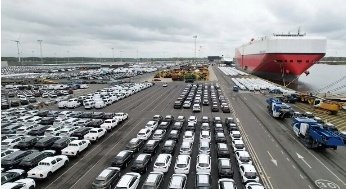
1) Space utilisation is planned proactively. Space in the yard is planned days or even weeks in advance. Arrivals, storage, and departures are orchestrated to maintain a nimble footprint rather than a chaotic one. This reduces empty walking and shuttle rides for drivers. When a vessel or truck arrives, the correct blocks or slots are ready and waiting.
A well-sequenced workshop.
2) A well-sequenced workshop. PDI, accessory fitting, minor repairs, washing, and fuelling all happen in the right order and at the right time. Work orders are generated automatically, and resources are scheduled down to the last minute — turning a busy workshop into something that runs more like a well-coordinated pit lane.
Transport management
3) Transport management links the terminal to the wider network. INFORM coordinates truck and rail flows to ensure that inbound and outbound volumes remain balanced with yard capacity and vessel windows. Think of it as a combined dispatch centre and control tower reacting to disruptions in real time.
Visibility paired with real decision-making
4) Visibility paired with real decision-making. By tracking and responding, the system combines visibility with decision-making. Every scan, movement, and workshop status update contributes to an up-to-the-minute picture of the terminal and the wider network. The system highlights exceptions such as vehicles at risk of missing a sailing, outliers in dwell time, and cases of damage.
Insights that turn data into decisions
5) Insights that turn data into decisions. Reporting and control pull all this data together to provide clear, actionable insights. Information on throughput, dwell time, resource usage, damage ratios, and CO₂ emissions is all available. Managers can ask, "What would happen if we changed this rule or added another night shift?" and immediately see the impact.
Handling more cars, driving fewer km within the yard, reducing delays on the quay, and lowering CO₂ emissions are all beneficial for workers, profits, and the planet. This is how to run a terminal like an orchestra.
Related : Pablo Rodas-Martini writes : The 'topography' of the Strait of Hormuz
#CO₂ emissions #digital tools #system combines visibility # RoRo terminal #OEM’s factory gate # GPS/RTLS tag #Transport management #Pablo Rodas-Martini
You Might Also Like

13 December 2025

21 November 2025
Recommendation News


Marine News Room
Exclusive with Gavin Allwright Secretary General of IWSA (3-3) 20 October 2025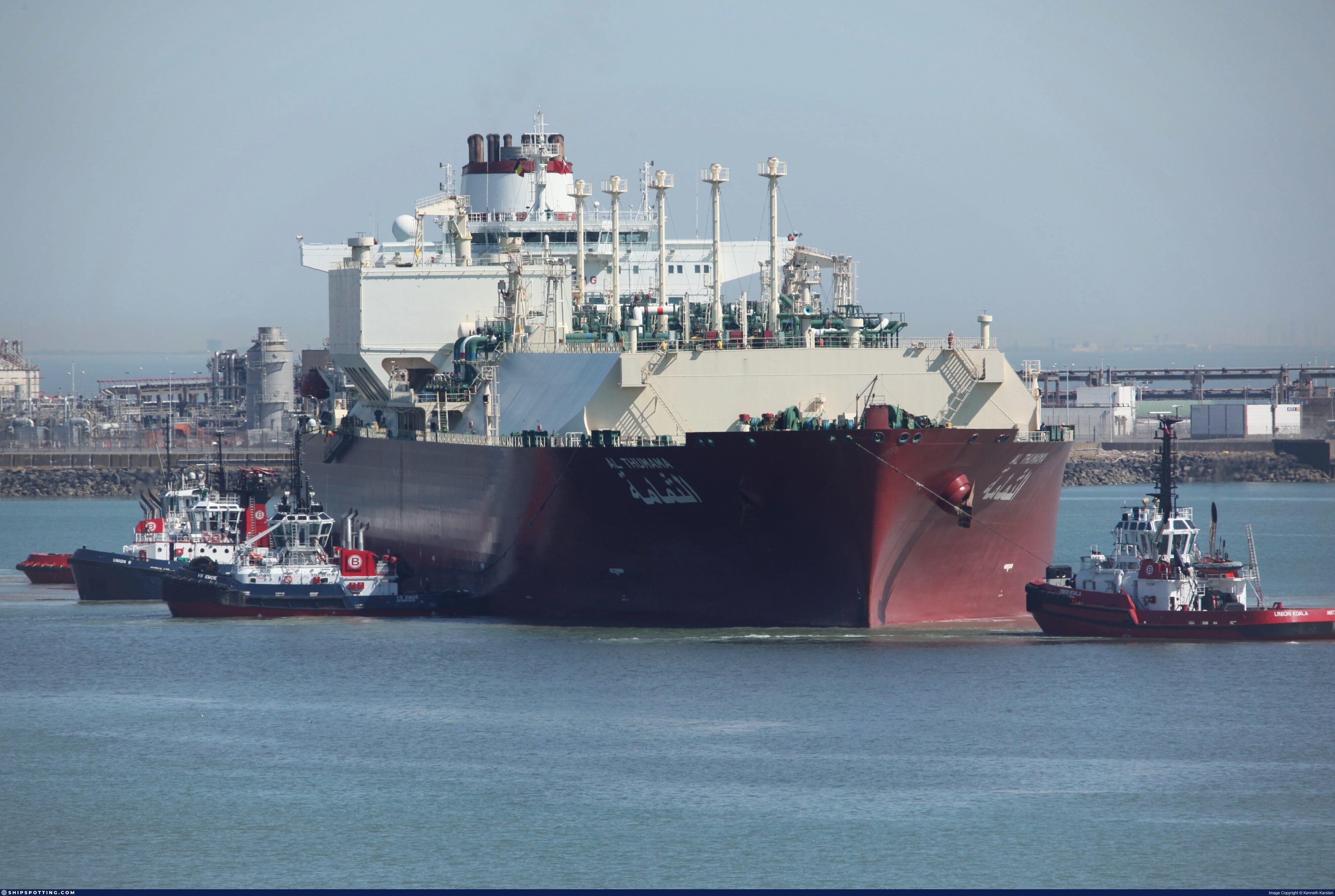
Shipping Lines
Qatar is offering two gas tankers for lease as the Ras Laffan facility shuts down due to the war. 06 March 2026
Marine News Room
After more than 3 months, Grimaldi's Grande Torino leaves the Persian Gulf 18 June 2026
Marine Tech
U-Ming Marine wins 2026 Taiwan green procurement award for ESG measures 15 May 2026