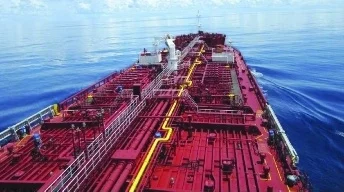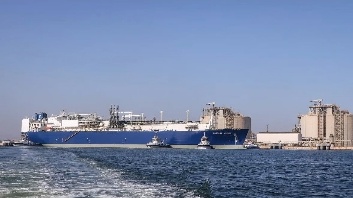
Egypt has announced that a preliminary investigation has revealed that the fire that broke out on two vessels at Damietta Port was caused by a drone.
The Egyptian Cabinet issued an official statement confirming that a preliminary investigation revealed that the fire that broke out in two vessels at Damietta Port was caused by a drone. The statement noted that no party has claimed responsibility for the incident so far. Concerned authorities are continuing their investigations to determine all the circumstances surrounding the incident and take the necessary measures to safeguard Egypt's national security and interests
A fire broke out onboard both the FSRU
It is noteworthy that a fire broke out onboard both the FSRU (Floating Storage and Regasification Unit) and an LNG carrier berthed at Damietta Port. According to the Egyptian Ministry of Petroleum, the fire affected a regasification vessel (a floating LNG terminal) and a storage vessel. The situation was quickly brought under control. The incident was addressed immediately in accordance with approved rapid response and emergency protocols executed by specialized firefighting and site–security teams. The emergency response team successfully managed the situation, and the Ministry confirmed no injuries or casualties
Oversee containment and safety measures
The Minister of Petroleum and Minerals Resources ( Eng Karim Badawi ) personally visited the site to oversee containment and safety measures , ensuring full compliance with safety procedures in coordination with relevant authorities. A technical committee was formed to the causes and assess the causes and evaluate the full technical impact of the incident
The Energius Winter
Before the conflagration, the Energius Winter was in fact expelling approximately 450 million cubic feet of gas per day into the national grid, having received three LNG consignments in July and preparing to receive a further four in August. The vessel was directly connected to the national gas grid before being disconnected, and the connection was shut down immediately following the outbreak of the fire.
According to sources, Damietta Port is currently operating as normal, receiving commercial ships of all types. The gas berth at the port is also functioning at full capacity.
Ambrey, on the other hand, stated that a drone had hit the US-owned FSRU (Energos Winter), causing a fire that had spread to an adjacent LNG carrier (Gaslog Salem).
Calling a drone attack from these regions " Impossible " is technically inaccurate ( as some actor inventories include long–range UAVs); however, considering geography , flight, paths , air defense networks, and military logic , the likelihood of such a scenario is extremely low compared to an internal operational fault
Yemen (Houthis)
Distance: 2,000 to 2,200 km to Damietta Port
Technical Capability: The Houthis possess long–range suicide drones ( e.g., Wa, id -2 Sammad -3 , Yafa ) capable of reaching 1,800–2,000 km– passing over the Red Sea, Saudi/ Jordian /Israeli airspace, or the Sinai Peninsula–and would face dense multi – layered radar and air defense networks. Crossing undetected is militarily illogical
Iran
Distance: 800 to 2,000 km from Western Iran to Damietta
Technical Capability: Possesses UAVs like the Shahed – 136 or Arash – 2( 2,500km range )
Airspaces &geopolitics :
Flight path would require violating sovereign airspace ( Iraq , Syria / Jordan and Ehypt/Israel ) The drone would be detected instantly by regional radar systems . Furthermore, Iran has no strategic motive to target Egyptian infrastructure
Iraq (Armed Factions
Distance: 800 to 1,000 km from Western Iraq ( Anbar ) to Damiatta
Capabilities & Terrain:
Geographically the closest point; however, transit requires crossing Jordanian and Egyptian airspace ( Sinai / Eastern Mediterranean ), both heavily monitored by early–warning radar systems that track low – altitude targes
About: Floating storage and regasification units (FSRUs)
Floating storage and regasification units (FSRUs) are vessels equipped to receive liquefied natural gas (LNG) shipments from tankers, regasify the gas, and inject it directly into the national grid. This ensures a continuous gas supply to power plants, the industrial sector, and other consumers.
The total capacity of Egypt's four FSRUs is approximately 2.75 billion cubic feet per day (bcf/d). These include the Energius Winter in Damietta Port with a capacity of 500 million cubic feet per day (cfd), and three FSRUs in Ain Sokhna Port: the Energius Power, the Hoegh Eskimo, and the Hoegh Galyon, each with a capacity of 750 cfd.
Egypt's current average natural gas production is around 3.8 bcf/d, compared to a domestic demand of approximately 6.2 bcf/d, rising to around 7.2 bcf/d during the summer months due to increased power plant consumption. This makes FSRUs crucial in securing supplies during peak periods.
During the current fiscal year, the government plans to import $10.7 billion worth of LNG shipments, while also implementing plans to increase domestic production and reduce the consumption gap. The Damietta incident highlights the importance of maintaining the readiness of the gasification system as one of the main pillars of energy security in Egypt.
About: Inchcape Shipping Services
Inchcape Shipping Services, the port and shipping services provider, had previously reported an explosion at an LNG terminal. The incident reportedly occurred while a shipment was being unloaded. According to the report, the affected vessels were safely moved out of the port area. No further details about the incident were provided.
About: The Energos Winter
The Energos Winter (IMO 9256614) has an LNG storage capacity of 138,250 cubic metres and a peak gas send-out capacity of 650 million standard cubic feet per day. The GasLog Salem (IMO 9638915) is a 155,000 cbm tri-fuel diesel-electric LNG carrier built in 2015.
Energos Infrastructure, based in the US, owns Energos Winter and operates a fleet comprising nine FSRUs, two floating storage units and two LNG carriers. The vessel is managed by Wilhelmsen Ship Management. The GasLog Salem is part of the GasLog fleet and is technically managed by the company.
Related: Ship traffic has plummeted through Bab el-Mandeb after Houthi attacks on Saudi oil sites.
A drop in the number of vessels passing through the Bab el-Mandeb
It is noteworthy that a drop of 50% in tonnage terms was seen in the number of vessels passing through the Bab el-Mandeb Strait to enter and exit the Red Sea on 25-26 July, according to Clarksons Research. the already low average seen in the second quarter.
On 20 July, the Houthis announced a blockade of Saudi commercial vessels, which was followed two days later by an attack on an oil tanker that had loaded cargo at the Yanbu oil terminal in the Red Sea. 'The number of VLCCs passing through the Bab el-Mandeb has fallen, averaging one per day over the past week, compared to an average of three per day in the second quarter,' stated Steve Gordon, Global Head of Clarksons Research.
#the Energius Winter #Houthis #Bab el-Mandeb #Clarksons Research.#drop#Ambrey # Egyptian Cabinet #FSRU # Egyptian Ministry of Petroleum # Damietta Port #Fire # two LNG ships
You Might Also Like

Recommendation News
Incidents
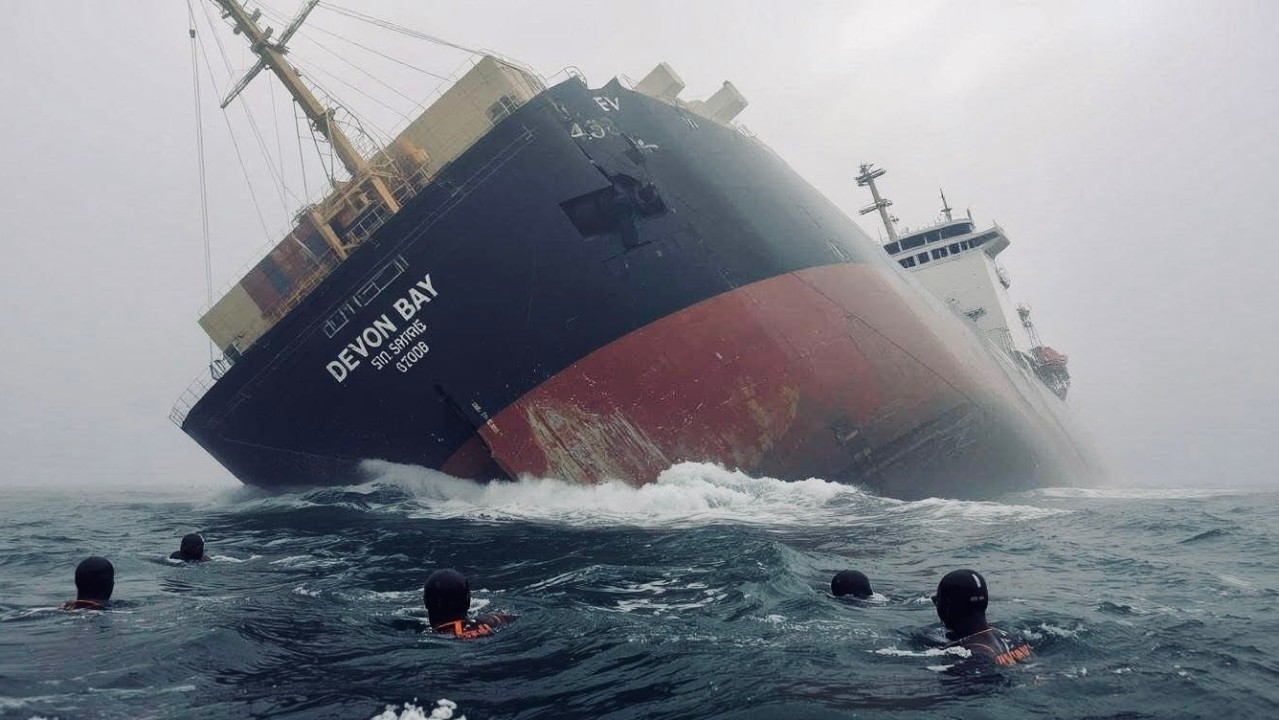
Tragedy at Sea: The MV Devon Bay Sinking and the Future of Filipino Seafaring Resilience 30 January 2026
Shipping Lines
APM Terminals and Eurogate plan to turn NTB into one of the most modern and efficient terminals in Europe 15 February 2026
Marine Tech
IMO SENSREC highlights investment needs for safe ship recycling 30 November 2025
Shipping Lines
Nobel Corporation Plc Complets Sale of five Jackups to Borr drilling 29 January 2026
Marine Tech
The Holland Shipyards Group has delivered third offshore support vessel, the Men Skey, to Dixstone. 25 March 2026