Gasnam revealed that the amount of LNG being bunkered in Spain has risen fourfold in the last two years. In 2025, bio-LNG made up 12% of all supplies, and this figure is rising.
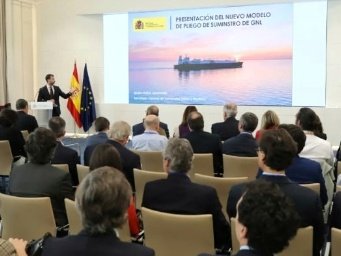
The Ministry of Transport and Sustainable Mobility of Spain has unveiled a unified LNG bunkering framework for its ports. This move comes in response to the significant surge in LNG supply, which surpassed 8.1 TWh in 2025 and has since quadrupled over the span of two years, as reported by the Ministry.
Harmonise LNG, bio-LNG, and e-LNG bunkering operations
Meanwhile, Spain is close to finalising a national specifications framework designed to harmonise LNG, bio-LNG, and e-LNG bunkering operations across its port network, according to industry association Gasnam. This week, the organisation held a working session at Puertos del Estado's headquarters to finalise the strategic document. This document will serve as a common reference for port authorities when regulating the supply of liquefied gas fuel services.
Promoting the adoption of lower-carbon marine fuels
The standardisation of requirements for access, safety, and environmental quality is achieved by the framework, which covers three bunkering models: ship-to-ship (STS), truck-to-ship (TTS), and pipeline-to-ship (PTS) operations. The aim is to establish consistent operating conditions nationwide while promoting the adoption of lower-carbon marine fuels
The amount of LNG being bunkered in Spain has risen fourfold
Gasnam revealed that the amount of LNG being bunkered in Spain has risen fourfold in the last two years. In 2025, bio-LNG made up 12% of all supplies, and this figure is rising. Spain's General Secretariat for Air and Maritime Transport under the Ministry of Transport and Sustainable Mobility, alongside Puertos del Estado, has coordinated the development of the document.
Related : Spanish study: Port race in the Strait of Gibraltar leans toward Moroccan ports.
Fuel suppliers and infrastructure operators,
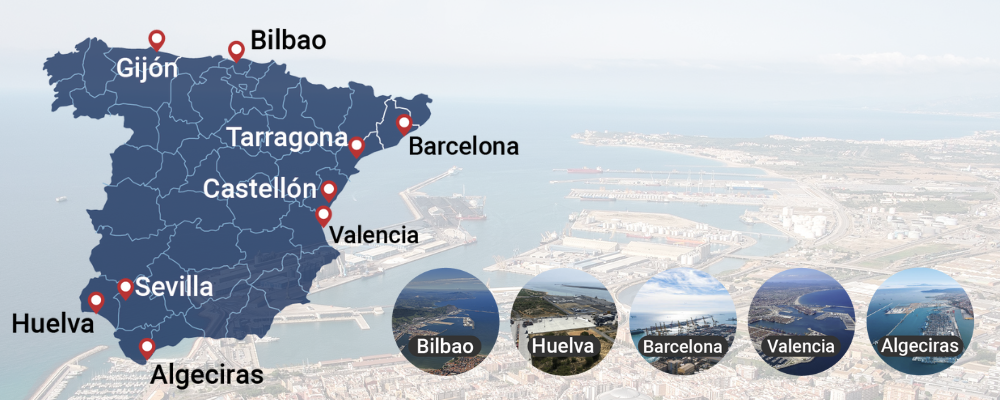
The process involves fuel suppliers and infrastructure operators, including Peninsula, Axpo Iberia, Shell, Enagás, Molgas Energy Group, ESK Gas Logistics, Baleària, and Repsol, as well as several Spanish port authorities. The action follows shipping's exposure to mounting pressure to reduce emissions in line with European and global decarbonisation objectives, with LNG and bio-LNG regarded as transitional fuels in the shift towards lower-carbon maritime operations.
About : Ministry of Transport and Sustainable Mobility
It is noteworthy that the Ministry of Transport and Sustainable Mobility is the Spanish government department responsible for transport and mobility policy across the maritime, rail, road, and aviation sectors. and The Directorate General of the Merchant Marine is Spain’s maritime administration responsible for merchant shipping and maritime safety.
Meanwhile, ANAVE is the Spanish shipowners' association, representing shipping companies and vessel operators. Gasnam is a Spanish association specialising in natural gas, LNG, and other alternative fuels for use in transport.
#ANAVE #Directorate General of the Merchant Marine #Gasnam # Ministry of Transport and Sustainable Mobility #Spanish ports # LNG bunkering rules.
You Might Also Like

Recommendation News
Marine Tech
Damen ASD Tug 2713 Fuel Flexible receives class and flag state approval 21 May 2026
Shipping Lines
CMA CGM to acquire FedEx Supply Chain for $1.4 billion. 02 July 2026
Shipping Lines
CMA CGM shifts INDAMEX toward Suez routing from mid-January 2026 07 January 2026
Incidents
Video : Fire on a Hong Kong-flagged ship in the Red Sea 16 October 2025
Ports
Antwerp chemical firms test water reuse 03 April 2026