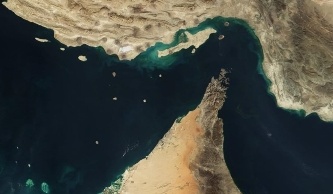
The closure of the Strait of Hormuz sets a dangerous precedent and raises questions about the long-term future of this and other crucial strategic chokepoints.
The insurance company Allianz Commercial's latest Safety and Shipping Review points to the fact that recent disruptions to major international waterways, most notably the Strait of Hormuz, are contributing to a broader escalation of risks affecting global shipping routes. Nevertheless, figures from recent years also present a less alarming picture for the maritime sector.
Greater uncertainty is being fuelled within the insurance industry by the ongoing military and political conflict in the Middle East, prompting responses from insurers that include the raising of coverage premiums, a closer scrutiny of transport-related risks, and a greater emphasis on underwriting strategies.
Allianz Commercial's take on the market's current trajectory is that it's moving towards a global shipping operating environment that's becoming more safety-conscious. In this environment, asset protection and maintaining continuous trade flows are just as important as cost efficiency.
The conflict in the Middle East
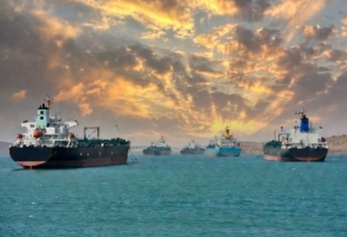
The report indicates that the conflict in the Middle East has had a direct impact on marine insurance, particularly in terms of hull and cargo coverage. Currently, approximately 1,150 merchant vessels exceeding 100 gross tons — representing a combined estimated value of around $125 billion (ships and cargo) and a carrying capacity of roughly 29 million tons — are idle in the Persian Gulf, awaiting the resumption of normal operations following recent diplomatic progress between the parties involved. The insurance group notes that up to 20,000 seafarers have been affected by this situation.
Related: Allianz : New risks and challenges are facing for marine insurers
Insurance coverage was maintained during the conflict,
Although insurance coverage was maintained during the conflict, Allianz Commercial has observed a rise in premiums, indicating a heightened perception of risk. For shipowners and insurers, the main worry has shifted from the availability of coverage to the safety of vessels and crews in potentially dangerous waters. According to Allianz, even if the current truce were to facilitate the reopening of key routes to and from the Persian Gulf, sustained international coordination would likely be required to restore confidence and support a return to pre-war traffic levels of up to 140 vessels per day.
Long-term advancements in maritime safety
Allianz Commercial highlights that, in addition to the present geopolitical turbulence, the broader insurance sector is impacted by long-term advancements in maritime safety. Over the past decade, the company has recorded more than 900 losses globally involving vessels with a gross tonnage over 100. The number of total losses recorded between 2016 and 2020 was 555, with an average of 111 per year. This compares to 350 losses between 2021 and 2025, representing an average of 70 per year. This decline is partly attributed to improved safety standards and operational risk management within the maritime sector, although significant losses continue to occur.
A general decrease in maritime incidents,
The report also points to a general decrease in maritime incidents, which fell by around 16% in 2025 compared to the previous year, dropping from 3,353 to 2,818. Despite this improvement, Allianz Commercial emphasises that exposure to losses remains significant, particularly in certain regions. The highest number of incidents was recorded in the Eastern Mediterranean and Black Sea (622), closely followed by the British Isles (619), which also represents the highest concentration of incidents seen in the last decade. Machinery damage was the leading cause of loss, accounting for over half of all incidents (1,505), while collisions and fires on large vessels continued to generate a significant number of insurance claims.
Fires: a persistent concern
It is noted by Allianz Commercial that fires involving container ships and car carriers remain a persistent concern, with over 200 incidents being recorded in 2025 alone — many of which resulted in constructive total losses.
The increasing size of modern vessels
The increasing size of modern vessels is also highlighted by the company, with the frequency and complexity of General Average claims being influenced as a result. Allianz explains that claims like these come about when shipowners and cargo owners share the extraordinary costs of saving a voyage in distress. These claims are becoming more complex and costly because cargo values are higher and shipment sizes are larger.
Claims that exceed $100 million.
In certain instances, these contributions can amount to as much as 50% of the cargo value, signifying that individual incidents involving high-value goods – such as electric vehicles – have the potential to result in claims that exceed $100 million.
A fundamental transformation in the shipping sector.
As per Thomas Lillelund, CEO of Allianz Commercial, "assessment reveals that the shipping sector has achieved considerable advancement in terms of safety in recent times. But it has also undergone a fundamental transformation, shifting from decades of relative stability—characterised by steady trade flows and largely predictable operating conditions—to an increasingly complex and volatile environment. The latest in a series of major disruptions affecting shipowners and freight operators is the conflict in the Middle East and the closure of the Strait of Hormuz. In an increasingly unpredictable world, where the cost of uncertainty is reshaping the maritime sector, resilience, geopolitics, and efficiency must be balanced.”
Prioritising transport resilience over cost efficiency
"Events in the Middle East have had a greater impact than many expected," says Rahul Khanna, Global Head of Marine Risk Consulting at Allianz Commercial. The closure of the Strait of Hormuz sets a dangerous precedent and raises questions about the long-term future of this and other crucial strategic chokepoints. It is becoming clear that we must pay the price for uncertainty by shifting from 'just-in-time' to 'just-in-case' supply chains and prioritising transport resilience over cost efficiency.”
Insurance markets react quickly to crises,
For Justus Heinrich, the boss of Allianz Commercial's global marine insurance business, "Insurance markets react quickly to crises, but the real challenge for companies is understanding how risks are connected. This is why resilience and risk management are becoming just as important as insurance coverage.'
Source: Shipping Italy
#Insurance markets # Justus Heinrich #Allianz #Rahul Khanna #Thomas Lillelund #modern vessels # Arabian Gulf. #Safety#Shipping # Middle East #insurance industry #Strait of Hormuz,
You Might Also Like


Recommendation News

Shipping Lines
TransContainer boosts port logistics with longer rail train operations 30 December 2025
Marine Tech
Wiernicki honored with Silver Bell Award for Safety Leadership 14 October 2025
Marine Tech
ABS Joins Korean Agency to Advance Smart Ship Technologies t Certification 06 November 2025
Ports
Marsa Maroc Acquires 45% Stake in Spanish Port Operator for €80 Million 17 December 2025
Marine News Room
Pablo Rodas-Martini : Santos Incredible I have ever seen in a port 21 October 2025