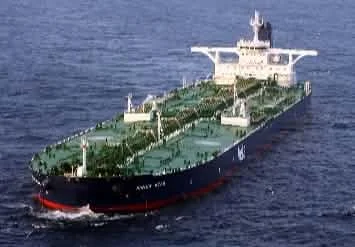
The expected response of oil markets was used to classify three broad scenarios for how Middle East shocks could play out.
Even as the region’s geopolitics become more fractious, oil markets and central banks generally view conflict as an event to monitor, rather than as a factor that dictates the macro outlook. An energy crisis like the one in the 1970s doesn’t look imminent. However, if one were to materialize, the consequences for inflation, growth, and policy would be profound.
Three broad paths for how Middle East shocks
Three broad paths for how Middle East shocks could play out were reported by Biz news—categorized by the expected response of oil markets—and their implications for the global economy were assessed. The most extreme case is an escalation that hits energy infrastructure or key choke points. This would lead to sustained price increases, reviving inflation risks and pressuring central banks to adopt a hawkish stance.
Energy infrastructure
A significant regional escalation that targets energy infrastructure, like that in Saudi Arabia or Iraq, or critical choke points, such as the Strait of Hormuz, would disrupt the market's assumption that oil keeps flowing.
Oil prices could surge by up to 80%. By early 2026, that would translate into a rise from $60 to a maximum of $108. This would mean slower growth, higher inflation, and a more hawkish monetary policy for the global economy
Our fundamental scenario,
Related : The oil majors' production in the Middle East
Consequently, in our fundamental scenario, as Biz News reported if there's a renewed flare-up centered on Iran, Iraq, or the Persian Gulf, we could still see some sharp but short-lived moves—as long as the conflict doesn't extend and cause long-term damage to energy facilities. Oil prices may spike briefly before returning to baseline levels.
In the event of limited shocks or instability, distant
In the event of limited shocks or instability distant from major oil sites, the physical supply would remain largely untouched, and prices would remain stable. The war in Gaza is a striking and heartbreaking example of a major geopolitical shock that has had virtually no impact on global oil markets.
In the event of limited shocks or instability distant from major oil sites, the physical supply would remain largely untouched, and prices would remain stable. It pumps one-third of the world's oil and one-fifth of its gas. Just like in the 1970s, it meets 15% of the world's total energy needs.
Geopolitics and Oil Scenario 1: No Impact
Geopolitical shocks generally do not affect oil prices, particularly when they take place in regions that are not close to major oil fields in Iran, Iraq, and the Gulf. The impact on the economy and oil market is usually minimal.
Scenario 2: Short-Term Oil Price Increases
The second category, which we think is most likely, includes situations where problems between countries in Iran, Iraq, or the Gulf—the main oil producers—cause oil prices to increase, but only for a short time. Examples include:
Scenario 3: Significant, Long-Lasting Surge in Oil Prices
This category is defined by substantial geopolitical shocks and considerable impact on energy prices.
Related : Trump waived the Jones Act for 60 days to allow oil to flow freely to US ports.
The Implications of a Substantial Increase in Oil Prices
The closure of the Strait of Hormuz would have a significant impact on the global oil supply, reducing it by approximately 20% in a worst-case scenario. Such a sudden shortage would overwhelm buffers and force prices to surge. Based on historical data and other studies, we estimate a 80% surge in crude prices. From an average of $60 per barrel in early 2026, the price of crude oil would surge toward $108 per barrel.
Two reasons why the economic damage
There are two reasons why the economic damage from $100-plus oil is likely to be smaller than during past oil shocks. First, economies are less oil-intensive than before. In the U.S., for example, the amount of oil needed to produce one unit of GDP has fallen by about a quarter since 2011. Second, inflation means that $100 of oil today buys fewer goods and services than it did a decade or two ago. However, it's still a shock, and different parts of the world will be affected differently.
Oil shocks
Oil shocks no longer hit the world’s largest economy like they once did. Shale transformed the United States from a major importer during the Iraq War era into an exporter. This shift will soften the blow when crude prices spike, meaning the impact on the US will be minimal.
Impact of the Middle East conflict on regional energy
Bloomberg Intelligence assesses that the impact of the Middle East conflict on regional energy companies like Saudi Aramco, ADNOC, and QatarEnergy hinges not only on the movement of oil and gas prices, but also—and more importantly—on whether production and exports remain uninterrupted. When geopolitical tensions push prices up without disrupting Gulf supply, the effect is positive.
Aramco operates at a scale
With an output of around 10 million barrels per day, Aramco operates at a scale where a $10-per-barrel shift in oil prices translates to an additional $35 billion to $40 billion in revenue per year (before taxes), suggesting a significant increase in cash flow as long as production and exports remain uninterrupted
#. Aramco #Bloomberg Intelligence #ADNOC #QatarEnergy #Oil shocks #oil markets #Oil Prices #Biz news #global economy #Strait of Hormuz
You Might Also Like

29 October 2025

19 November 2025
Recommendation News

Ports
Marsa Maroc Acquires 45% Stake in Spanish Port Operator for €80 Million 17 December 2025
Incidents
27 kg of cocaine seized in Gioia Tauro in a container of bananas 16 October 2025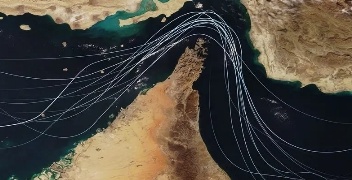
Marine News Room
The Omani proposal for regulating navigation in the Strait of Hormuz is outlined. 13 July 2026
Marine Tech
IMO : Mexico prepares for green shipping future 14 October 2025
Incidents
Under Investigation : Somali Pirates Hijack Yemeni Fishing Vessel 16 October 2025