The European Union wants the Northern Sea Route along Russia's Arctic coast to remain open to international shipping
Europe's Northern Neighbourhood: A New Strategy for the Arctic
The European Union wants the Northern Sea Route (NSR) along Russia's Arctic coast to remain open to international shipping. This is as it prepares a new Arctic strategy. The Times has reported this information. Kaja Kallas, the EU’s foreign policy chief and former Estonian prime minister, said that Europe should collaborate with the US and Canada to prevent the route from becoming a strategic chokepoint. She added that cooperation with partners could ensure the route remains open to all.
A New Strategy for the Arctic
Today, on 20 October, the European Commission is expected to adopt and present 'Europe's Northern Neighbourhood: A New Strategy for the Arctic'. This strategy is expected to include plans for a surveillance centre to monitor suspicious shipping activity, as well as support for military-grade ports and airports and facilities to monitor and repair subsea data cables.
Plans to increase Europe’s icebreaker capacity
Brussels also plans to increase Europe’s icebreaker capacity and allocate €260 million ($291.9 million) to military technologies capable of operating in the Arctic, including aircraft designed for extreme weather conditions and long-range sensors. A planned maritime security hub would monitor shipping and submarine activity in the region.
Changing ice conditions in the Arctic
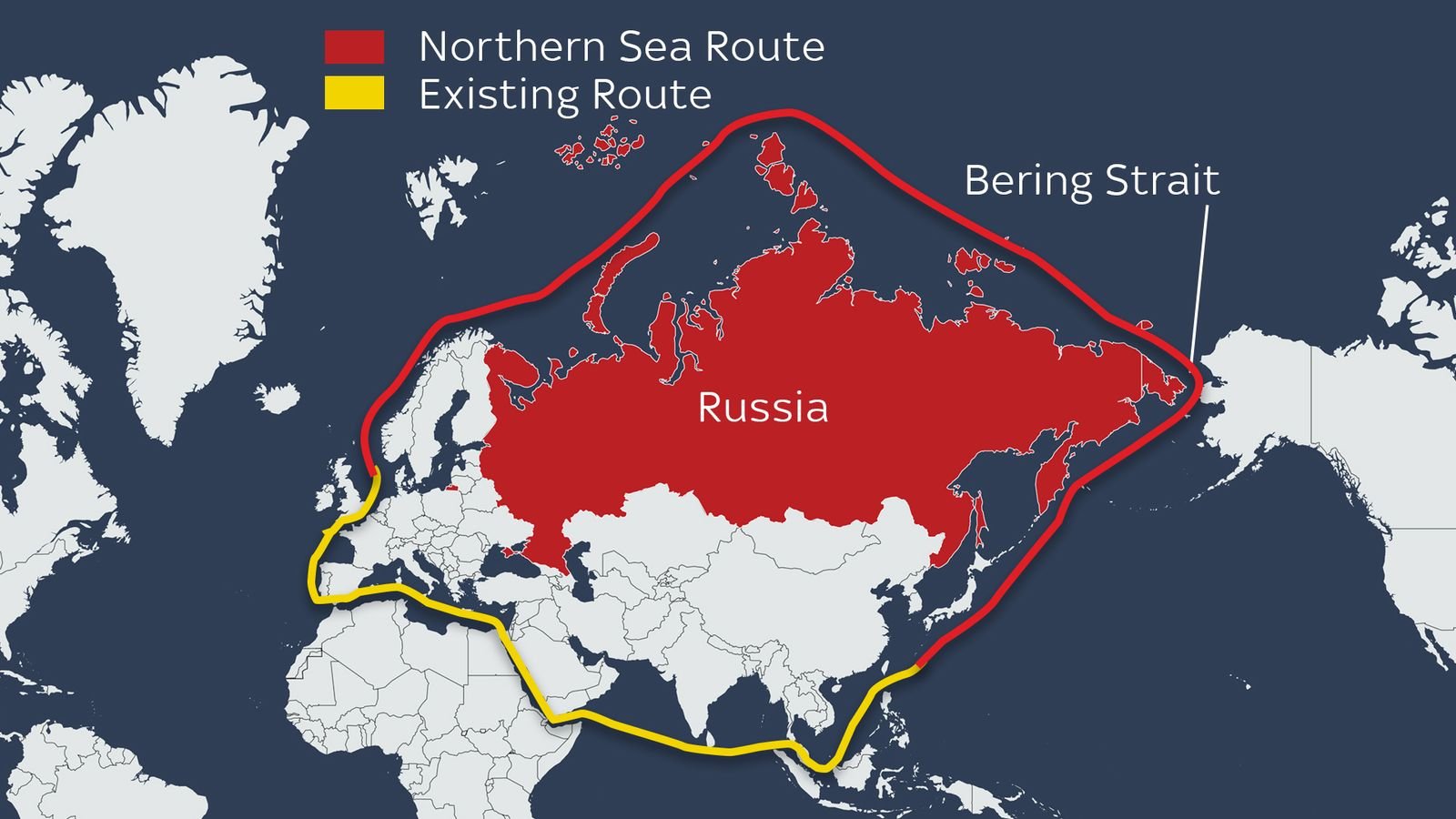
Changing ice conditions in the Arctic have made seasonal voyages along the Northern Sea Route more accessible, making it a more commercially important route. In summer, voyages can be at least one-third faster than established routes through the Red Sea and the Mediterranean between Asia and Europe.
The revised Arctic strategy would have 'security at its core'
In September, Kallas said that the revised Arctic strategy would have 'security at its core'. The EU’s previous Arctic policy, adopted in 2021, focused on regional stability, climate and environmental issues, and sustainable economic development. The revised strategy is expected to place greater emphasis on security, maritime infrastructure, and access to Arctic shipping routes.
The Northern Sea Route (NSR)
Notably, the Northern Sea Route (NSR) or Northeast Passage runs from the northernmost parts of the North Sea across the icy waters of the Arctic Ocean north of Russia, east to the Chukchi Sea and Bering Strait, where access to the North Pacific is reached. Several straits in the Passage can be classified as international.
As with the Northwest Passage, the Northeast Passage is difficult to navigate due to the extreme natural conditions resulting from its geographical location. However, if climate change continues to bring warmer air to the area, the conditions of winds, ice, and currents may result in a more favourable sea route.
It was found that the Arctic ice cap was over 50% below average in some areas of the Northeast Sea Route. This allows ships to easily travel through its waters from Europe to Asia, which is a result of climate change. However, the changing climate does not resolve the legal issues and questions that arise if foreign ships use the route, as no specific universal agreement has yet been reached on this matter.
# European Union #Kaja Kallas #The Times # European Commission #Northern Sea Route (NSR )# Russia's Arctic coast
You Might Also Like

Recommendation News

Shipping Lines
Oman’s Asyad purchase two Crude Oil tankers 19 October 2025
Marine Tech
ABS Approves Ammonia Cracking Technology for Ships 14 October 2025
Shipping Lines
Maersk Enhances Connectivity Across the Americas with New Manzanillo Depot 18 December 2025
Incidents
27 kg of cocaine seized in Gioia Tauro in a container of bananas 16 October 2025
Incidents
ReCAAP: Six Vessels Targeted in the Singapore Strait 17 October 2025