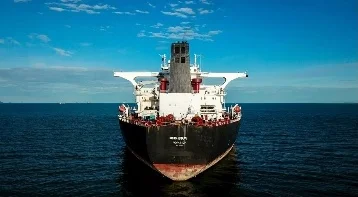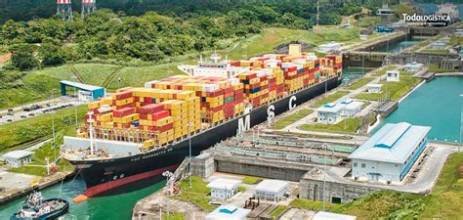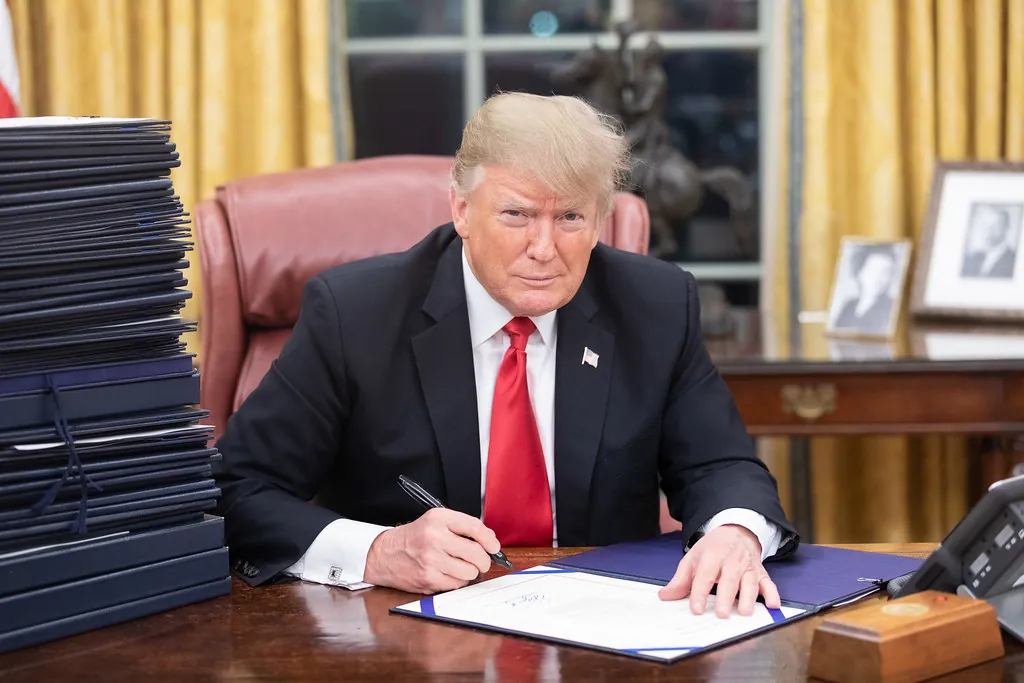
On 25 November, the Office of the United States Trade Representative (USTR) proposed new tariffs on 14 trading partners, including the European Union.
Washington has once again turned to tariffs. On 25 November, the Office of the United States Trade Representative (USTR) proposed new tariffs on 14 trading partners, including the European Union. This follows an eight-month investigation conducted under Section 301 of the Trade Act of 1974, which examined the issue of excess production capacity fuelled by government subsidies. This provides a new legal basis for the measures following a Supreme Court ruling in February that overturned tariffs previously imposed under emergency powers (IEEPA).
The proposed tariff rate for European goods is 15%,
The proposed tariff rate for European goods is 15%, which is the same as that set for Japan, South Korea, Taiwan and Switzerland. China would face a rate of 20%, with cumulative tariffs potentially reaching 45% on certain categories. The benchmark for Brussels remains the all-encompassing 15% ceiling agreed upon at Turnberry in July 2025. However, the USTR text leaves room for ambiguity. Some interpretations suggest an additional 15% levy on top of existing Most Favoured Nation (MFN) duties, and the draft allows for an increase to 20% should ongoing negotiations be deemed 'unsatisfactory'. Once in effect, tariffs on European products would rise from 10% to 15%.
Related: Trump's tariffs rejected, the US may have to repay $175 billion
Although the scope for exemptions is broad,
Although the scope for exemptions is broad, the USTR has explicitly targeted the chemical, pharmaceutical, and automotive sectors. Automobiles, steel, and aluminium are excluded, as they are already subject to sector-specific tariffs under Section 232. Semiconductors, as well as certain energy and food products, are also exempt. European wine would face an aggregate levy of 15%, though Champagne would be exempt. For the time being, the Irish pharmaceutical sector remains unaffected. In Italy, the sectors most exposed are those most dependent on American demand, such as industrial machinery, fashion, furniture, and the agri-food industry.
Steel and aluminium derivatives,
The issue of steel and aluminium derivatives, which are currently subject to a 50% tariff, also remains unresolved. The EU has set a deadline of the end of 2026 for Washington to reduce these tariffs to a maximum of 15%; if this deadline is not met, European concessions will be suspended.
The measures have not yet come into effect
The measures have not yet come into effect. They must undergo a public consultation and hearing process, with a final ruling potentially arriving in January 2027. It is precisely this timeframe that concerns industry operators. Experience from 2025 shows that announcing new tariffs encourages 'frontloading', or accelerating shipments. In the coming weeks, we are likely to see an increase in bookings on transatlantic routes, both by sea and, for higher-value goods, by air. A slowdown could follow at the start of the year.
For air cargo,
For air cargo, which relies heavily on pharmaceuticals, fashion, and components on the Italy-US route, the primary challenge is volatility, in the form of short-lived spikes in demand and the need for rapid reallocation of capacity. In the container shipping sector, the risk lies in a potential new phase of 'stop-and-go' activity regarding volumes at Tyrrhenian ports most closely linked to the North American market.
Freight forwarders and customs brokers
Meanwhile, freight forwarders and customs brokers are facing an increasing workload in areas such as tariff classification, preferential origin and exemption verification. Amidst comprehensive caps, Most Favoured Nation (MFN) duties and sector-specific regimes, it is ultimately the individual customs tariff line that will make the difference.
After the midterm elections,
The political backdrop is a significant factor: the proposal was made just weeks after the midterm elections, in which the Democrats gained control of both the House and the Senate. The message for businesses remains the same as it has been for the past two years: they must diversify their markets and suppliers and build supply chains capable of absorbing tariff-related shocks, which have now become a recurring feature.
Source: Shipping Italy
# Democrats #(USTR) #Trade Act of 1974 # (IEEPA) #US tariffs#Europe # logistics #goods
You Might Also Like


20 October 2025
Recommendation News

More
Courses : Entry-level staff in logistics, operations, warehousing 05 November 2025
Yachts&Cruises
AIDA Cruises Celebrates 30 Years of Partnership with Madeira 19 November 2026
Yachts&Cruises
Starboard and Princess Cruises Expand Retail Partnership Across Half of Princess Cruises' Global Fleet 02 June 2026
Yachts&Cruises
Josh Hyde and Waitematā Racing Secure 2nd Place at the USA Grand Slam – Oakcliff International 07 September 2026
Ports
Rabie receives a delegation from the International Monetary Fund IMF mission 08 December 2025