Trump raises global tariff to 15% using Trade Act authority
According to the Supreme Court, the president unlawfully used powers reserved to Congress. Europe is eagerly awaiting Washington's move
Postpone the vote on the possible ratification of the US-EU trade agreement scheduled for February 24 in the International Trade Committee.
The Supreme Court handed Trump a stinging 6-3 defeat by ruling he overstepped his authority by using IEEPA, a sanctions law, to impose tariffs on imported goods. The justices sent the case back to the Court of International Trade to sort out next steps, a process expected to set off a scramble by companies to demand refunds.
According to the ruling, passed by a vote of six in favor and three against, tariffs cannot be imposed under a law intended for national emergencies. The U.S. Constitution grants Congress, not the president, the authority to impose taxes and tariffs. Trump, however, approved the tariffs without congressional approval, calling them "vital to economic security" and previously stated that he had a backup plan in the event of an adverse court ruling.

Refunds to be demanded
"The Supreme Court did not talk explicitly about the $175 billion in tariffs that could potentially be refunded. On the other hand, their ruling today clearly does open that door for those refunds to be demanded," PWBM director Kent Smetters told Reuters. Most companies will likely seek refunds, "and it's basically just going to come out from the U.S. Treasury," he added
Trump touted the revenue generated by all of his tariffs
Meanwhile Trump has touted the revenue generated by all of his tariffs, which were estimated by the Congressional Budget Office at about $300 billion annually over the next decade. Refunds of $175 billion would exceed the combined fiscal 2025 spending by the Department of Transportation and the Department of Justice.

Three separate cases,
The Supreme Court litigation consisted of three separate cases, which were consolidated for oral argument. One challenge was brought by a family-owned toy company, Learning Resources, which employs approximately 500 people. Another challenge was brought by the Liberty Justice Center, a public interest law firm, on behalf of a group of small businesses, including a wine distributor called VOS Selections. The third challenge was brought by 12 U.S. states: Arizona, Colorado, Connecticut, Delaware, Illinois, Maine, Minnesota, Nevada, New Mexico, New York, Oregon, and Vermont.
Lower courts ruled that Trump had exceeded his authority
The case reached the Supreme Court after lower courts ruled that Trump had exceeded his authority by imposing tariffs under a law intended only for national emergencies. The Trump administration appealed to the highest court in the United States after the U.S. Court of Appeals for the Federal Circuit and Washington-based U.S. District Judge Rudolph Contreras ruled against him
ALTERNATIVE CALCULATIONS
On the other hand Boller said the PWBM model, built for long-term revenue forecasts, cross-references U.S. Census Bureau import data on around 11,000 product import categories based on eight-digit tariff codes across 233 countries, and applies statistical forecasting methods to come up with about $500 million in IEEPA-based revenue collected daily. As of Thursday, that model estimated $179 billion in total receipts under IEEPA since Trump began imposing tariffs under that law in February 2025.
CBP last published its customs assessments under IEEPA-based tariffs and other trade remedy duties on December 14, at that time showing an at-risk total of $133.5 billion since the first duties under the law were imposed. Net duty collections are typically slightly lower because the tariff assessments are subject to adjustments and corrections that result in refunds.

The PWBM model
The PWBM model also made quick adjustments for sometimes-abrupt tariff changes by Trump, including from trade deals that cut import duty rates for goods from certain countries. South Korea, for example, saw its U.S. tariff rate drop to 15% from 25% in November
Captured changes in punitive duties under IEEPA,
It also has captured changes in punitive duties under IEEPA, such as the imposition last August of a 40% tariff to punish Brazil over the prosecution of Trump ally and former President Jair Bolsonaro, and the removal of duties on Brazilian coffee, beef and cocoa in November.
The Penn-Wharton Budget Model
According to economists at the Penn-Wharton Budget Model, the amount raised so far through tariffs based on Trump's emergency measures amounts to over $175 billion, an amount that may now have to be repaid. "We note the US Supreme Court ruling and are carefully analyzing it. We remain in close contact with the US administration to clarify what measures it intends to take in response to this ruling.
Postpone the vote
Businesses on both sides of the Atlantic depend on stable and predictable trade relations. We therefore continue to advocate for low tariffs and work to reduce them," a spokesperson for the EU Commission stated after the Supreme Court struck down the US tariffs. Following the ruling, as reported by several agencies citing internal sources, the European Parliament is preparing to postpone the vote on the possible ratification of the US-EU trade agreement scheduled for February 24 in the International Trade Committee.
Trump raises global tariff to 15%
In response to the Supreme Court's decision The US administration has raised the planned global tariff rate to 15% by invoking Section 122 of the Trade Act of 1974, shifting legal footing less than a day after a Supreme Court ruling invalidated its previous trade authority, according to the White House.
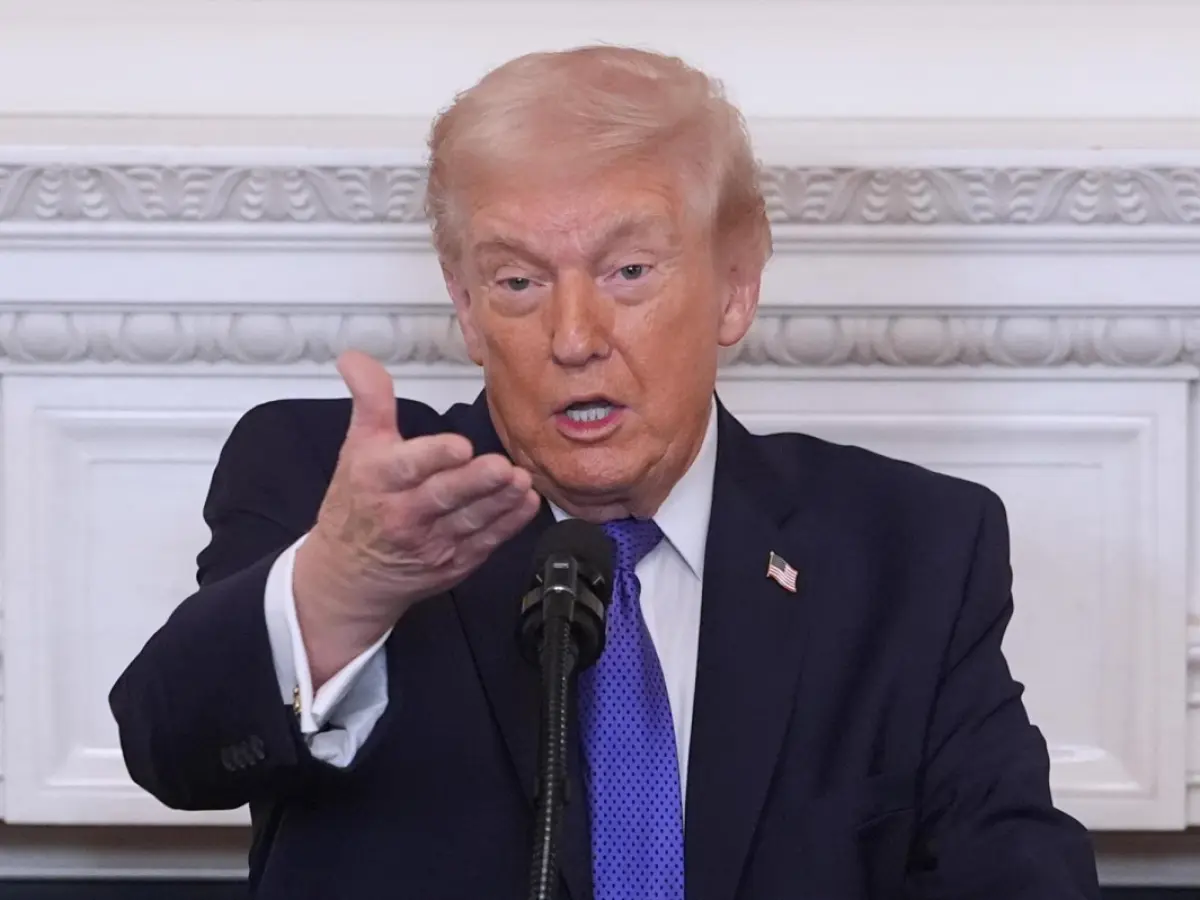
“I, as President of the United States of America, will be, effective immediately, raising the 10% Worldwide Tariff... to the fully allowed, and legally tested, 15% level,” President Donald J. Trump said in a written statement.
Related :Trump cuts tariffs on beef, coffee and other foods as inflation concerns mount
Source : Agencies
# EU Commission #The SuprPenn-Wharton Budget Modeleme Court #Trump's tariffs rejected #The U.S. Constitution #The PWBM model #Kent Smetters #IEEPA#Trade Act
You Might Also Like
Recommendation News

Incidents
Under Investigation : Somali Pirates Hijack Yemeni Fishing Vessel 16 October 2025
Marine Tech
Fincantieri :Agreement for two new cruise ships for Marella Cruises 10 October 2025
Ports
U.S. grants India six-month sanctions waiver 31 October 2025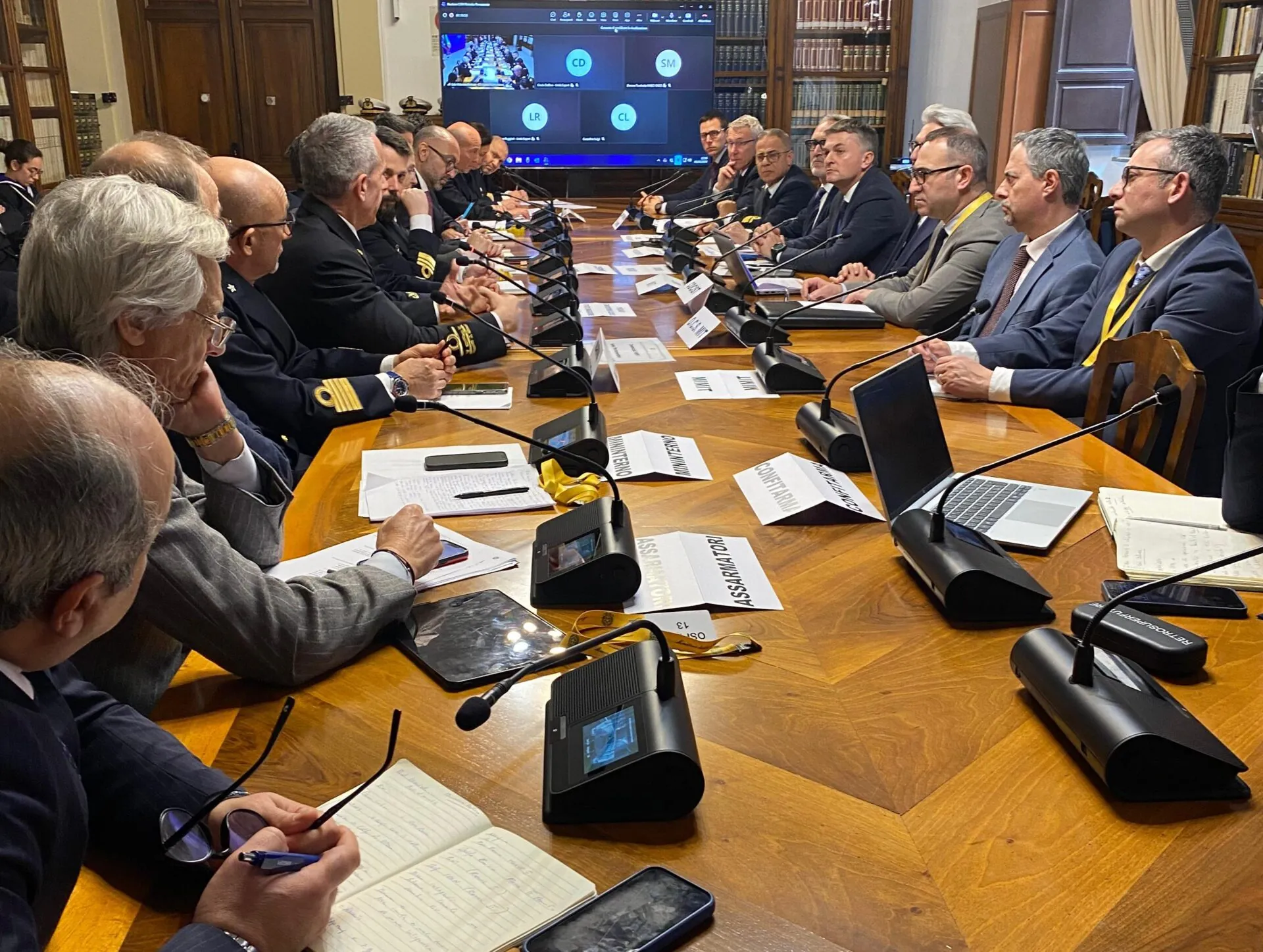
Marine News Room
The Inter-Ministerial Committee for Maritime Transport Safety met in Rome, Italy, to discuss the war in Iran. 06 March 2026
Shipping Lines
"Seatrium-buil WTIV " Completes Sea Trials, Delivery in February for Maersk Offshore Wind 11 January 2026