Developing Maritime Education in Ports the “Blue Gold” – Mechanisms and Leaps

By : Mohamed Fouad
International expert in supply chains and logistics
Developing Maritime Education in Ports the “Blue Gold” – Mechanisms and Leaps .What is the benefit of an important commercial port in a strategic location without professional human resources?
Before we begin discussing the urgent necessity of developing the education and training system in the maritime transport sector, it is crucial to determine the mechanisms, objectives, and practical methods for achieving this development—not merely on an academic level.
The first question
The first question is: What is the benefit of a major commercial port in a distinguished geographical location without qualified and professional human resources?
The answer lies within the question itself: A strategic geographical location, alongside available tools and support, would be meaningless without highly skilled personnel. Without them, the geographical advantage would be lost.
Significance of developing maritime education
Thus, the significance of developing education in the maritime transport sector becomes clear. Strengthening our resources and maximizing national income is essential, as this sector closely impacts various industries, commerce, investment, production, and all strategic and vital fields for nations and industrial, productive, and service-oriented institutions.
Maritime Ports: The Blue Gold Mine for Nations and Peoples
Let’s begin by reviewing the importance of the maritime ports sector and its reflections on the economy, industry, and1 investment:
- Integration with large-scale industrial and production plans to enhance investment attractiveness and solidify the geographic importance of ports on the global logistics map.
- Enhancing port connectivity with rail, air, and land transport networks to establish a comprehensive domestic link for cargo and goods shipment at low economic costs, within short timeframes, and in an organized manner.
- Expanding maritime routes and attracting new lines, which strengthens connections with regional and international ports, fosters investments, and supports global trade.
- Aiding the tourism sector, including yacht tourism, beach tourism, and passenger cruises.
- Boosting competitiveness of goods and services by reducing transportation, export, and import costs.
Without developing maritime education, ports may lose their advantages, such as geographic location, storage capacity, and the number of berths.

The Importance of Developing Maritime Education for the Transport Sector
- Nations today aspire to increase smart ports, which utilize information technology in their operations via smart applications and modern operational mechanisms to attract maritime routes and investments, boosting their share in global trade circulation. This goal cannot be achieved without qualified personnel trained in the latest technologies.
- Digital transformation and eliminating traditional paperwork is the first and most crucial step toward smart ports. Achieving this requires professionals who can lead systems and information departments, as well as personnel trained in modern operational programs.
- There is a difference between a single-window system and a truly smart port, where human intervention is minimal, acting as a strategic command unit—which necessitates exceptionally skilled professionals capable of utilizing advanced software in port operations.
- Private and investment sector participation is vital in transitioning education from traditional academic methods to practical approaches aligned with maritime job market demands and operational requirements. Collaboration must extend to port authorities, software companies such as Microsoft and Oracle, and government entities involved in operations.
A second tour will follow to cover more professionals in this sector. Meanwhile, here are simplified insights into key administrative pillars of this vital field:
Commercial Management: Business-Minded Professionals
Negotiations with maritime routes, investors, importers, exporters, and manufacturers require non-traditional professionals—beyond just job functions.
Securing agreements with new clients or shipping lines demands strong expertise and precise market knowledge, alongside familiarity with international maritime laws and trade agreements.
These professionals are essentially business entrepreneurs within the port industry, capable of marketing goods and services effectively, even amid market fluctuations such as recessions or economic downturns.
Securing a single dollar of profit in negotiations with a maritime route is no easy at all.
Operations Commandos
Ports demonstrate their strength and readiness through the efficiency of their operations teams.
A smart planning crew organizes tasks for ships, storage areas, and warehouses—ensuring highly professional execution, record movements , and low economic costs.
Continuous operational monitoring and crisis management across entire daily activities ensures smooth coordination with internal departments and clients.
Precision and speed at port entrances and weighing stations prevent congestion or accidents, reduce truck turnaround time, cut transportation costs, and minimize carbon emissions from fuel combustion.
Digital applications, such as the Vehicle Booking System (VBS), play a crucial role in streamlining operations.
Dock Workers Battalion
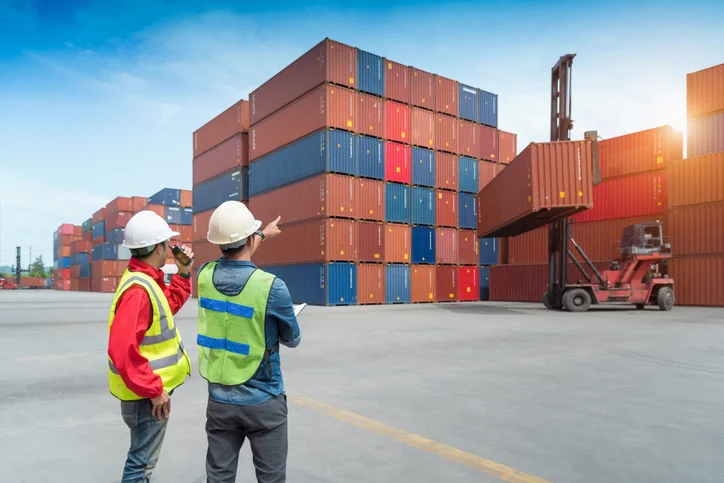
Dock workers endure harsh conditions—be it cold or hot weather, day or night shifts, or strong winds and dust storms.
Their training must emphasize top-tier safety and rapid execution.
Just as F-16 and F-35 fighter jets require highly skilled pilots, the giant port machinery—QC, MHC, RTG, RMG, RS, etc.—demands expert operators.
These operators are physically, mentally, and technically trained to reach the highest levels of professional performance.
Revolution in Maritime Systems and Technology
The world now speaks of blockchain, digitization, automation, smart operating systems, cybersecurity, surveillance networks, and fire prevention technology—alongside administrative and financial coordination applications.
This reinforces the critical role of information systems and technology personnel, who strategically plan and manage ports.
Their strength directly determines the advancement of ports.
Without them, smart ports would cease to exist, and the single-window policy would be ineffective.
Related : Mohamed Fouad writes: Message from above the Red Sea

Engineering: The Lifeline of Equipment and Machinery
Ports have evolved significantly in the last three decades, requiring advanced equipment for handling, shipping, and storage.
These machines form the nervous system and arteries of the port’s body—a decline in their efficiency directly impacts overall productivity and competitiveness.
Port engineers must operate like heart surgeons, ensuring equipment functionality with precision.
Their ongoing learning and innovation in handling mechanical, electrical, cooling, and tire maintenance prevents technical issues and optimizes resource management for repairs—which, in turn, lowers maintenance costs and avoids disruptions.
Supply Chain Leaders: “Prophit Soliman” Strategic Insight
The world now understands the importance of supply chain management, reminiscent of Prophet Soliman strategic planning when consulting his commanders on how to build Queen Bilqis’ palace.
Here, the most knowledgeable, skilled, and meticulous professional was chosen for successful execution.
Similarly, supply chain excellence relies on technology, precise operational software, logistics, contracts, auctions, service agreements, and digitalization—all vital for port success.
Human Resources Consultants
HR professionals shape the future workforce of ports, designing effective training programs that align with industry needs.
They support governmental and private sectors in workforce development, making them key partners in the maritime industry’s evolution.
Special Welcome To All Maritimes Industry Seafarers!
To all employees and professionals across various industries worldwide, especially those in maritime transport, thank you for your invaluable contributions to global commerce and trade!
Mohamed Fouad , Seafarers . Maritime Ports Sector ,Supply Chain Leaders , Prophit Soliman , Jewels , Dock Workers Battalion
You Might Also Like
24 January 2026

12 February 2026
Recommendation News

Marine Tech
Wärtsilä Lifecycle Agreement ensures reliable performance and efficiency for 12 new LNG carriers 16 January 2026
Incidents
Fincantieri files €100 million lawsuit against Paroc in a US court 18 October 2025
Incidents
A ship carrying oil was hit in the Strait of Hormuz 02 March 2026
Marine Tech
ABS and Fleetzero to Advance Battery Containers for Maritime Applications 15 January 2026