IACS Council chair Alex Gregg-Smith said ammonia toxicity, methanol flammability and the storage and bunkering requirements of hydrogen each demand specific technical standards, crew training and emergency-response provisions.
The global shipping industry is currently experiencing a major shift in its propulsion technology, driven by international regulations to reduce carbon emissions and the need for operations to be more sustainable. At the heart of this technical evolution are the standards set by leading classification societies. IACS unified requirements form the basis of this regulatory and technical framework. These requirements are the baseline standards that classification societies apply to ship construction, structural integrity, and statutory safety compliance.
The classification frameworks must evolve rapidly as shipowners increasingly specify dual-fuel machinery and alternative energy vectors, such as liquefied natural gas, methanol, ammonia, and hydrogen. Understanding how these standards are formulated and applied is essential for navigating the modern maritime regulatory landscape. In addition, those working in the field of advanced propulsion systems need to be aware of broader industry trends, including the assessment of employment opportunities in the dry bulk sector in the context of evolving global energy policies.
The Traditional Role of Classification Societies
Traditionally, classification societies have operated as independent technical bodies, establishing and verifying rules for the design, construction and periodic survey of merchant vessels. Although flag states have sovereign authority over statutory certification under International Maritime Organization (IMO) conventions, they often delegate these surveys to recognised classification societies through formal authorisation agreements. Such international regulatory bodies work closely together to coordinate safety standards, and this cooperative approach also underpins the IMO's broader intervention during maritime crises.
Harmonising the approach across IACS.
Harmonising the approach across international jurisdictions and preventing regulatory fragmentation are the objectives of the International Association of Classification Societies IACS, which coordinates technical standards. The organisation develops comprehensive technical benchmarks through consensus-building among its member societies. These benchmarks guarantee that a vessel classed in one jurisdiction adheres to the same structural and safety standards as one classed elsewhere, thereby maintaining a level playing field for global tonnage providers. This cooperative framework ensures that engineers apply engineering principles consistently, thereby mitigating risks associated with sub-standard design or construction practices in emerging shipbuilding markets. Furthermore, technical standardisation supports marine underwriters, port authorities and charterers by providing a reliable, predictable baseline for vessel quality and operational safety.
The introduction of alternative marine fuels
The introduction of alternative marine fuels brings with it a host of complex engineering challenges that were not fully anticipated by traditional rules. Fuels with low flashpoints, cryogenic properties, or high toxicity profiles, for instance, require rigorous containment, venting, and fire-suppression systems. Novel fuel arrangements are increasingly being modelled using advanced engineering methodologies. This helps to assess their structural responses and risk profiles. It also ensures that IACS unified requirements continue to provide robust safety guarantees.
UR H2 is a safety framework for ammonia release mitigation systems.
Alex Gregg-Smith, Chair of the IACS Council, said: 'Ammonia toxicity, methanol flammability, and the storage and bunkering requirements of hydrogen each demand specific technical standards, crew training, and emergency response provisions.' He added: “The most urgent task is to agree on those uniform minimum requirements before vessels are ordered on a large scale.” IACS has revised Unified Requirement UR M78, which covers safety requirements for ammonia-fuelled engines, and has published UR H2, which establishes a safety framework for ammonia release mitigation systems."
Gregg-Smith asserted that bunkering infrastructure and shoreside interfaces demand a commensurate level of technical scrutiny as that applied to vessels. IACS is also collaborating with the Maritime and Port Authority of Singapore through a Letter of Intent, which covers technical standards and requirements for the safe implementation of new solutions. Gregg-Smith added that the rapid adoption of new fuels, digital tools and automation could outpace regulation without common standards.
Related: IACS 2025 Annual Review : The role of class in driving progress on maritime safety and innovation
Shipowners
Shipowners are faced with a complex situation due to the differing approaches of the IMO, the EU and individual flag states. Digitalisation is changing the nature of classification itself, with drones and other remote inspection tools reducing the need for surveyors to be physically present for certain tasks.
About: IACS
IACS has developed cyber-resilience requirements UR E26 and UR E27 for ships, onboard systems, and equipment. Its guidance on remote inspection techniques dates back to 2016. Gregg-Smith took over as IACS Council chair in July. The association’s 12 member societies cover over 90% of the world's cargo-carrying tonnage. In 2025, IACS authored 37 independent submissions to the IMO and co-sponsored a further 20 papers. Founded in 1968, IACS develops technical requirements that are applied by its member classification societies, and it also provides technical input to international maritime regulation.
#IACS #IMO #Shipowners #Alex Gregg-Smith #Digitalisation #global shipping industry #Ammonia toxicity#, crew training#UR M78#fuel rules #safety compliance #Port Authority of Singapore
You Might Also Like
24 February 2026
Recommendation News

Yachts&Cruises
Viking Receives 2024 North America IPO of the Year Award 07 October 2025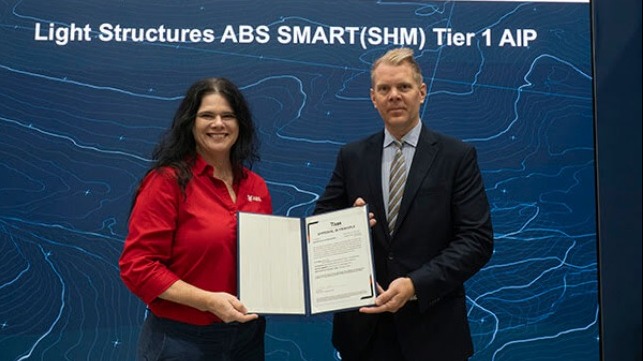
Marine Tech
ABS : An approval in principle (AIP) to Light Structures 14 October 2025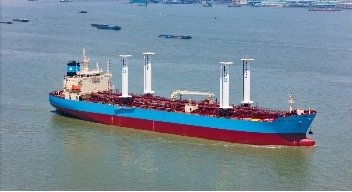
Marine Tech
Bound4blue completes second suction sail installation for Maersk Tankers 03 May 2026
Marine Tech
Joshua Jordan was appointed CEO of Roboat 07 October 2026
Ports
Bangladesh drops plan to lease key Chattogram container terminal amid protests 10 February 2026