Saudi is solidifying its position as a vital regional trading hub. As a critical ally to the United States, it is exciting to see the Kingdom growing its maritime
Northeast Maritime Institute was an early adopter of online maritime education and training
With the introduction of new technologies into shipping, I am confident that the traditional roles and manning of vessels will change
Our domestic industry, protected by the Jones Act, is doing very well in my opinion. I agree that the United States needs more ship building capacity to promote national security interests
There is a great book called “Oceans of Grain” and the author makes a point that international shipping defies and outlasts all nations and empires that try to impose their will upon it
By : Magdy Sadek

In 1975, the US owned share of world open-registry ships was 26%. This means that the United States had a degree of effective control over more than twenty-six percent (26%) of the global maritime industry, because this figure does not alsoinclude US-flag vessels. Today, the United States owns roughly 2.6% of global commercial vessels that is a remarkable change in a relatively short timespan
In 2019, we introduced the concept of a USVI flag, which would allow the United States and its allies to bring tonnage under US sovereignty in order to promote resilient US supply chains. Technology is both a blessing and a curse. It is a blessing because it gives mariners access to better tools and more information to safely navigate. It is accurse because it creates complacency, overreliance, and cybersecurity vulnerability. GPS is easily spoofed, and therefore navigators relying solely on digital navigation tools are putting themselves and others at risk.
As it relates to marine casualties, it appears to me that in many cases the human element plays a predominant factor We are eager to bring our capacities into the Gulf region to help improve the talents and pool of professional mariners working in the region
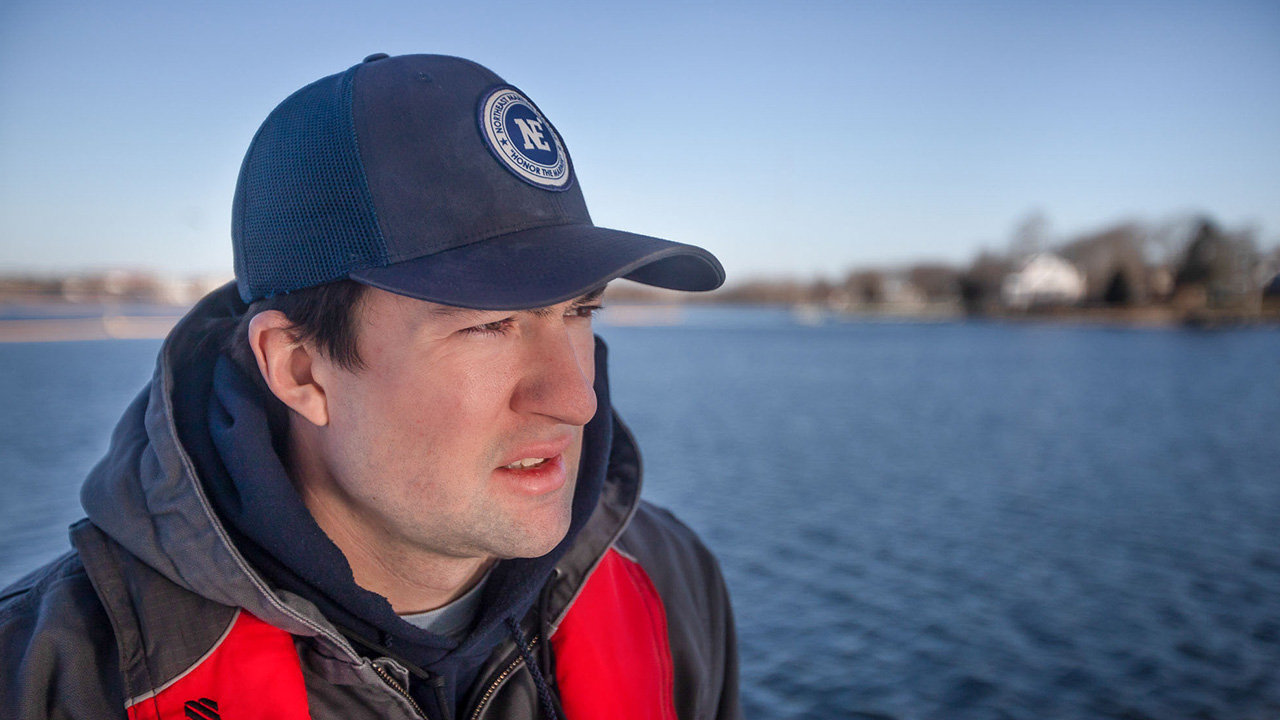
Capt. Morgan Gifford Dawicki is Chief Operating Officer, Adjunct Faculty, and Member of the Board of Trustees of Northeast Maritime Institute in And Candidate for U.S. Senate FAIRHAVEN, MASSACHUSETTS in exclusive interview to Saudi Magazine ALAM Al MWANI , He emphasizes Saudi is solidifying its position as a vital regional trading hub. As a critical ally to the United States, it is exciting to see the Kingdom growing its maritime according to 2030 vision adding “We are eager to bring our capacities into the Gulf region to help improve the talents and pool of professional mariners working in the region “
He pointed out in his interview that the technological transfo rmation of the maritime industry will also require transformation of maritime education.
The future of maritime education with (4IR)
As we approach 2026, how do you see the future of maritime education in light of the Fourth Industrial Revolution (4IR) and the introduction of artificial intelligence and digitization into all sector ?
The technological transformation of the maritime industry will also require transformation of maritime education. The greatest challenge with the adoption of these technologies is that we currently have an older population of professional mariners. The average age of a professional mariner in the United State is approximately fifty (50) years old. Most emerging technologies are not easily adopted and assimilated to by older populations.
This was true for the internet, smartphones, and social media and will pose a similar challenge in the professional maritime education space. New technology will be exciting for younger generations and will hopefully make the maritime profession more appealing to their technological appetites.
So, I would say that we need to ensure that these new technologies are adopted with a couple key considerations in mind. First, older mariners will continue to be the life blood of the maritime industry for the next ten to twenty (10-20) years. Second, these new technologies need to be marketed to younger generations as part of the excitement and appeal of choosing a career at sea.
Northeast Maritime Institute and Major technological leap
What is new or unique that this institute offers to its students in light of this major technological leap in this field, as you are the vice president of the institute and Faculty member in the Department of Nautical Science for the Associate Degree in Applied Science in Nautical Science?
Northeast Maritime Institute was an early adopter of online maritime education and training. In fact, when the Covid-19 pandemic arrived, we were ready to play a vital role in the continuity of global maritime trading commerce because our
Institution was ready to deliver education and training anywhere, anytime. Our online platform, Northeast Maritime
Online (NEMO), undergoes constant improvement by our dedicated faculty and staff.

In the coming months, we are excited to be launching an expanded toolkit of online software to manage, track, and train learners all over the world. These new tools, developed through our HALO Education Systems team that helped build our online exam platform HALO Exams, will transform how we deliver online education.
We will have much better data insights for every individual learner’s knowledge, understanding, and proficiencies beyond just the results that they get on their final exams.
Over the coming year we also have plans to integrate a lot more interactive simulation and visual aids into our curriculum which we believe will continue to improve learning outcomes.
The future of seafarers
What do you expect the future of seafarers in light of all these application of technology?
The human element can never be removed from anything that we do, whether it is maritime or any other industry. With the introduction of new technologies into shipping, I am confident that the traditional roles and manning of vessels will change. But we should also not forget that such changes have occurred several times across the course of our maritime history. Look no further than in the late 1800s when we switched from sails to steam. The roles of blacksmith, cooper, and sailmaker disappeared, but new roles such as steam engineer emerged. 
The human element will remain as vital as ever and I am confident that even with the introduction of new technologies, humans will continue to be the core component of vessel operations.
Maritime issues of concern to the U.S
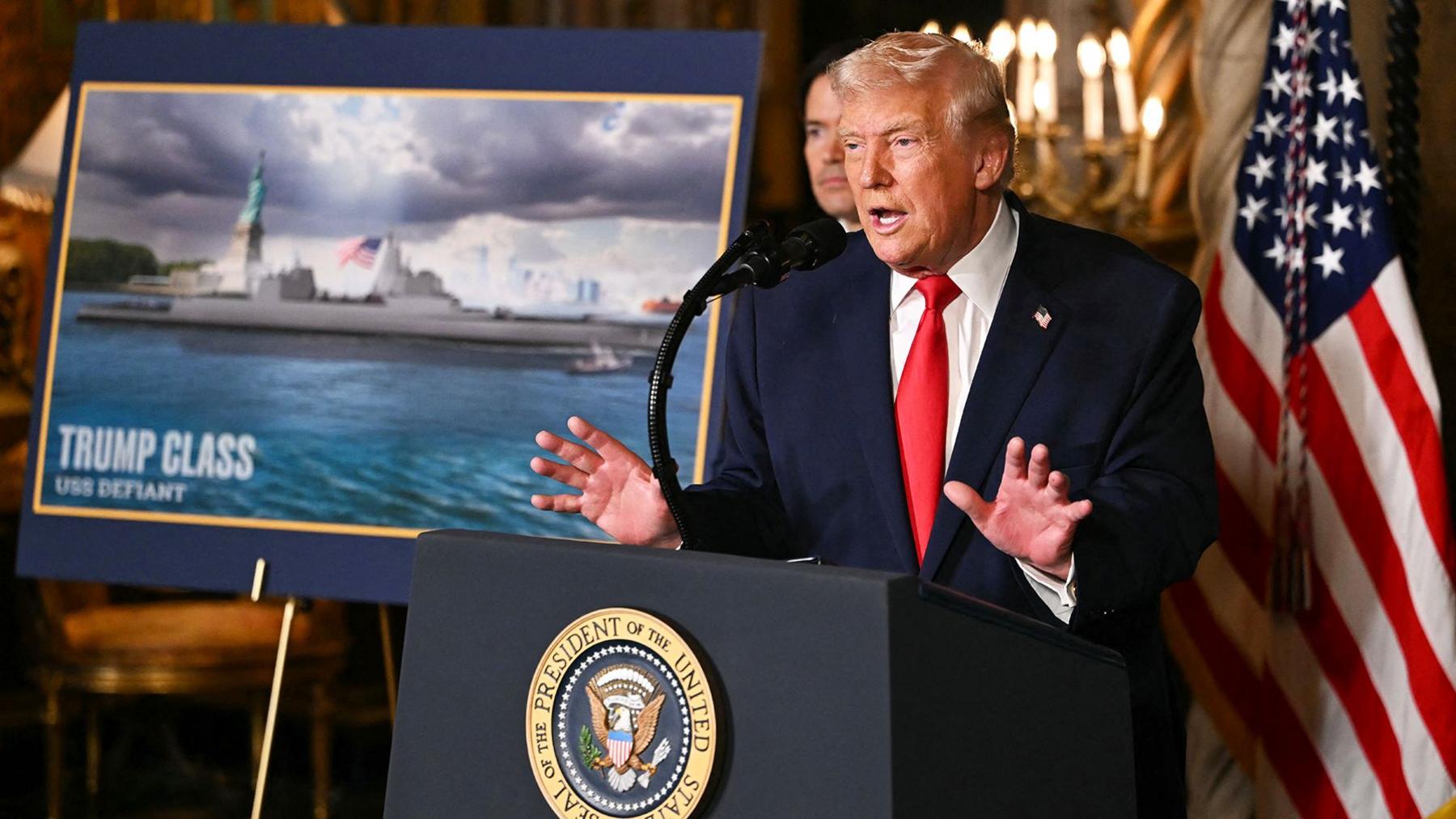
As a captain running for the U.S. Senate, would you consider maritime issues of concern to the U.S. administration? Do you agree with President Donald Trump's decisions, such as steps toward a globally competitive shipbuilding industry?
I commend the Trump administration for putting its weight and attention behind revitalizing America’s maritime Dominance There is no question that America is failing to complete in the global maritime context when it comes to international shipping.
Our domestic industry, protected by the Jones Act, is doing very well in my opinion. I agree that the United States needs more ship building capacity to promote national security interests
However, I do have concerns that some of the steps that have been taken VIS -A -VIS a competition with China, is helping China and hurting the United States. China developed its ship building capacity over the span of decades, and the expectation that the United States can build hundreds of ships over the next decade without monumental investment is farfetched, though that should not deter the United States from making the attempt and continued investments into its domestic shipbuilding capacity.
Like China, we need to build up our capacity over the next twenty (20) years and that will require the support of the White house and the Congress on a continual basis. Attempts to rebuild the US fleet have been made several times with little success, because it is hard to build things efficiently, cost effectively, and at scale if investments are lacking in seriousness and continuity.
I also view America’s maritime challenges through a much broader lens than just ship building. In 1975, the US owned share of world open-registry ships was 26%. This means that the United States had a degree of effective control over more than twenty-six percent (26%) of the global maritime industry, because this figure does not also include US-flag vessels.
Today, the United States owns roughly 2.6% of global commercial vessels that is a remarkable change in a relatively short time span. This brings to mind the notion that not only should we have more US-flag, US-built, and US-crewed vessels, but that we also need to gain more effective control of the total share of global tonnage.
Look at what Russia has done to trade oil internationally to bypass sanctions. It simply chose to compete in the market and bought tonnage. Russia did not see this as undermining its domestic maritime industry, but rather an extension of its overall global maritime influence and capacity
In 2019, we introduced the concept of a USVI flag, which would allow the United States and its allies to bring tonnage under
US sovereignty in order to promote resilient US supply chains. I believe firmly that in the context of great power competition, the United States needs to compete in any way possible, and that means growing our commercial maritime capacity anywhere possible. The USVI “Flag of Responsibility” concept is a no-brainer that can be implemented without undermining existing and proposed initiatives to expand the core US-flag. The main opponents to the proposal have been our domestic unions, who ironically would benefit because more ships mean more jobs.
The main opponents to the proposal have been our domestic unions, who ironically would benefit because more ships mean more jobs.
As a marine accident investigator
-As a marine accident investigator, what have you observed this year in terms of the number of marine accidents compared to previous years? Have their types changed? How do you assess or evaluate today's robberies, kidnappings, and pirate attacks?
I will try to approach this from a board perspective as to where see the greatest challenges. First, technology is both a blessing and a curse. It is a blessing because it gives mariners access to better tools and more information to safely navigate. It is accurse, because it creates complacency, overreliance, and cybersecurity vulnerability. GPS is easily spoofed, and therefore navigators relying solely on digital navigation tools are putting themselves and others at risk.
As it relates to marine casualties, it appears to me that in many cases the human element plays a predominant factor. Failure to enforce safety standards, lack of qualified maritime education and training, and human error are chiefly to blame when it comes to accidents.
When it comes to marine incidents, you are correct to highlight robberies, kidnappings, and piracy as being of concern, however I would say that to me the greatest concern is the growing capacity for small scale actors and terrorist groups to disrupt shipping via the adoption of cheap and asymmetric warfare tools such as drones. Shipping has always been an easy target for nations to create pressure points against each other, but it has seldom been a tool of disruption for terrorists seen at such a scale until recently. Protection of maritime chokepoints will need to improve by land and by sea in order to preserve continuity of trade well into the future.
IUU fishing

Source Image : Allianz
What do you mean by sanctions violations by members of the maritime community, of which you are one of the investigators? And what are the most important risks, of Unregulated Fishing and are they still increasing despite the measures taken by countries?
Sanctions are one of the most legitimate tools that countries have at their disposal to deal with criminals and bad actors.
However, we also see that sanctions have limitations in their effectiveness. I point to the sanctions on Russia resulting from the invasion of Ukraine, which have done little to stem the flow of oil revenue to Russia.
What we are witnessing today is a breakdown of the rules-based international order, which the United States is also unfortunately playing a role in. Rules work when everyone follows them, but because there is no international apparatus to enforce the rules, we are left dealing with the consequences of states and nations who choose to put their selfish interests ahead of our common humanity. We will all be worse off if the rules-based international order is not preserved.
IUU fishing is an example of where the international order breaks down, because individual nations have refused to hold illicit actors accountable. These actors are often multinational and embedded in broader illicit networks. Capacity building and growing multilateral frameworks are helping to combat IUU fishing one of the greatest difficulties in my mind is the failure to adopt STCW-F. Despite being introduced decades ago, STCW-F has not been entered into force yet. If this hurdle can be overcome it would bring a lot more transparency to global fishing and improve the quality standards.
The Commonwealth of Dominica International Ship Registry
If you can give us details of the Commonwealth of Dominica International Ship Registry?
The Dominica International Ship Registry was created as a “Flag of Responsibility” meaning that it is not a flag of convenience. There is confusion amongst some who say that all open registries are flags of convenience. That is not the case. The Dominica Maritime Registry was the first registry in the world to require proof of ultimate beneficial ownership, a remarkable commitment towards promoting sanctions compliance and choosing quality over profit, unlike most flags of convenience. The Dominica Registry boasts a large and growing fleet of private yachts and provides quality service and excellent prices to global ship owners.
The maritime transport and the geopolitical challenges
Are you optimistic about the recovery of the maritime transport sector in light of the geopolitical challenges facing the world?
There is a great book called “Oceans of Grain” and the author makes a point that international shipping defies and outlasts all nations and empires that try to impose their will upon it.
Today, the reality is that war is disrupting shipping, but wars do not last forever. Many are concerned with the size and scope of the “dark fleet” or “shadow fleet” as being evidence of international shipping falling apart, but to me this is simply evidence of a wartime economy at play.
The liberalized nature of international shipping is always a casualty to war. In my opinion the “dark fleet” could wither away quickly once the war in Ukraine is over, though it could become an inspired model for any future conflicts involving great powers.
If conflicts involving great powers continue, then nations wishing to enforce sanctions will need to decide whether engaging informal blockades or other escalatory measures are appropriate right now, there is little that can be done because to intervene. Strongly would be to risk widening the scope of the war, though now that Russia has sent drones into Polish air space, the Europeans may feel more confidence to try new tactics
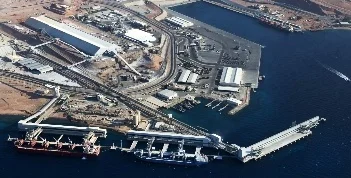
Saudi ports and Vision 2030
What is your opinion about what Saudi ports have achieved through Vision 2030 and the accomplishments made by three of its ports among the world’s top 100 ports, according to Lloyd's List?
It is exciting to see the Kingdom of Saudi Arabia diversifying its economy and developing a strong economic future according to 2030 vision Trade and commerce are the backbone of any great economy that has access to the ocean and ports are the vitals nodes that allow trade and commerce to occur. Saudi is solidifying its position as a vital regional trading hub. As a critical ally to the United States, it is exciting to see the Kingdom growing its maritime capacity and I am confident that it will continue to make great strides in growing its overall maritime capacity in the years to come.
Plans to expand outside the United States
Do you have plans to expand outside the United States and enter the Gulf market in general and the Saudi market in particular?
As you know, our passion is maritime education and training. With the development and deployment of our new digital systems which will come online in 2026, we are eager to bring our capacities into the Gulf region to help improve the talents and pool of professional mariners working in the region. There are opportunities for us to enter into the Saudi market in 2026and I am hoping that those opportunities are realized. We seethes as a great opportunity to deepen the maritime relationship between the United States and the Kingdom. In my view, industrial and cultural relationships provide the essence and foundation of any formal ties between nations. The relationship between the United States and the Kingdom will be critical for a strong, safe, and economically stable region well into the future and it would be an honor to play a role in furthering those ties.
Related : Faces : Dawicki : A real Maritime Policy expert running for the US Senate
https://www.googletagmanager.com/gtag/js?id=G-VQT6FQ9K2E">
#Capt. Morgan Gifford Dawicki , #ALAM Al MWANI , #US senate , #Maritime Education , #Northeast Maritime Institute , #Donald Trump , #Saudi ports ,#Northeast Maritime Institute , #Seafarers
You Might Also Like

15 October 2025

04 January 2026
Recommendation News

Shipping Lines
Maersk appoints Charles van der Steene as its new Managing Director for the IMEA region 24 January 2026
More
Opportunities : Crew for W2W Vessel (North Sea) 31 October 2025
Shipping Lines
MSC surpasses 7 Million TEU for the first time 03 November 2025
Marine Tech
U-Ming Marine wins 2026 Taiwan green procurement award for ESG measures 15 May 2026
Ports
LA Port sees 10 million-container year in sight with a steady October 19 November 2025