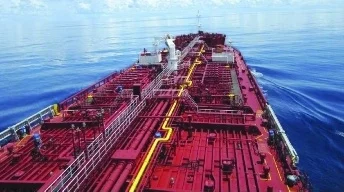
Is the seafaring profession on its way to disappearing? A WMU study reveals
A WMU study reveals harsh conditions may drive half of seafarers to leave their jobs in five years, raising alarms for maritime safety.
The World Maritime University (WMU) has published a major new report, In Search of a Sea-Life Balance in an Adverse Environment, shedding light on the realities of seafarers’ work, health and career intentions in today’s shipping industry. Commissioned by the Officers’ Union of International Seamen (OUIS), the study draws on responses from 4,372 seafarers representing 99 nationalities, making it one of the most comprehensive recent surveys of life and work at sea.
The findings point
The findings point to persistently long working hours, limited opportunities for rest and shore leave, and high levels of work-related stress. Around one third of respondents were assessed as experiencing severe or potentially dangerous stress levels, while mental well-being scores indicate that a significant proportion of seafarers may be at risk of mental health problems. U.S. seafarers, a specific focus of the study, reported particularly heavy workloads, extended work hours, and administrative and inspection pressure despite shorter contract lengths.
Raises concerns about the future sustainability of the maritime workforce.
The report also raises concerns about the future sustainability of the maritime workforce. Nearly half of all respondents indicated an intention to leave seafaring within the next five years, with poor mental health and dissatisfaction with working conditions emerging as key drivers. According to the authors, these trends pose serious risks to safety, operational resilience and long-term recruitment and retention across the global shipping industry.

Urgent action by regulators, shipowners and other stakeholders
Conducted by researchers at WMU with both academic and seafaring backgrounds, the study calls for urgent, coordinated action by regulators, shipowners and other stakeholders to reduce excessive workloads, address administrative burdens and place seafarers’ health and well-being at the centre of maritime policy and practice.
The maritime regulatory framework

“Prioritizing seafarers’ mental well-being and healthy working conditions is a necessity, as well as the way to ensure the long-term sustainability of the maritime workforce,” said WMU President, Maximo Q. Mejia, Jr. “The results of this report by WMU and OUIS indicate that the interlinked challenges of work-life balance, income security, and fatigue affect seafarers’ well-being. Meaningful improvement requires targeted, evidence-based policy-making and a genuine commitment to further integrating human-factors science within the maritime regulatory framework.”
Seafarers are still confronted with major challenges
Nick Bramley, OUIS Executive Director commented on the report saying, "This timely study shows that, however much the working world ashore may change, seafarers are still confronted with major challenges in achieving a healthy and socially sustainable work/life balance. From the numerous statements by working seafarers, it becomes evident that a major change is required if the industry is to not only retain those experienced seafarers in whose training so much time has been invested, but also to recruit the next generation. It is particularly interesting to note that although seafarers, and particularly officers, from a high-wage economy such as the USA, despite enjoying more leave, are still confronted with the same, i.e., more intense, on-board working time as colleagues from countries such as India or the Philippines.”
Related : India and ISWAN : MoU to strengthen the welfare a of seafarers
source :Press - Release
#(OUIS) #Nick Bramley #Maximo Q. Mejia, Jr.# WMU # U.S. seafarers #ٍ WMU study #Future of Seafarers
You Might Also Like


25 November 2025
Recommendation News

Marine News Room
IMO and EU launch "Future-Ready Shipping in Africa" project 02 December 2025
Ports
Port of Hamburg strengthens presence in the Gulf region 24 February 2026
Incidents
A suspected Russian "shadow fleet" tanker was seized in the North Sea 03 March 2026
Marine News Room
Exclusive with Gavin Allwright Secretary General of IWSA (3-3) 20 October 2025