The continuing use of tariffs against friend and foe alike combined with the uncertainty of when or if they will be implemented makes trade forecasting very difficult,
While there appear to be signs of a normalization in the U.S. container import flows and less impact from frontloading, the expectations are that volumes will continue to fall at least through the first four months of 2026. Uncertainty about the U.S.’s tariffs, policy issues, and geopolitical developments all continue to weigh on the outlook for trade.
The National Retail Federation and Descartes Global
Both the National Retail Federation and Descartes Global are pointing to a weak start to 2026 import volumes. Descartes calculates that January container volumes were at a total of 2.3 million TEU, which was up more than 90,000 TEU versus December, but down nearly seven percent versus a year ago. Last year, importers were believed to be frontloading ahead of the return of Donald Trump to the White House.

Global Port Tracker
Import volume at the nation’s major container ports is expected to see a significant year-over-year decline during the first half of 2026 as the impact of tariffs continues, according to the Global Port Tracker report released on Monday, Feb. 9 by the National Retail Federation and Hackett Associates.
Tariffs are a tax on U.S. businesses
Hackett Associates founder Ben Hackett said tariffs have brought “a global change in trade relations” that is affecting import volumes. “The continuing use of tariffs against friend and foe alike combined with the uncertainty of when or if they will be implemented makes trade forecasting very difficult,” Hackett said, adding that last year’s government shutdown is still making up-to-date government data difficult to come by. “Following essentially flat container import volumes in 2025 compared with 2024, we expect a decline during the first half of 2026 and likely longer.”
A Supreme Court decision
A Supreme Court decision could come at any time on the legality of the administration’s use of tariffs under the International Emergency Economic Powers Act. However, if the court strikes down the IEEPA tariffs, there are concerns that the administration could implement tariffs under other trade authorities.
Related : Argentina : Reduce export tariffs on aluminum and steel until the end of December
U.S. ports
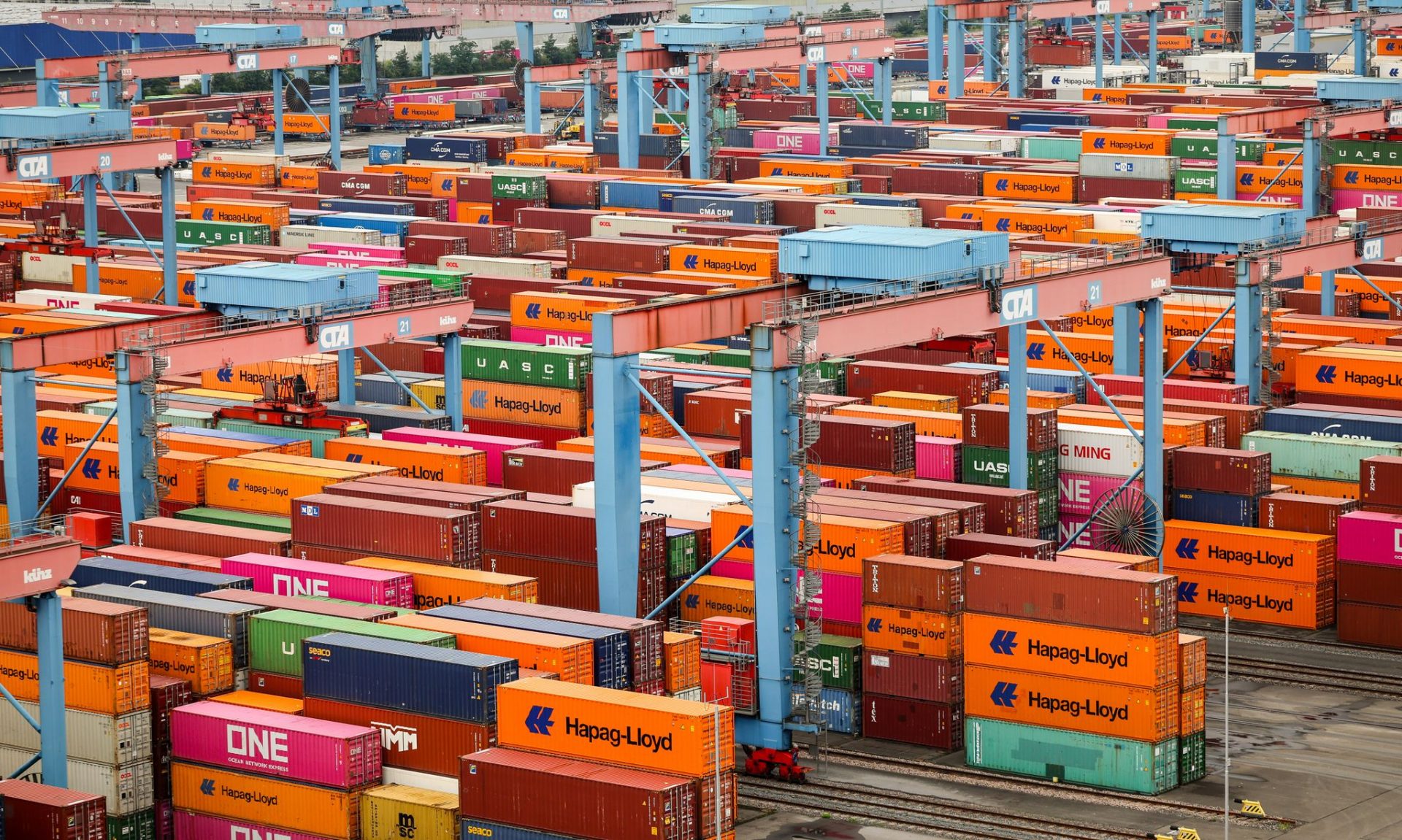
U.S. ports covered by Global Port Tracker handled 1.99 million Twenty-Foot Equivalent Units – one 20-foot container or its equivalent – in December, although the Ports of Houston and Charleston have not yet reported their data. That was down 1.7% from November and down 6.6% year over year. Ports have not yet reported numbers for January, but Global Port Tracker projected the month at 2.11 million TEU, which would be up from December ahead of Lunar New Year factory shutdowns in Asia but down 5.2% year over year.
Forecast of February
February is forecast at 1.97 million TEU, down 3.1% year over year; March at 1.89 million TEU, down 12%; April at 2.05 million TEU, down 7.1%; May at 2.13 million TEU, up 9.3%, and June at 2.12 million TEU, up 8%.
Those numbers would bring the first half of 2026 to 12.27 million TEU, down 2% from 12.53 million TEU during the same period in 2025. The May and June results show a year over year increase largely because of the sharp drop-off in imports during those months last year after “Liberation Day” tariffs announced in April 2025.
Global Port Tracker
Global Port Tracker, which is produced for NRF by Hackett Associates, provides historical data and forecasts for the U.S. ports of Los Angeles/Long Beach, Oakland, Seattle and Tacoma on the West Coast; New York/New Jersey, Port of Virginia, Charleston, Savannah, Port Everglades, Miami and Jacksonville on the East Coast, and Houston on the Gulf Coast.
Related : Trump cuts tariffs on beef, coffee and other foods as inflation concerns mount
Source :Agencies
#Global Port Tracker #US Ports #U.S.’s tariffs Hackett Associates#U.S. container import #Port of Virginia,
You Might Also Like

13 January 2026

Recommendation News
Incidents
Ship traffic has plummeted through Bab el-Mandeb after Houthi attacks on Saudi oil sites. 27 July 2026
Marine News Room
AMB Nancy Karigithu, Ex -candidate for the IMO Secretary-General, in an exclusive interview 01 April 2026
Marine Tech
IACS urges fuel rules before alternative-fuel ship orders scale up 11 September 2026
Shipping Lines
Two more tankers bound for India have set sail through the Strait of Hormuz. 24 March 2026
Incidents
Fire on the Rospomare B oil platform in the Adriatic 16 October 2025