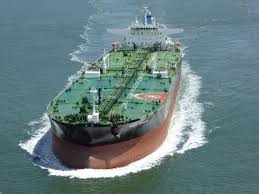
Should Washington attack Iran and Tehran retaliate by closing the Strait of Hormuz to shipping, war insurance premium rates could increase, resulting in higher shipping fees.
Rates for supertankers shipping crude on the key Middle East-to-China route have surged to a six-year high, as supply from the Persian Gulf to India has soared and traders rushed to ship ahead of a potential U.S. military campaign in Iran, according to industry data and sources reported Reuters. Meanwhile the price of ocean-going oil reached its highest level in six years this week, fueled by a surge in crude oil exports from the Middle East and increased trading activity
According to LSEG data,
According to LSEG data, the daily freight rate for a Very Large Crude Carrier (VLCC) capable of carrying up to two million barrels of oil from the Middle East to China has more than tripled since the beginning of the year, reaching $170,000 per day in recent days. This is the highest level recorded since April 2020.
As statistics from the analytics firm Kpler show, crude oil exports from the Middle East surpassed 19 million barrels per day in February, marking the highest level since April 2020. This increase was driven by Saudi Arabia, the United Arab Emirates, and Iran, while India's demand rose after reducing imports from Russia.
VLCC freight rates
"VLCC freight rates have seen many positive fundamental factors. Starting with the seaborne transport of Venezuelan barrels on 'legitimate' vessels rather than shadow fleet vessels, increased OPEC+ production, and sustained refiner demand for crude oil — particularly from India, which has shifted from Russian to Middle Eastern barrels — these factors have contributed to the positive trend," said June Goh, senior analyst at Sparta Commodities. Referring to large tankers smaller than VLCCs,

Suezmax and Aframax markets
She added, "The Suezmax and Aframax markets will soon feel the knock-on effects on the crude oil transportation markets. emphasized June Goh, a senior analyst at Sparta Commodities. "The Suezmax and Aframax markets will soon experience spillover effects from the dirty freight market,"she added This refers to crude oil and fuel oil that are transported in smaller tankers than Very Large Crude Carriers (VLCCs).
The daily rate
The daily rate for renting a Very Large Crude Carrier (VLCC), which can carry up to two million barrels of crude oil, has increased to as much as $170,000, tripling since the beginning of 2026. A number of factors have contributed to the surge, most notably increased demand from India for Middle Eastern crude. New Delhi is seeking to replace a significant portion of the Russian barrels it has purchased over the past three years.
Retaliate by closing the Strait of Hormuz
Analysts confirmed this. Should Washington attack Iran and Tehran retaliate by closing the Strait of Hormuz to shipping, war insurance premium rates could increase, resulting in higher shipping fees. The Strait of Hormuz is a major shipping lane for Persian Gulf oil exports.
Notably, the global oil tanker fleet is shrinking due to the decommissioning of older ships that transported oil from Iran and Russia in recent years. The United States and some European countries have cracked down on these tankers, reducing available cargo capacity.
Related : BIMCO: Crude tanker order book reaches nine-year high

South Korean shipping company Sinokor
Meanwhile, the South Korean shipping company Sinokor has become one of the most active purchasers of Very Large Crude Carriers (VLCCs) in recent months. The firm currently controls nearly 80 vessels on the spot market, which has reduced the overall supply of these tankers and enabled shipowners to raise freight rates. Sinokor

Sinokor, a shipping company rumored to be joining forces with Aponte's MSC, is expected to have a fleet of over 120 vessels by the end of March. Maritime analytics firm Signal Group reports that Sinokor became the largest commercial operator in the VLCC segment when it reached the 88-vessel mark. Sinokor now represents approximately 24% of the spot-trading fleet and 12% of the total global VLCC fleet. These figures represent an unprecedented level of concentration for a single trading entity in this market, say analysts at Signal Group.
On the other hand Shipbroker Clarksons expects higher war risk insurance premiums, as shipowners will be charging a premium to bring vessels to the region and charterers will be accelerating bookings to reduce scheduling uncertainty.
Related : US Impose sanctions 29 vessels allegedly linked to Iranian oil
Source : Agencies
#supertankers shipping crude #Iran #Strait of Hormuz # June Goh #Suezmax and Aframax markets # Sinokor #VLCC rates #oil tanker rates
You Might Also Like

Recommendation News

Incidents
In mysterious circumstances : Two adventurous sailors found dead on yacht off South Africa 06 December 2025
Incidents
Polar Star US icebreaker frees Scenic Eclipse II from Antarctic pack ice 25 January 2026
Shipping Lines
Baltic Exchange hosts annual forum during Singapore Week 19 October 2025
Marine News Room
Philippa Charlton : Appointed as Director of Maritime London 22 December 2025
Shipping Lines
Tanker prices rise after latest US sanctions against Russia 19 October 2025