
The transportation of both green and roasted coffee is now more expensive and unstable. Consequently, there is a risk of further deterioration.
The International Coffee Organization cautions that geopolitical tensions in the Middle East could generate considerable knock-on consequences across global commodity markets, and coffee is not an exception. Around one-fifth of the world's oil supply passes through the Strait of Hormuz, making it one of the most critical chokepoints in global trade. Since March, shipping through the strait has decreased, causing higher oil prices, increased fuel costs, and greater volatility in freight markets.
Increasingly challenging for Italian coffee roasting companies
On the other hand, the Middle East crisis, combined with various production issues, is making life increasingly challenging for Italian coffee roasting companies. Michele Monzini, Vice President of the Italian Coffee Committee at Unione Italiana Food, addressed this issue in an interview with Comunicaffé. A jump of more than 63% saw Brent crude prices increase from $72.29 per barrel on 27 February to a high of $118.03 per barrel on 29 April. This directly impacts coffee transport costs, inland logistics, and fertilizer prices, all of which are central to production and export economics.
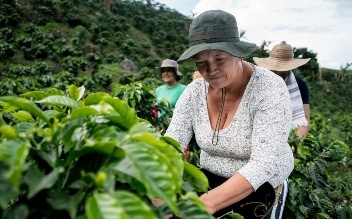
The Middle East is a region where coffee consumption is on the rise.
An increasingly important coffee-consuming region has been seen in the Middle East, with strong demand growth across Gulf countries over the past two decades. In 2024, the region imported 8.6 million bags of coffee, accounting for 4.5% of the world's total imports. Any regional instability could impact import demand, port operations, and re-export hubs, such as those in the United Arab Emirates, which play a strategic role in regional distribution and the trade of speciality coffee.
Related : The impact of the Strait of Hormuz closure on global maritime traffic
Rising tensions in the Red Sea and the Strait of Hormuz.
Logistics times and costs to Europe have increased due to rising tensions in the Red Sea and the Strait of Hormuz. On top of this, the sector is now also dealing with the scarcity of raw materials from Brazil and Vietnam, countries that account for over half of global production and have experienced "extreme climate events." Reduced green coffee availability is also being felt in Colombia and Indonesia. However, Monzini explained that the prospect of abundant harvests in Brazil, Vietnam, and Indonesia in 2026 is helping to reduce price volatility.
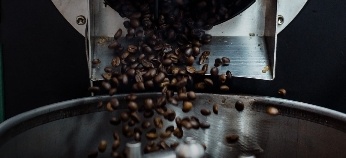
Fertilizers are considered to be essential for coffee production.
Fertilizers are considered to be essential for coffee production. Between one quarter and one third of the global fertiliser trade, including up to one third of nitrogen fertilisers (urea), transits through the Strait of Hormuz. The Gulf region is a major producer of fertilisers, with the Qatar Fertiliser Company (QAFCO) being the world's largest urea supplier, accounting for 14% of global urea.
The price of urea fertiliser increased
Consequently, the price of urea fertiliser increased from $465.45 to $684.75 per tonne over the same period – a rise of 47%. For coffee-producing countries such as Brazil and Vietnam, fertilisers account for a significant proportion of production costs: 23% in Brazil and 26% in Vietnam. Smallholders, who operate on thin margins, are the most vulnerable to such price hikes.
Exploring new markets
The sector is still looking to spread its wings by exploring new markets, with a keen interest in Colombia, Honduras, Uganda, India, and Indonesia. The critical issues affecting maritime transport, such as the recent blockades of the Red Sea and the Strait of Hormuz, have made longer-term planning necessary, with supply horizons of several months and improved inventory management.
Requires more structured planning
Monzini emphasised that the Hormuz crisis is impacting the entire supply chain due to rising energy costs. These costs affect product transformation and distribution logistics, production itself (due to the rising cost of fertilisers), and final processing, such as packaging.
The transportation of both green and roasted coffee is now significantly more expensive and unstable. This poses a risk of further deterioration. In response, companies are diversifying ports, carriers, and logistics hubs to increase supply chain flexibility. However, this increases management complexity and requires more structured planning than in the past.
#Michele Monzini #International Coffee Organization #Middle East # Italian Coffee Committee #Strait of Hormuz #distribution logistics #(QAFCO#coffee-producing #Fertilizers
You Might Also Like
Recommendation News

Marine Tech
UK P&I Club : Ship’s Biofouling Compliance-Regional Standards 15 October 2025
Marine News Room
Gavin Allwright writes : Reflections from Asia 18 December 2025
Yachts&Cruises
A €229 million auction has been announced for the sale of five Moby ferries. 06 November 2025
Seafarers
Good Deeds Sailing Duo Launch Sailorsbay App 15 October 2025
Shipping Lines
MSC submits an offer and joins Hapag Lloyd in the race for Zim 16 December 2025