In times of war, Saudi Arabia is taking on an increasingly significant role as a logistics hub for GCC countries.
Rising geopolitical tensions in the Arabian Gulf have caused disruptions to vital shipping routes through the Strait of Hormuz. Saudi Arabia's ports have emerged as an alternative artery. This is true not only for the region but for global trade. With their advanced infrastructure and high operational capacity, these ports are increasingly recognized as an international logistics hub capable of safeguarding energy flows and supply chains during a period of unprecedented security challenges to the global economy.
The addition of two new maritime shipping services
Emphasizing its growing logistical significance, the Saudi Ports Authority (Mawani) recently announced the addition of two new maritime shipping services at the Port of Jeddah Islamic in collaboration with the shipping companies Maersk and Hapag-Lloyd. This development strengthens the country's maritime connectivity with global markets. The new routes include Maersk’s AE19 service and Hapag-Lloyd’s SE4 service. Each has a capacity of approximately 17,000 twenty-foot equivalent units (TEUs). These services will significantly boost the port’s operational efficiency and competitive position.
These routes connect Jeddah Islamic Port to nine major regional and international ports
These routes will connect Jeddah Islamic Port to nine major regional and international ports, including Tianjin Xingang, Qingdao, Ningbo, and Shanghai in China; Busan in South Korea; Tanjung Pelepas in Malaysia; and Singapore. It's also got these key hubs in the Mediterranean, and routes that go all the way to South Africa via the Cape of Good Hope. So, it's like this super flexible network for moving cargo around the world.
Aramco revealed a significant shift in its export strategy
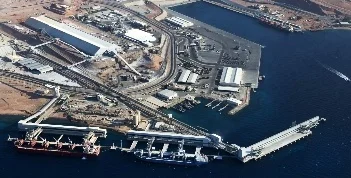
Recently, Saudi energy giant Saudi Aramco revealed a significant shift in its export strategy, confirming that some of its crude oil exports are now being redirected to the Port of Yanbu on the Red Sea coast. Reuters reports that Aramco has told its Arab Light crude buyers that shipments will be loaded from Yanbu instead of from Gulf terminals. This decision reflects Aramco's growing confidence in the capacity of Red Sea ports to safely and efficiently handle large-scale oil flows, away from the volatility of Gulf shipping lanes.

Related : ( Mawani ):Hosting the 23rd meeting of the Riyadh (MOU) on Port State Control,
An integrated port network
An integrated port network managed by the Saudi Ports Authority is the foundation of Saudi Arabia's strategic shift. This network includes 290 berths equipped with advanced technology. These ports serve as vital logistics gateways and arteries, ensuring the steady flow of oil and essential goods.
Flexibility in responding to regional or global disruptions.
The Kingdom’s geographic location linking Asia, Europe, and Africa amplifies the importance of its port system, offering Saudi Arabia significant flexibility in responding to regional or global disruptions. Beyond operational efficiency, the port system has also become essential for attracting foreign investment. By presenting itself as a reliable and sustainable hub for global trade, Saudi Arabia aims to ensure secure maritime traffic and more resilient supply chains amid geopolitical uncertainty.
One of the world’s busiest maritime corridors
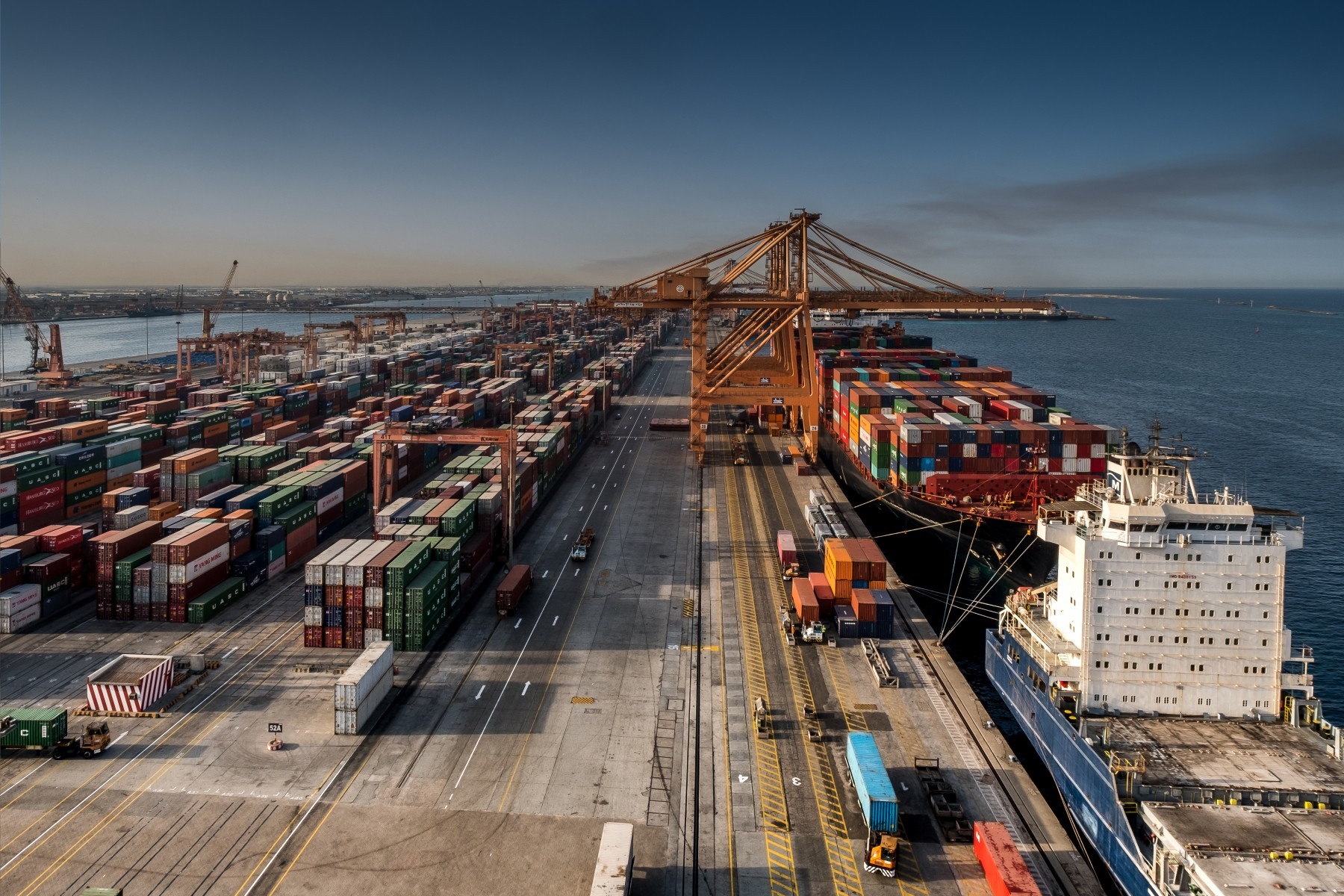
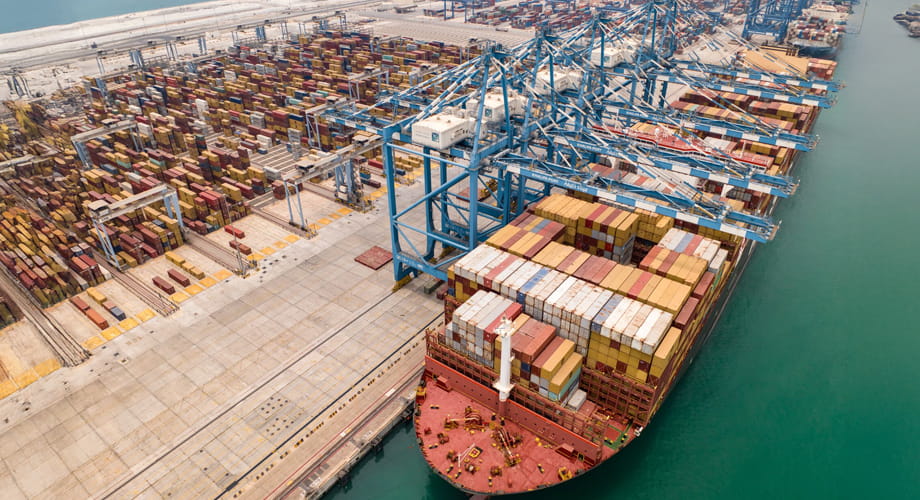
The kingdom's principal commercial gateway and the largest hub port on the Red Sea is still Jeddah Islamic Port. Located along one of the world’s busiest maritime corridors, the port is a vital link in the trade between Asia, Europe, and Africa. Spanning approximately 12.5 square kilometers, the port boasts 62 berths and two specialized container terminals, each capable of accommodating vessels carrying up to 19,800 TEUs. The port handles over 130 million tons of cargo each year, accounting for approximately 75 percent of Saudi Arabia’s maritime trade.
Key terminals
Key terminals include the Red Sea Gateway Terminal and the South Container Terminal, both of which are undergoing continuous expansion with state-of-the-art smart systems and automation to enhance efficiency in cargo handling, storage, customs clearance, and ship services. The port has direct links to ports in Europe, Asia, and Africa
It is one of the world’s most advanced transshipment hubs.
Located in King Abdullah Economic City north of Jeddah, King Abdullah Port has emerged as one of the world’s most advanced transshipment hubs. Spanning 20 square kilometers within a broader economic zone of 168 square kilometers, the port serves as a key node on the east-west trade route, linking Asia, Europe, and Africa. With an annual container handling capacity of 25 million TEUs, the port ranks among the largest container ports globally. The facility is equipped with high-capacity cranes, smart gate systems, and automated guided vehicles, and is designed to efficiently handle the world’s largest cargo ships.

With an annual handling capacity of 210 million tons, King Fahd Industrial Port in Yanbu is the largest facility on the Red Sea for loading crude oil and petrochemical products
Yanbu Commercial Port,
Yanbu Commercial Port, one of the oldest ports on Saudi Arabia's western coast, represents the kingdom's second maritime gateway for pilgrims after Jeddah. It was officially opened in 1965 during the reign of King Faisal and lies between Duba Port to the north and the industrial and Jeddah ports to the south. Modern road networks link the port to Medina and Mecca, strengthening its strategic role within the Red Sea port system.
For Saudi energy exports, Yanbu represents a strategic safety valve. Through the Red Sea, the port can export four to five million barrels of oil per day, ensuring significant oil flows even if shipping through the Strait of Hormuz is disrupted.
.As a northwestern gateway, Duba Port handles both passengers and cargo, with an annual capacity of about 10 million tons Jazan Port, located in southern Saudi Arabia, has the third-highest design capacity of any port on the Saudi Red Sea coast. It is also the kingdom’s main entry point for livestock imports from the Horn of Africa, sitting about 266 miles from the Bab el-Mandeb Strait.
.Ras Al-Khair Port
Opened in 2016, Ras Al-Khair Port is Saudi Arabia’s newest industrial port. It serves Ras Al-Khair Industrial City. The port is connected to mining areas via a dedicated railway and exports industrial and mineral products to global markets. The port has 14 berths and supports over 100 industrial projects operating in the city.
.Al-Khafji Port, located on the eastern coast of Saudi Arabia's Eastern Province, primarily functions as an oil export facility. It exported its first crude shipment in 1960. The port can simultaneously accommodate three tankers—two for loading and one for unloading—while six additional vessels can wait offshore and up to 30 smaller vessels can dock at its berths.
National development strategy
Saudi Arabia’s national development strategy aligns closely with these expansions and international partnerships. The Saudi Ports Authority has invested over 27 billion riyals (approximately $7.2 billion) to upgrade major port infrastructure and establish 20 integrated global logistics zones. The scope of these efforts extends beyond cargo handling. Technological and structural modernization has enabled Saudi ports to receive the world’s largest container ships, which have a capacity of up to 24,000 TEUs. This development reinforces the kingdom’s ambition to become a global logistics hub connecting three continents.
Related : Jeddah Port now offers Maersk and Hapag-Lloyd services,
Investments in infrastructure
.Investments in infrastructure that reduces reliance on the Strait of Hormuz have been made by Saudi Arabia for a long time. One key component is the East-West Pipeline, also known as the Petroline Pipeline, which transports oil from the kingdom’s eastern oil fields to the Red Sea coast. The pipeline has an initial capacity of about 5 million barrels per day, which can be increased to roughly 7 million barrels per day during emergencies.
Positive implications
The increasing emphasis on Red Sea ports could also have positive implications for Saudi Arabia's non-oil trade. If the Red Sea becomes a preferred trade corridor due to its safety and stability, the volume of container and cargo traffic through ports such as Jeddah Islamic Port and King Abdullah Port could increase substantially.
An expanded re-export activity could be led to by this shift, as distribution centers for Asian goods heading to the Middle East and Africa are what Saudi ports are becoming. It may also stimulate growth in logistics services, such as storage, handling, and distribution, while increasing demand for trucking and inland transport across the kingdom.
Saudi Arabia's port infrastructure improves
Additionally, ports that experience higher commercial activity often attract related industries, including light manufacturing, assembly operations, and regional distribution centers. These developments could strengthen the economic zones surrounding Saudi ports.
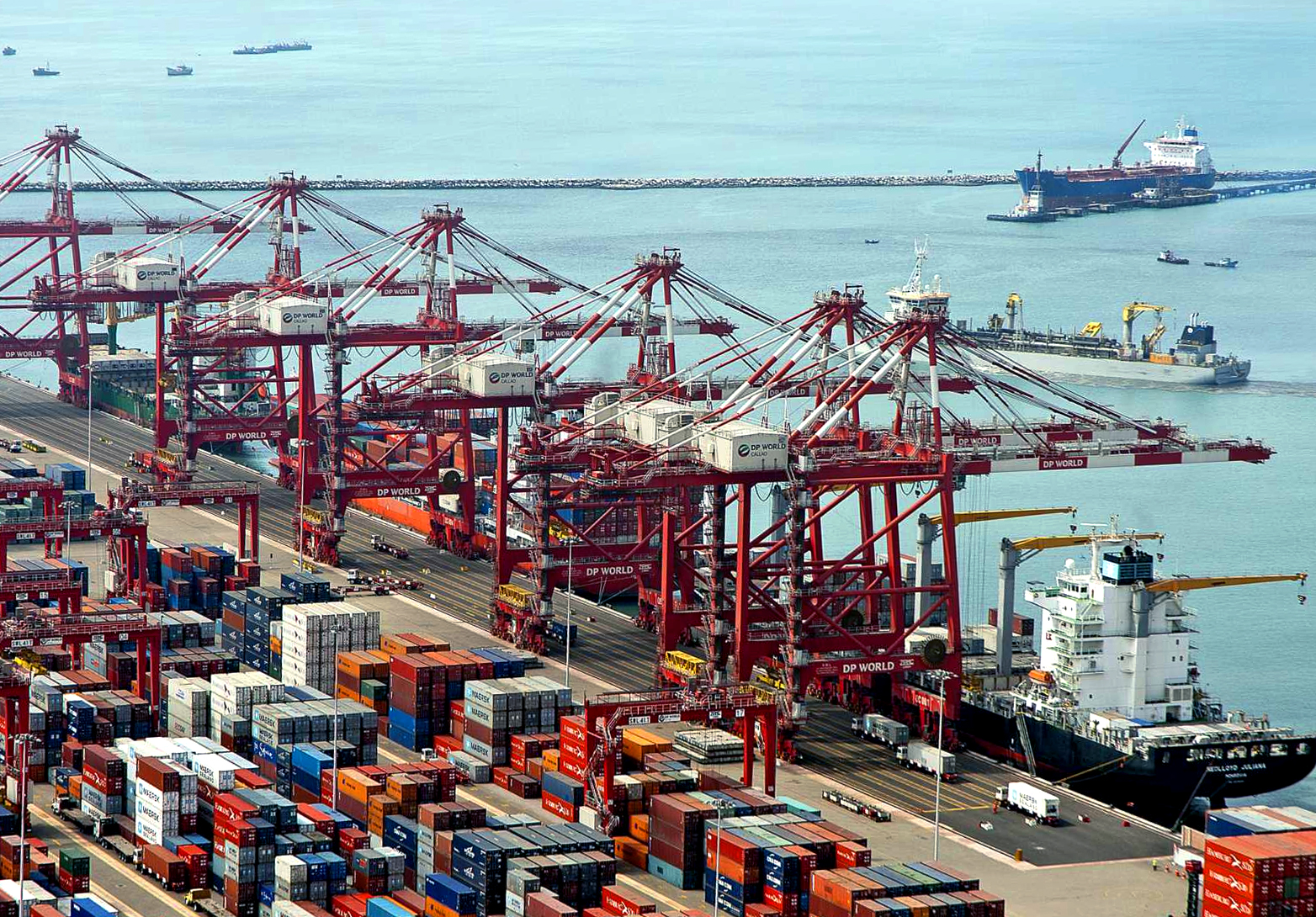
As Saudi Arabia's port infrastructure improves and its connections to road and rail networks expand, the country may increasingly serve as a major transit hub for goods entering the region rather than simply a destination market. A broader shift in global trade toward the Red Sea could accelerate the expansion of the kingdom’s non-oil trade, supporting its ambition to become a global logistics hub linking three continents.
Surcharges for certain voyages.
However, redirecting oil shipments may affect transportation costs. Cargo bound for Asia from the Red Sea must travel farther than cargo departing from the Gulf, which increases fuel consumption and operating costs. Higher demand at Red Sea ports could also raise service fees or extend vessel waiting times if traffic increases.
Saudi Arabia’s advanced infrastructure of pipeline network
The cost of transporting oil is also influenced by marine insurance. Insurers often reassess risk levels when shipping routes change, which can result in adjusted premiums or surcharges for certain voyages.
Notwithstanding these factors, meanwhile the challenges remain manageable. Saudi Arabia’s advanced infrastructure and pipeline network enable the quick transport of crude oil to large-scale loading facilities that can handle significant volumes. Continued upgrades to port capacity, improved vessel traffic management, and long-term agreements with shipping and insurance companies are also effective cost-control tools.
Logistics costs
For now, small increases in logistics costs might be worth it if they help us be more flexible in our strategy. He said that ensuring uninterrupted energy supplies to global markets is ultimately more valuable than marginal differences in shipping costs in a world where energy security remains paramount.
These ports, designed with advanced infrastructure and high operational capacity, are increasingly seen as an international logistics hub capable of safeguarding energy flows and supply chains at a time when the global economy faces unprecedented security challenges.
The addition of two new maritime shipping services
In a move that highlights their growing logistical importance, the Saudi Ports Authority (Mawani) recently announced the addition of two new maritime shipping services at the Jeddah Islamic Port, in partnership with the shipping giants Maersk and Hapag-Lloyd.
The markets for fresh fruits and vegetables in Saudi Arabia and the Gulf region are still very uncertain because of the ongoing fighting in the area. The instability has caused major disruptions to global shipping routes, with many vessels being rerouted and others lacking clarity on their final destinations. Despite these challenges, Saudi Arabia currently has sufficient stock to stabilize the market in the short term, although operations remain far from normal and the supply chain remains under pressure.
Immediately after the war broke out,
Immediately after the war broke out, sharp price hikes occurred. "The sharpest immediate impact has been felt in many items supplied from China, Pakistan, India, Australia, Thailand, and South Africa. South Africa plays a particularly critical role in supplying the Gulf with fresh produce year-round, especially stone fruits, pome fruits, grapes, and citrus. It is one of the few countries that consistently balances market demand with a stable and predictable supply. Therefore, any disruption in South African shipments has a direct effect on pricing, availability, and market stability
The foundation of the fresh goods distribution system is provided by ٍShipping Lines Many have temporarily suspended service to destinations in the Middle East, while others have introduced war-risk surcharges that increase freight costs. These additional charges are expected to influence market prices further
Modified the supply chains
Companies like Global Star, which import fresh goods, swiftly modified their supply chains, finding other routes to keep their products flowing. Saudi Arabia continues to receive shipments through Jeddah Islamic Port and King Abdullah Port without interruption. In the wider Gulf region, alternative entry points include Sohar Port in Oman and Khorfakkan Port in the UAE. However, if the conflict persists, temporary shortages cannot be ruled out. Nevertheless, we remain optimistic that alternative logistics solutions can be identified and implemented to ensure continuous supply.
#Sohar Port #Saudi Ports #Port of Yanbu #Maersk #King Abdullah Port #Ras Al-Khair Port#Jeddah Islamic Port#Mawani #GCC countries #logistics hub #Arabian Gulf # international commerce
You Might Also Like
13 February 2026

14 October 2025
Recommendation News
Shipping Lines
The Strait of Hormuz is open to ships that are bound for China (and India) 12 March 2026
Shipping Lines
Egypt ships LNG cargo from Idku plant to Canada 13 January 2026
Marine Tech
IMO has released the first regulatory framework for autonomous vessels. 07 June 2026
Shipping Lines
3M Shipping purchased one tanker and Fratelli d'Amico Armatori sold another. 25 March 2026
Yachts&Cruises
Majesty 100 Terrace First Hull Handed Over 08 October 2025