Could oil be transported by trucks across the UAE to Oman?
By : Anatolii Viliugin
·Master Mariner
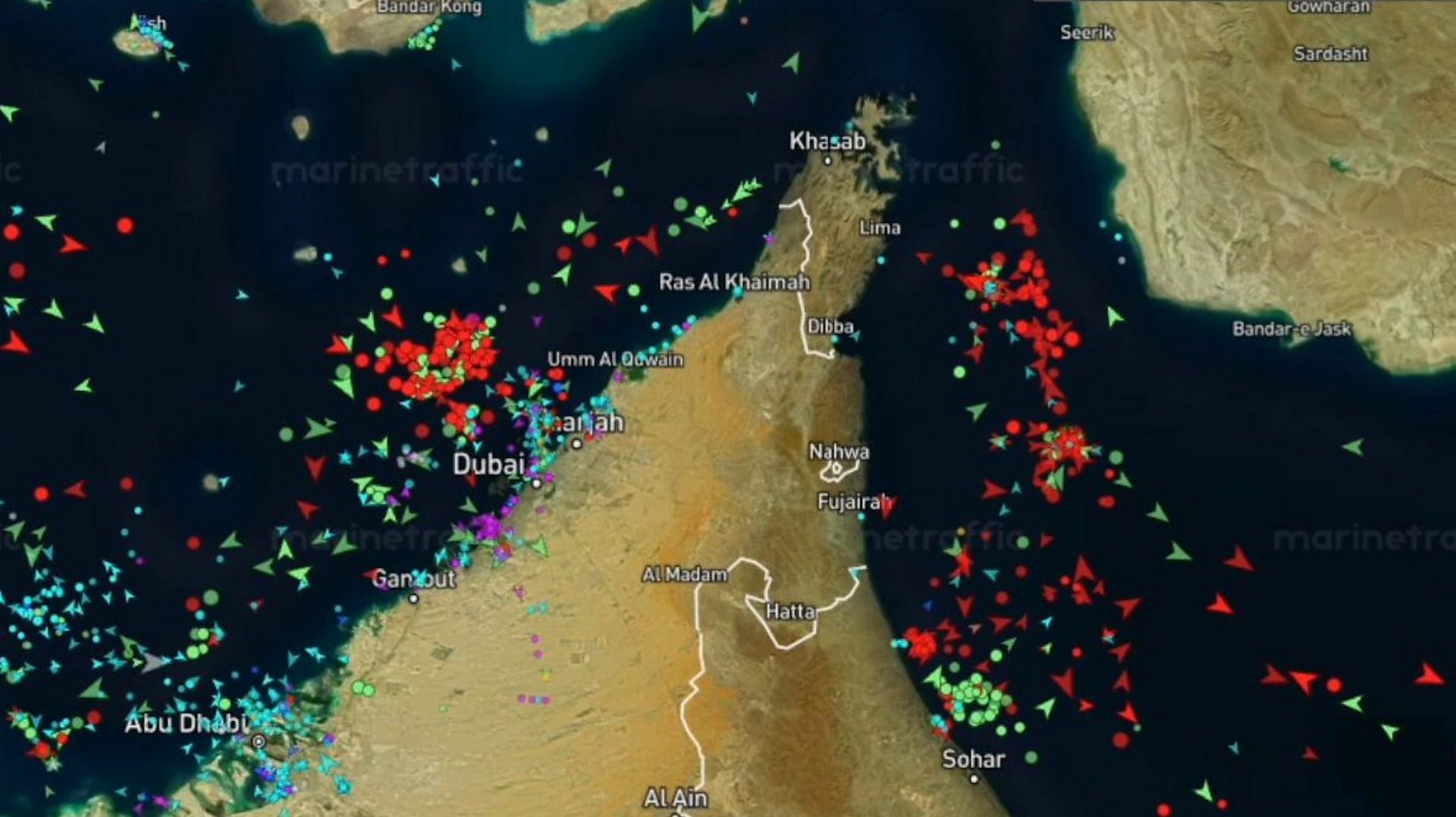
Recently, an interesting graphic has been circulating on social media. It suggests that if the Strait of Hormuz were closed, oil tankers could unload crude oil on one side of the United Arab Emirates, then trucks would transport the oil by road to ports in Oman, where it would be loaded onto ships again. At first glance, this might seem like a creative solution. However, from a supply chain perspective, this idea is not practical. Oil and other bulk commodities are transported in extremely large volumes. For example, a VLCC (Very Large Crude Carrier) tanker can carry around 2 million barrels of oil. This is one of the main reasons why maritime transport plays a dominant role in global trade: massive carrying capacity, low cost per barrel, and continuous connectivity between ports.
Let’s briefly analyze this idea from a logistics perspective.

1️⃣ The scale problem
A typical oil tanker truck can carry around 200 barrels of oil.
To replace the cargo of one VLCC tanker (about 2 million barrels), roughly 10,000 trucks would be required.
However, about 17–20 million barrels of oil pass through the Strait of Hormuz every day. Moving such volumes by trucks would require tens of thousands of vehicles daily, massive storage terminals, and an extensive logistics network.
2️⃣ Infrastructure reality
Oil terminals are designed to transfer large volumes directly from ships through pipeline systems. These facilities rely on deep-water berths, powerful pumping stations, and large tank farms. A system where oil is unloaded from ships into trucks and then reloaded onto ships would require building an entirely new logistics infrastructure.
3️⃣ The desert factor
The proposed route mostly crosses desert areas. Extremely high temperatures, sand and dust exposure, and limited heavy logistics infrastructure would create major operational challenges for thousands of tanker trucks operating continuously.
4️⃣ Cost comparison (approximate)
Pipeline: $1–2 per barrel
Oil tanker (maritime): $1–3 per barrel
Road transport (trucks): $10–25+ per barrel
As we can see, road transport is by far the most expensive option for moving bulk oil. This is why energy supply chains address strategic chokepoints not by relying on trucks, but mainly through alternative ports and pipeline routes.
You Might Also Like

12 January 2026
10 April 2026
Recommendation News

Marine News Room
Raul Villa Caro : Navy’s training ship-“Juan Sebastián de Elcano” 28 October 2025
Marine Cultures
With Sakhraoui Tarek Caricaturiste 17 January 2026
Seafarers
ITF issued a warning regarding MV Hondius and hantavirus 11 May 2026
Shipping Lines
ONE reported a profit of $338 million in FY2025 on $16.62 billion in revenue. 30 April 2026
Marine Tech
CESMA calls for new standards for ship documentation and SOLAS 14 October 2025