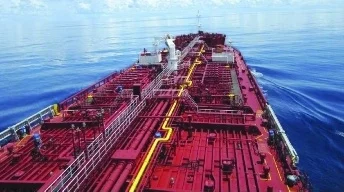
Modern warships require high power to achieve top operating speeds, even though they will spend most of their active life sailing at economical speeds.
By : Raul Villa Caro
Secretario de la Fundación “EXPONAV”
Throughout history, the armed forces of different countries were responsible for the design, construction, maintenance, and operation of their ships. However, the introduction of military vessel classification in the last three decades has changed this concept. The involvement of naval services in the pre-contract stages of shipbuilding has led to improvements in the final product.
The German Navy began developing standards for different types of military vessels 35 years ago. These standards are known as the 'Naval Ship Rules'. Although they are different, these rules, which classify and certify compliance with conventions, have clear parallels with their counterparts for civilian vessels.
The navies' own standards and specific circumstances
However, for this model to work, the Joint Chiefs of Staff needed first-hand knowledge of the navies' own standards and specific circumstances. Therefore, the decision was made to unify criteria among NATO countries, resulting in the creation of the Naval Ship Code (NSC). Equivalent to the civilian SOLAS standard, this code is based on the objectives, missions, and operational requirements of military vessels, setting out the minimum safety requirements for the design of warships.
LR is the oldest classification society
Lloyd's Register (LR), a classification society, published its first regulations for civilian vessels in 1764. These regulations informed insurance agents and shipowners of the condition of the ships they insured and chartered. LR is the oldest classification society and originated in a London coffee house called Lloyd's Coffee House, which was frequented by shipowners, shippers, seamen, charterers, insurers, and others. Other classification societies later emerged, including Bureau Veritas (BV), which was founded in Belgium in 1828 and is a founding member of the International Association of Classification Societies, as well as RINA (1861), ABS (1862), and DNV (1864).
More than fifty classification societies worldwide
Although there are more than fifty classification societies worldwide, only the twelve most important belong to the International Association of Classification Societies (IACS). Headquartered in London, the IACS is an advisory body to the IMO (a UN agency) and is the only non-governmental organisation authorised to develop and apply rules with observer status. Its current members are: LR, BV, ABS (USA), CCS (China), CRS (Croatia), DNV (Norway), IR Class (India), KR (South Korea), NKK (Japan), PRS (Poland), RINA (Italy), and TL (Turkey)
The Spanish Maritime Administration
At the national level, it should be noted that the Spanish Maritime Administration is responsible for recognising "Authorised Organisations (AOs)" that have already been recognised by the EC. Through the DGMM (Directorate General of the Merchant Marine), this body authorises these organisations to carry out ship surveys on behalf of the Maritime Administration. The AOs authorised to carry out ship surveys on behalf of the Administration in Spain, in accordance with Royal Decree 877/2011 (list updated in 2022), are the following: BV, CCS, DNV, KR, LR, and RINA.
Classification societies and military vessels
After verifying compliance with their regulations, classification societies grant vessels seeking classification a 'class certificate', which certifies their classification by a specific society and its scope. In the case of military vessels, the missions that these ships are designed to perform are embodied in their capabilities. What is a business objective for a merchant ship is a mission for a warship.
Conventions overseen
Conventions overseen by the International Maritime Organisation (IMO), such as SOLAS and MARPOL, exempt warships from compliance. However, this does not mean that navies do not work to ensure the safety of their vessels, crews and the environment. Therefore, the safety of a military vessel is not simply a matter of individual state criteria. Cooperation has been initiated between Classification Societies... and NATO in the first decade of this century, resulting in a code: the 'Naval Ship Code (NSC)'.
Regulations for Military Vessels
The regulations for warships cover the same aspects as those for civilian vessels, but with some additional features. In general, they contain rules on matters such as general arrangement and compartmentalisation, structural strength, intact and damaged stability, machinery installations, equipment and services, fire protection, abandoning the ship and provisions for life at sea.
Regulation outlines the procedures for classifying ships
The first part of each regulation outlines the procedures for classifying ships, including newly built and existing vessels. It also specifies the conditions that could lead to withdrawal of the Class Certificate.
One of the most important parts of this certificate is the 'class notation', which indicates the classification level assigned to the vessel based on its compliance with the standards. The structure of the class notation depends on the classification system (CS).
Related : Raul Villa Caro writes : REDMAR: the sea level measurement network of State Ports

The Naval Ship Code (ANEP-77) and Surface Vessel Safety
The NATO Naval Ship Code (also known as publication ANEP-77) . It is an objective-based standard for warships, offering a safety regulatory framework equivalent to the IMO's SOLAS for civilian vessels. It recognises military operational requirements while maintaining this level of safety. The Naval Ship Code takes an objective-based approach, with the objectives representing the upper levels of the framework against which the ship is assessed during design, construction and operation. In short, the ship must be designed, built and maintained in such a way that, when in operation, it is safe and capable of preventing injury to the crew on board. Furthermore, it must have essential safety functions in the event of foreseeable damage.
A hierarchy of levels was adopted for the development of the Naval Ship Code, as shown in Figure 5. The increasing width of the triangle as the Code descends through the levels implies an increasing level of detail. The ANEP 77 standard defines a main objective through a series of 'levels' or frameworks for verification during design, construction, and operation, as shown in Figure 5.
Conclusions
Even though modern warships will spend most of their active life sailing at economical speeds, they require high power to achieve top operating speeds. However, due to the energy efficiency criteria involved in the development of modern warships, studying operating economy is particularly important. Combined with the need to comply with most IMO and MARPOL regulations, this leads to a scenario in which the role of naval authorities in mission success is significant
Para leer artículo resumen publicado en el Diario de Ferrol el 13/04/26:
#Raul Villa Caro #IACS#military vessels.'# certifications #NATO Naval Ship Code #Lloyd's Register (LR) # The German Navy#IMO #The navies #Spanish Maritime
You Might Also Like

16 October 2025

Recommendation News
Yachts&Cruises
Stena RoRo signs five-year charter for A Nepita with Marine Atlantic-Canada 07 January 2026
Ports
Trump's tariffs rejected, the US may have to repay $175 billion 22 February 2026
Marine Tech
ABS :Condition-Based Maintenance System from Samsung Heavy Industries Gets MART (MHM) Tier2 PDA 14 November 2025
Marine News Room
Sabra : Syria has returned as a major player in Maritime Sector 20 October 2025
Ports
Port Saint John Announces Appointment of New Chief Operating Officer 31 January 2026