US would hit and obliterate Iranian power plants, starting with the largest one if Tehran did not fully reopen the Strait of Hormuz within 48 hours
48 hours have been given to Iran by Donald Trump to reopen the strait of Hormuz to shipping or face the destruction of its energy infrastructure, as the most destructive attack yet on Israel has been launched by Tehran. The US president had said just a day earlier that he was thinking about bringing the military operations to a close after three weeks of war, and this ultimatum was issued just a day later. This came at a time when the key oil passage was still effectively closed and thousands more US Marines were heading for the Middle East.
On Truth Social, Trump wrote that the US would “hit and obliterate” Iranian power plants, starting with the largest one, if Tehran did not fully reopen the Strait of Hormuz within 48 hours. According to the time of his post, this deadline was 23:44 GMT on Monday.
Imposed restrictions on vessels from countries involved in attacks
Tehran has imposed restrictions on vessels from countries involved in attacks against Iran, but will assist those that stay out of the conflict, according to Iran's foreign minister, Abbas Araghchi. After Trump said he would attack Iran, the country's army said it would hit energy and water-making machines "owned by the US and the leaders in the area". This information was given by the Fars news agency.
Related : Hormuz stoppage will impact cost of living according to UNCTAD
Important of The Strait of Hormuz
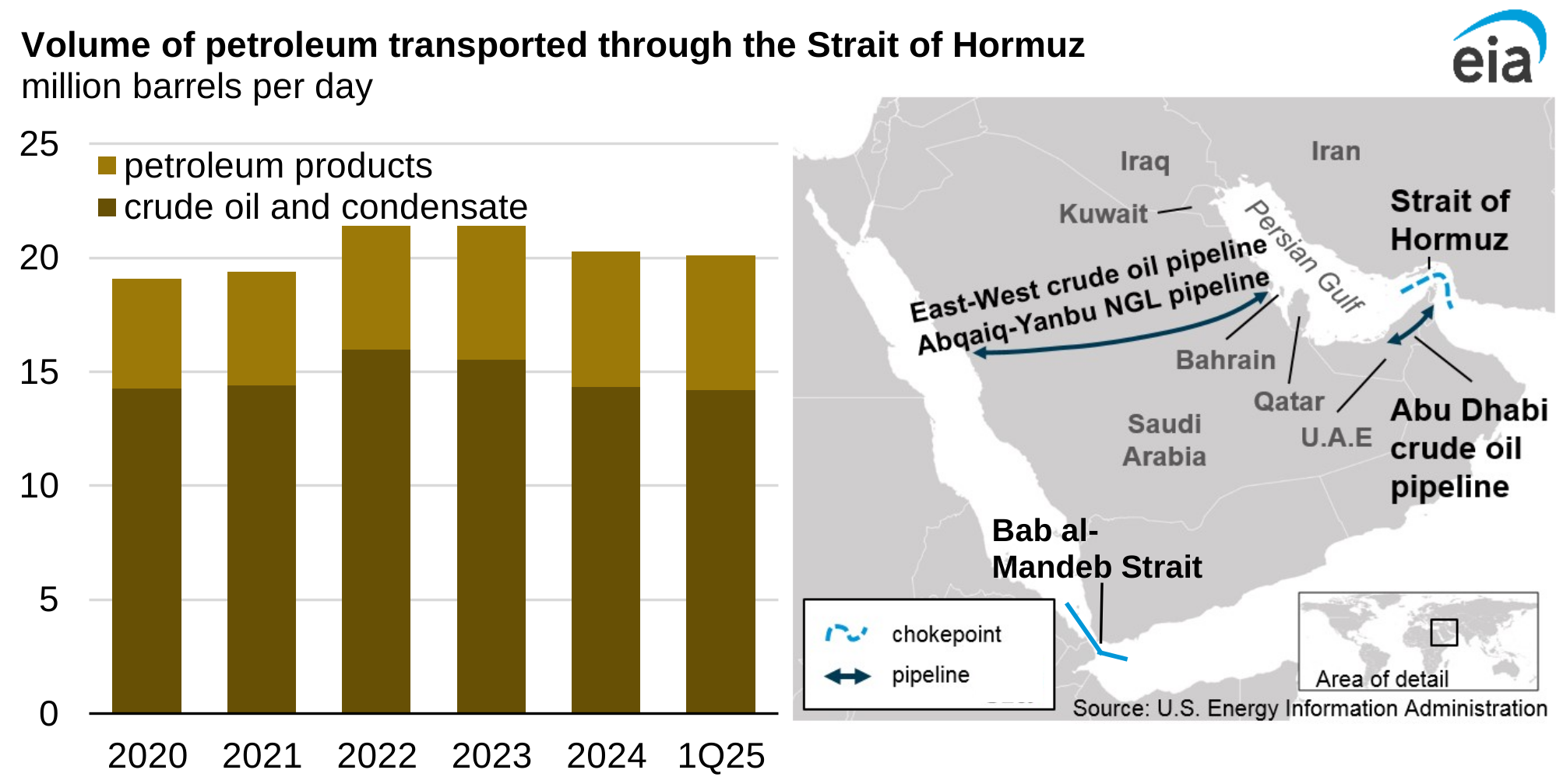
The Strait of Hormuz is a body of water that connects the Persian Gulf with the Gulf of Oman and the Arabian Sea. It is located between Oman and Iran. It is deep and wide enough to accommodate the world's largest crude oil tankers and is one of the world's most important oil chokepoints. Large volumes of oil flow through the strait, and there are very few alternative routes for moving oil out of the strait if it were to close. In 2024, an average of 20 million barrels of oil per day (b/d) flowed through the strait, equivalent to around 20% of global petroleum liquids consumption. In the first quarter of 2025, total oil flows through the Strait of Hormuz remained relatively unchanged compared to 2024.
From 2022 to 2024, the amount of unrefined oil and liquid natural gas passing through the Strait of Hormuz fell by 1.6 million b/d, which was only partly counterbalanced by a 0.5-million b/d rise in petroleum product shipments. This decline in oil transit through the strait reflects OPEC+'s decision to cut crude oil production several times, starting in November 2022.
Related : Pacific revives container freight rates
This lowered exports from Saudi Arabia, Kuwait and the United Arab Emirates (UAE). Disruptions to oil flows around the Bab al-Mandeb Strait in 2024 led Saudi Arabia’s national oil company, Aramco, to redirect seaborne crude oil flows away from the Strait of Hormuz and instead transport them overland through its East-West pipeline to Red Sea ports. Furthermore, increased refining capacity in the Persian Gulf states has boosted regional demand for crude oil, diverting some flows to local markets within the Persian Gulf.
Related : IMO :Statement on the Strait of Hormuz
#The Strait of Hormuz #Donald Trump #Bab al-Mandeb Strait #Persian Gulf # Iran’s power #US Marines #(UAE).
You Might Also Like

24 December 2025

26 November 2025
Recommendation News

Marine Tech
The Swedish Club reports 99% retention and increased tonnage at 2026 renewal 24 February 2026
Shipping Lines
APM Terminals and Eurogate plan to turn NTB into one of the most modern and efficient terminals in Europe 15 February 2026
Shipping Lines
D'Amico I.S. announced an increase in time charter coverage. 26 February 2026
Marine Tech
IBIA Welcomes Ton Visser as New Training & Technical Advisor 04 September 2026
Shipping Lines
Reuters : CMA CGM resumes Russia trade with food cargo 24 November 2025