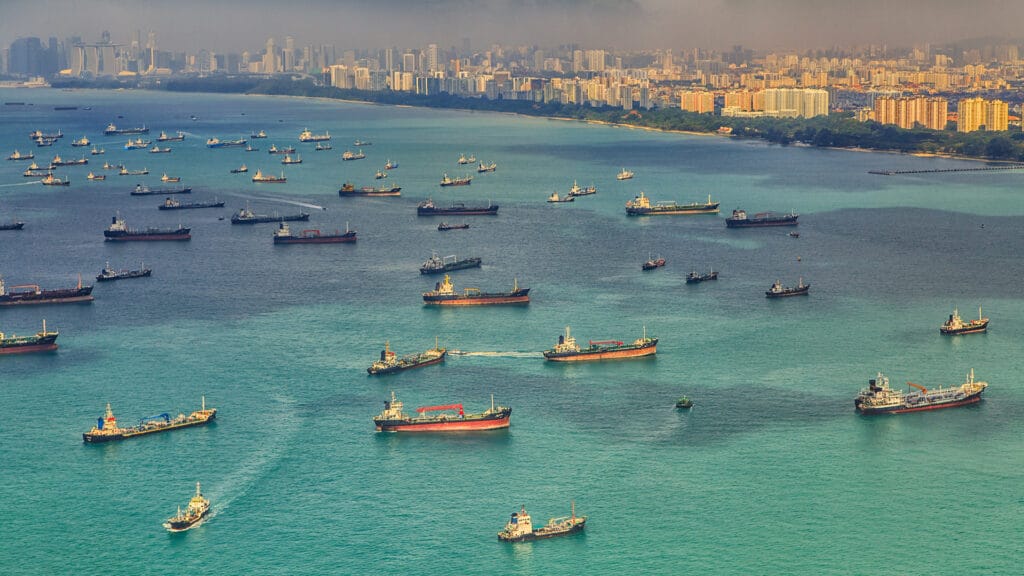
Approximately 130 container ships, accounting for around 1.5% of the global fleet capacity, have been stranded in the Gulf since the onset of attacks on 28 February
The Strait of Hormuz has effectively immobilised nearly three per cent of global container volumes
A series of effects related to congestion have been triggered by the closure of the Strait of Hormuz. These effects have spread from the Persian Gulf to key container ports in Asia, including Singapore, Shanghai and Busan. This has led to a build-up of vessels and extended waiting times. However, the direct impact of the closure is still felt most acutely in the Gulf itself.
Niels Rasmussen, BIMCO's Chief Shipping Analyst, has stated that approximately 130 container ships, accounting for around 1.5% of the global fleet capacity, have been stranded in the Gulf since the onset of attacks on 28 February. The suspension of transits through the Strait of Hormuz has effectively immobilised nearly three per cent of global container volumes, resulting in a direct impact on around five per cent of global ship demand. This figure takes into account both the stranded vessels and the knock-on effects of schedule disruption, repositioning delays and missed connections across the wider network.
Pressure on Asian hub ports
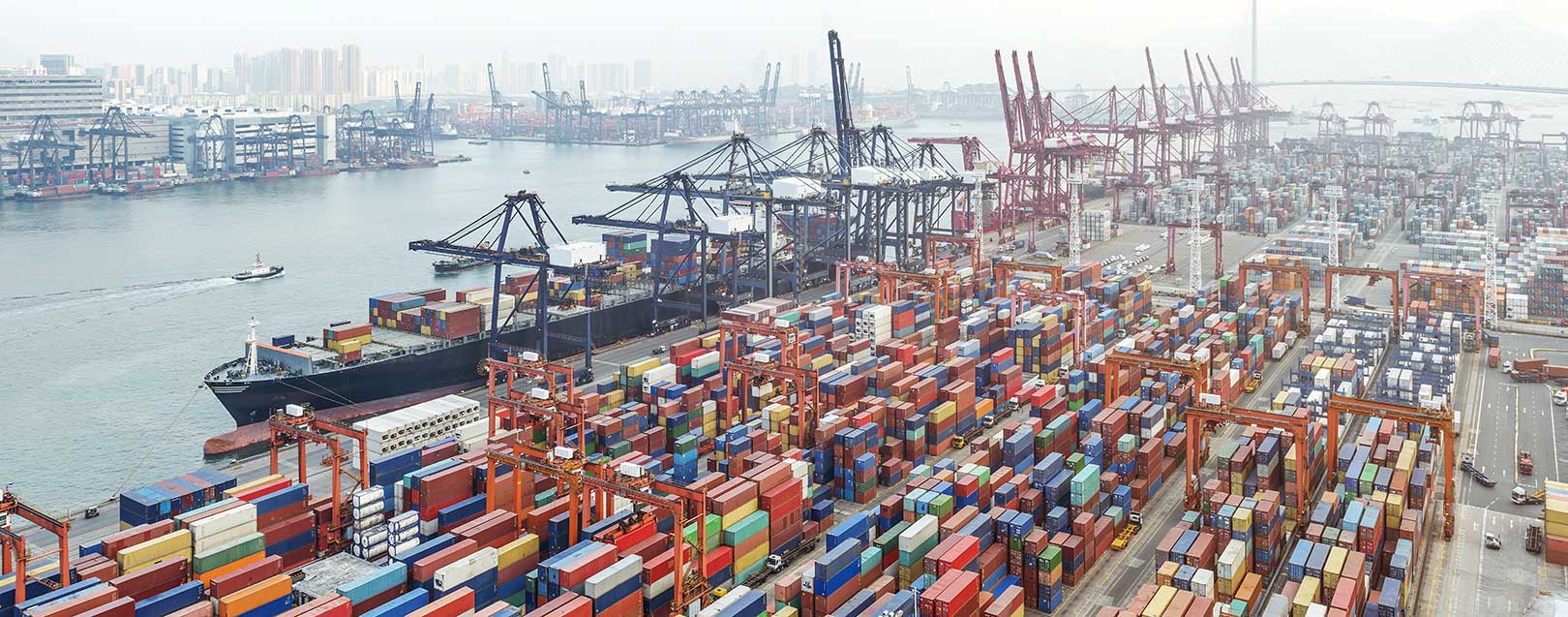
The ripple effect of vessel congestion from the Gulf is creating real operational strain at Asian hub ports. Ships that have been diverted from Gulf routes, are delayed in completing their Gulf voyages or are waiting for updated routing instructions are causing vessel bunching at Singapore, Shanghai, Busan and Colombo — ports that usually operate on tight schedules with little leeway. Longer dwell times at these hubs are stretching yard capacity, increasing container handling costs and causing systemic schedule unreliability that multiplies costs across entire supply chains.
COSCO Shipping Lines' decision
This week, COSCO Shipping Lines' decision to resume accepting dry container bookings from shippers in the Gulf region provided partial relief, as the Chinese carrier reopened booking channels that had been suspended during the height of the crisis. Meanwhile, Yang Ming has updated the routing of its GS2 service to account for operational constraints in the Middle East, and Maersk has highlighted the growing food security pressures facing markets in the Middle East that depend on imported grain, edible oils and processed goods. This serves as a reminder that the human cost of supply chain disruption extends well beyond commercial logistics.
Related : COSCO Shipping resumes bookings for the Middle East
Kamarajar Port: Manage disruptions in automobile exports
Significant storage capacity has been earmarked by Kamarajar Port Ltd (KPL) to manage disruptions in automobile exports caused by escalating tensions in West Asia, which have impacted key shipping routes to the Gulf region.Approximately 100,000 square metres of storage space has been set aside by the port to handle diverted cargo, particularly export vehicles rerouted due to delays and uncertainties in shipments bound for the Gulf. According to officials familiar with the developments, 5,711 vehicles have already been received at the port.
A surge in export volumes and is creating capacity
Kamarajar Port is currently experiencing a surge in export volumes and is creating capacity for nearly 7,000 transshipment vehicles. The disruption stems from shipping lines avoiding affected maritime corridors, which has led to delays in scheduled sailings to Gulf destinations. In order to support exporters and ease congestion, the port has also extended the free storage period by an additional 20 days, effectively doubling the standard 20-day window. This is expected to provide relief to automobile manufacturers who are facing logistical bottlenecks and rising costs due to uncertainties in vessel schedules.
A pre-eminent automotive manufacturing hub,
Chennai, a pre-eminent automotive manufacturing hub, has been particularly affected by the slowdown in shipments to the Middle East. According to industry sources, companies are currently investigating alternative options to make sure that deliveries are made on time. Officials have highlighted that safety, vessel availability and route stability are still pressing concerns, with manufacturers keeping a close eye on the evolving geopolitical situation. These ongoing disruptions are putting increasing strain on India’s automobile export supply chain and highlighting the need for adaptive logistics planning and temporary storage solutions. The situation is still changing, with tensions in West Asia putting pressure on global trade flows and maritime connectivity.
The Dakshin Bharat Gateway Terminal (DBGT)
Meantime, the Dakshin Bharat Gateway Terminal (DBGT) in Tamil Nadu handled its first 100 per cent transhipment vessel this week. The MSC Krystal (IMO 9372470, MMSI 356330000 -sailing under the flag of Panama. ) berthed on 26 March to handle approximately 1,307 TEUs of pure transhipment containers. DBGT has been facilitating the movement of cargo affected by the crisis, establishing itself as an alternative routing hub during this period of disruption. This achievement shows how India's newer, smaller terminals are seizing commercial opportunities arising from operational gaps caused by the Gulf crisis.
X-Press Feeders Updates Hercules Service Linking
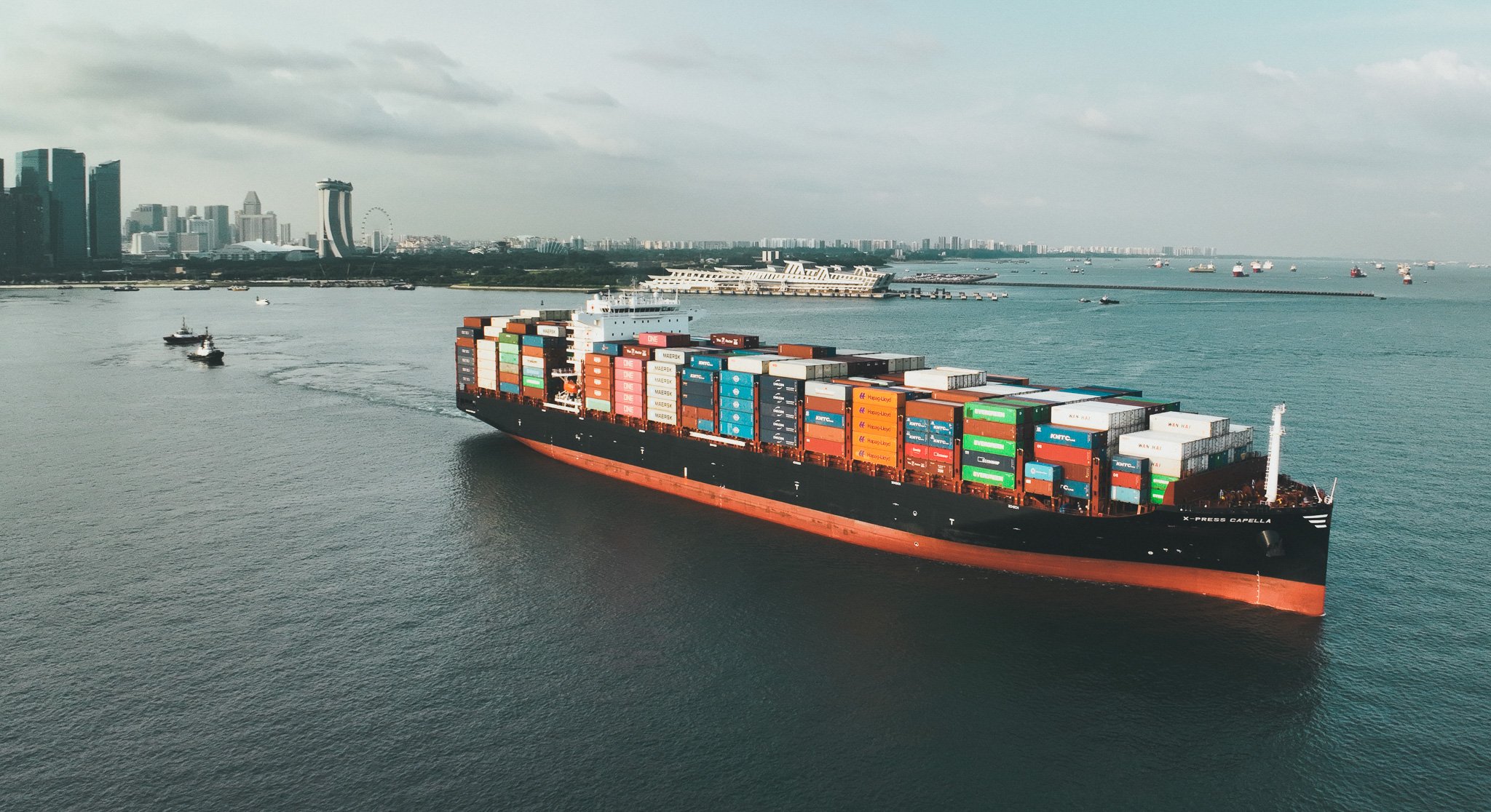
Conversely, Singapore-based feeder operator X-Press Feeders has announced an update to its Hercules Service (HLS) which will take effect on 24 April 2026. will enhance connectivity between Southeast Asia and the Indian subcontinent The revised port rotation will be as follows: Laem Chabang – Singapore – Port Klang – Nhava Sheva – Mundra – Karachi – Port Klang – Singapore – Laem Chabang.
A direct maritime connection between Thailand, India and Pakistan
A direct maritime connection between Thailand, India and Pakistan is offered by the fixed-day weekly service, which is also designed to strengthen trade links between Southeast Asia and India's West Coast .A fleet of five vessels, each with a nominal capacity ranging from 3,000 to 5,000 TEUs, will operate the service, ensuring reliable and comprehensive regional coverage.
#BIMCO #X-Press Feeders #Asian ports #DBGT #The MSC Krystal #Kamarajar Port#Niels Rasmussen # Strait of Hormuz #India and Pakistan #Chennai #Port Klang #Maersk #Middle East # Yang Ming
You Might Also Like

13 December 2025

28 December 2025
Recommendation News

Shipping Lines
Columbia Group appoints Ulla Eithz Nielsen to newly created Deputy COO role 12 February 2026
Incidents
Panama-flagged ATA 1 towed to safe anchorage after engine failure in Çanakkale Strait 09 December 2025
Incidents
18 Egyptians missing and 3 others dead in the sinking of an illegal immigration boat - Details 25 February 2026
Yachts&Cruises
Report: €843 million is set to be invested in maritime tourism in the Adriatic through to 2030 28 June 2026
Incidents
At least 148 people die after boat catches fire in Congo 17 October 2025