The vessels will operate under long-term charter contracts with Hyundai Glovis, which is pursuing a strategic plan to expand its fleet to 128 vessels by 2030
A new milestone has been reached in the automotive industry with the delivery of the world's first car carrier with a capacity of more than 10,000 units in China. This expansion in capacity is a response to the ongoing increase in export demand from Asia. The vessel is also noteworthy because it is owned by South Korea's HMM and forms part of Hyundai Glovis' strategy to expand and diversify its business.
Glovis Leader
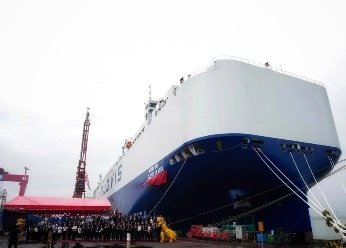
Glovis Leader (IMO 1063279, MMSI 352006608 -sailing under the flag of Panama. ) was built by the Chinese shipyard Guangzhou Shipyard International. It was the first of a series for the South Korean partnership. Measuring 230 metres in length and 40 metres in width, it has 14 cargo decks. Designed to carry a wide range of vehicles, including electric and hydrogen vehicles, as well as heavy trucks, the vessel has a gross tonnage of 20,000 tons (102,588 deadweight tons) and is registered in Panama. It has a total capacity of 10,800 standard-sized vehicles.
It has a total capacity of 10,800 standard-sized vehicles. The new vessel is equipped with dual-fuel engines capable of running on LNG or conventional fuels. It also features shaft generators and can use shore power when in port. Its cruising speed is 19 knots
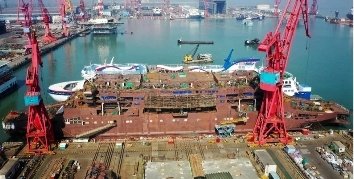
shipyard Guangzhou Shipyard International
The vessels will operate under long-term charter contracts
The vessels will operate under long-term charter contracts with Hyundai Glovis, which is pursuing a strategic plan to expand its fleet to 128 vessels by 2030 and increase annual capacity from 3.4 million to 5 million units by the same year. If the company achieves these goals, it expects to handle around 20% of the global ocean freight volume of finished automobiles
An increase in the size of these vessels
The construction of new car-carrying vessels has also resulted in an increase in the size of these vessels. Last year, China delivered the BYD Shenzhen, which has a capacity of 9,200 vehicles and is the largest in its class. A month later, the Anji Ansheng was delivered, which has a capacity of 9,500 vehicles. In 2024, Wallenius Wilhelmsen announced plans to expand its fleet with vessels capable of carrying 11,700 cars.
Growing role in the construction of container ships,
GSI emphasized its growing role in the construction of container ships, which the company noted are typically high-value vessels requiring a high level of technical expertise. Challenges highlighted include multilayered thin-plate structures, vehicle fire safety, roll-on/roll-off systems, and high-stability design. The shipyard reports having received orders for 40 car carriers as part of China's strategy to expand into the high-value shipbuilding sector and having delivered 26 to date. GSI emphasizes a series-building approach, which contributes to increased efficiency and reduced delivery times
#BYD Shenzhen #Guangzhou Shipyard International #Glovis Leader # Hyundai Glovis #HMM#China's strategy # world's first car carrier #The Service
You Might Also Like


18 October 2025
Recommendation News

Marine Tech
IMO : Mexico prepares for green shipping future 14 October 2025
Incidents
Oil tanker hit off Oman coast after drones strike Duqm port 01 March 2026
Shipping Lines
TT Club :Innovators in Cargo Handling Safety Honoured 09 October 2025

Shipping Lines
Nobel Corporation Plc Complets Sale of five Jackups to Borr drilling 29 January 2026