The 84th session of the MEPC ended with a renewed commitment to the IMO Net-Zero Framework, which set out a strict timeline for finalising global shipping emission measures by the end of 2026
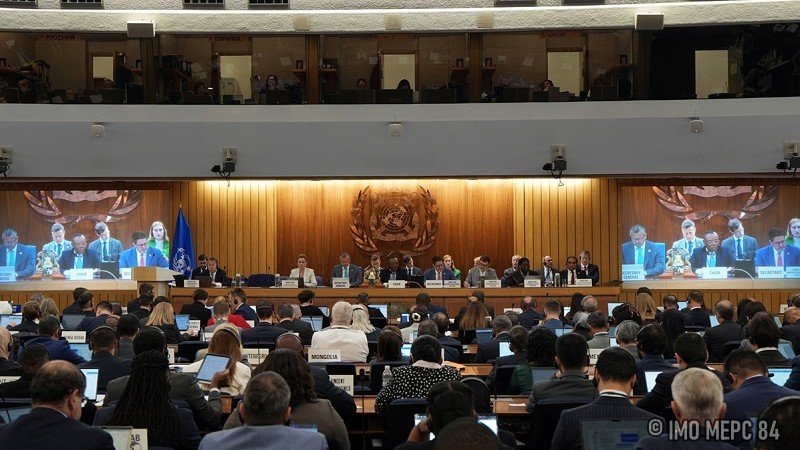
The 84th session of the Marine Environment Protection Committee (MEPC 84) concluded at the International Maritime Organization (IMO) headquarters this week, marking what officials described as a vital “restoration of rhythm” for the maritime industry’s decarbonization journey.
Held from April 27 to May 1, 2026, and chaired by Dr. Harry Conway of Liberia, the session served as a high-stakes diplomatic arena where nearly 100 delegations grappled with the future of ship emissions, regional security, and the rising tide of plastic pollution.
A sense of measured optimism prevailed.
The overarching sentiment was one of cautious optimism. IMO Secretary-General Arsenio Dominguez, in his closing remarks, declared the committee was “back on track,” while emphasizing that the path forward requires a fragile commodity: trust.
“We are back on track, but we have to rebuild trust. I encourage you to maintain this momentum through your intersessional work and to prepare submissions that can bring the membership together.”
Draft amendments to the NOx Technical Code
The meeting also approved draft amendments to the NOx Technical Code for engines using non-carbon and mixed fuels, creating a regulatory basis for the certification of ammonia-fuelled engines. Rules were advanced for crude oil tankers to carry P/V valves with a minimum opening pressure of 0.20 bar, and changes to MARPOL Annex I were approved to allow controlled dewatering of oily bilge water by forced evaporation
Related : IMO joins Asia-Pacific Heads of Maritime Safety Agencies annual meeting
The Net-Zero Framework
No decision was reached during the talks on the Net-Zero Framework regarding core design features, including the potential establishment of an IMO Net-Zero Fund. Negotiations will continue at two additional intersessional meetings, with no timeline set for the approval or adoption of a revised framework.
The IMO is the United Nations agency specialised in global shipping regulation. This includes maritime safety, pollution prevention, ship efficiency, and environmental standards adopted through international conventions.
DNV is a Norwegian classification society and assurance provider that carries out classification, certification, advisory, and statutory work in the maritime and other industrial sectors.
#IMO # DNV #IMO Net-Zero Fund # Arsenio Dominguez #(MEPC 84)#NOx Technical Code #Dr. Harry Conway of Liberia #maritime industry’s decarbonization
You Might Also Like

Recommendation News

Marine Cultures
"The Storm over Evpatoria” oil painting by Ivan Aivazovsky 29 October 2025
Ports
Georgia Ports welcomes U.S.-India trade agreement 06 February 2026
Shipping Lines
Transocean Acquires Valaris In $5.8B Deal To Create Drillship Giant 11 February 2026
Ports
Syria to upgrade phosphate quay at Tartous Port in modernization drive 21 May 2026
Yachts&Cruises
Fincantieri: Oceania Sonata launched at Marghera shipyard 29 August 2026