AAPA LATAM is not just a congress; it is establishing itself as the leading forum for Latin America to debate the logistics, port, and commercial models it will require to compete in the coming decades
The discussion that began at AAPA LATAM Lima 2025 remains highly relevant. The debate on the future of logistics in Latin America will once again take centre stage from December 1st to 4th at the Guatemala edition, in a global landscape marked by geopolitical tensions, technological transformation and new environmental demands.
Just under a year ago, port leaders, logistics experts, and specialists from across the region got together to discuss artificial intelligence, sustainability, new trade routes, free trade zones, human capital, and regional cooperation. At that time, many of these issues seemed to be accelerating trends. Today, many of these transformations are already having a direct impact on the competitiveness of Latin American ports and logistics chains.
The future of Latin America's logistics sector
The future of Latin America's logistics sector is smart, sustainable and integrated, as the "Logistics Innovation for International Development" panel had already anticipated in Lima. This was confirmed by the reconfiguration of global trade, the advance of automation, geopolitical tensions between major powers, pressure on supply chains and the region's new logistical prominence.
Attendees included the following people:
Eva María de los Dolores Muñoz Pineda, president of AMACARGA Mexico, brought the panel together.
The following people were in attendance: Roberto Gamboa Aguilar (Director of Empresa Portuaria Arica, Chile); Julio Rodríguez (Executive Director of the Association of Free Zones of the Americas, AZFA); Eduardo Cerdeira (General Manager of Euroandinos Port Terminals, Peru); and José de la Peña (President of the Board of Directors of Empresa Portuaria Santo Tomás de Castilla, Guatemala). Many of the topics that dominated that conversation are precisely the ones that are reshaping the global logistics landscape today.
Related : IMO : Strengthening gender-inclusive maritime policy in Latin America
The environmental and urban impact of port operations
One of the central themes was the environmental and urban impact of port operations. The historical pollution caused by bulk minerals had a severe impact on the city of Arica, even forcing families to relocate due to health problems caused by lead poisoning, as Roberto Gamboa Aguilar recalled. Drawing on this experience, he emphasised that sustainability must now be analysed not only within ports, but also throughout the entire logistics chain and in the communities that coexist with port operations.
Guatemala's complex environmental situation,
Similarly, José de la Peña outlined Guatemala's complex environmental situation, particularly the pollution of the Motagua River, which discharges around 20,000 tonnes of plastic into the Caribbean each year. The Guatemalan executive stated that the lack of territorial planning and modern public policies had become one of the main obstacles to regional port development. However, the panel also offered a profoundly strategic perspective on the opportunities available to Latin America if it manages to transition towards smarter, more collaborative integration
Enhancing the efficiency of logistics operations.
Artificial intelligence AI and new technologies have emerged as key tools for enhancing the efficiency, traceability and sustainability of logistics operations. Julio Rodríguez emphasised that AI is now a reality and not just a future trend, highlighting how technology enables the monitoring of entire supply chains, the optimisation of operations, and progress towards more sustainable and integrated models.
The Peruvian port system
Hailing from Peru, Eduardo Cerdeira offered a particularly pertinent viewpoint, given the country's recent logistical ascent following the inauguration of the Port of Chancay and the fortification of the Peruvian port system. The executive maintained that the region is undergoing a period of rapid transformation where 'flexibility and agility' are fundamental to responding to constant changes in international trade.
A rethink of trade routes, logistics strategies, and supply chains.
One of the most pertinent topics discussed by the panel was the new geopolitics of global trade. Tensions between the United States and China, conflicts in the Middle East and Ukraine, changes to tariffs, and recent issues with the Panama Canal are forcing a rethink of trade routes, logistics strategies, and supply chains.
In this new scenario, the panellists agreed that Latin America has a historic opportunity. The region has enormous potential to become a major logistics and trade hub,' said José de la Peña, who called for a shift away from isolated port competition and towards regional cooperation models.
Significant investments in training, talent, and new skills
Roberto Gamboa also took up this concept, stressing that projects such as the Chancay development in Peru and the new outer port of San Antonio in Chile should be viewed as positive developments for the whole of South America, rather than as individual competitions. Another pivotal element of the discourse pertained to human capital. According to the experts, the region will only be able to undergo technological transformation if it makes significant investments in training, talent, and new skills. One of the major challenges facing the logistics and port sector in the coming years was identified as training professionals capable of working with artificial intelligence, interpreting data, and adapting to new work models.
'Everything is logistics.'
In that context, the panel came up with a definition that today summarises much of the transformation that international trade is undergoing: 'Everything is logistics.' ”From agro-industrial production to e-commerce and from ports to free trade zones, logistics has ceased to be a mere support activity. It has become the strategic core of global competitiveness.
AAPA LATAM Guatemala 2026,
AAPA LATAM is not just a congress; it is establishing itself as the leading forum for Latin America to debate the logistics, port and commercial models it will require to compete in the coming decades. AAPA LATAM Guatemala 2026, which will be held from December 1 to 4 at the Westin Camino Real Hotel in Guatemala City, will once again make many of these discussions a central focus. This is in response to the impact of Lima 2025. In a region seeking to reposition itself amid major global changes, Guatemala emerges as a strategic host for promoting a regional agenda based on innovation, integration, sustainability and cooperation.
# AAPA LATAM Guatemala 2026 #Roberto Gamboa #Port of Chancay #port of San Antonio #Latin America #AI #environmental #Julio Rodríguez # new logistics era #Eva María
You Might Also Like
Recommendation News

Marine Tech
RINA Expands in Southeast Asia with New Open Innovation Hub in Singapore 07 November 2025
Marine Tech
Rina signs a double Thai partnership with PTT Public Company 08 October 2026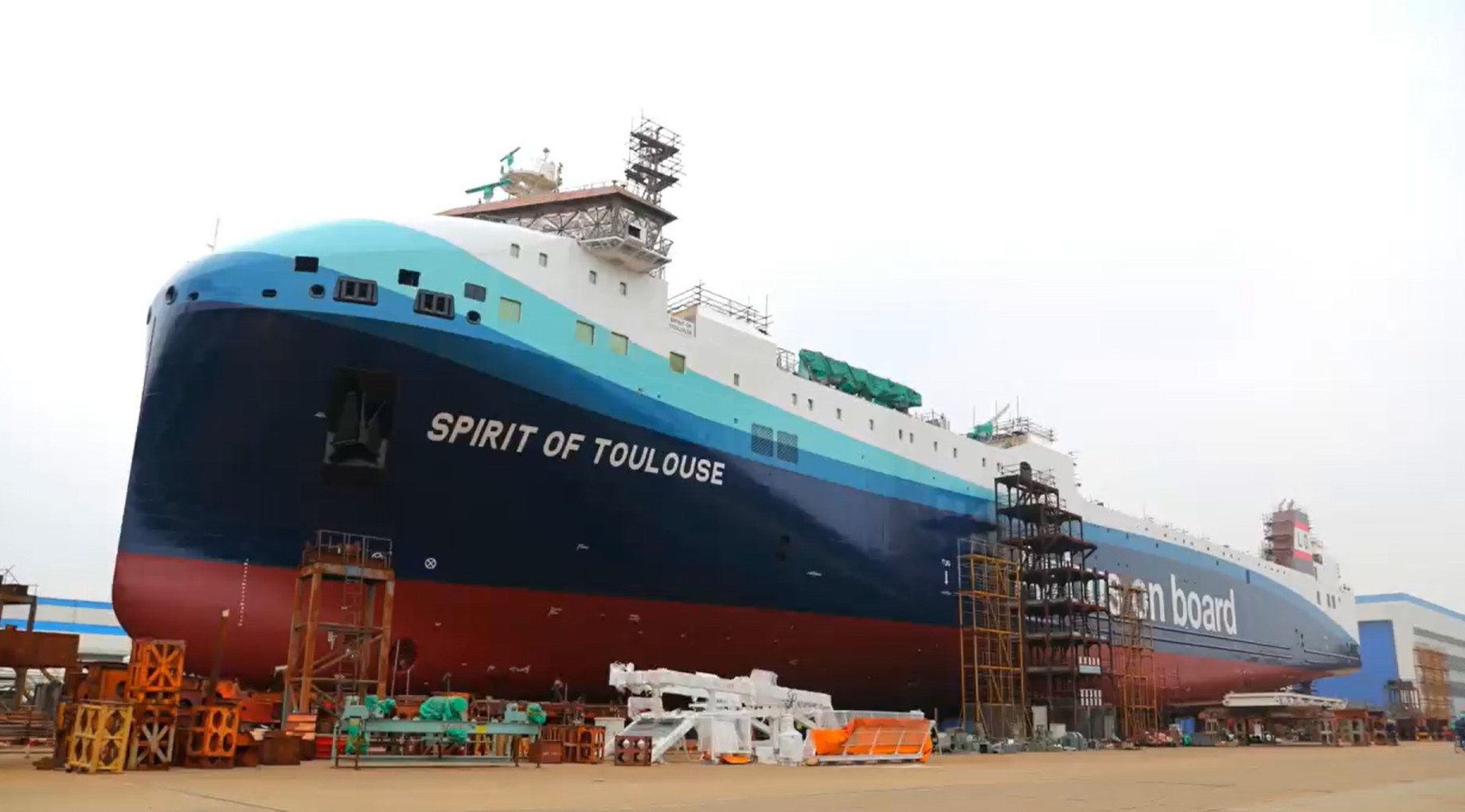
Marine Tech
LD Armateurs Launches Spirit of Toulouse, First of Three Low‑Emission RoRo Vessels Chartered to Airbus 12 February 2026
Yachts&Cruises
SA Yachts Delivers its new flagship, the Gran Turismo 67m M/Y Sea Raider X 21 July 2026
Ports
Johor Port has introduced designated safety routes for port users. 06 March 2026