
Port State Control detentions are not the result of unfair enforcement, regulatory ambiguity, or bad luck. Instead, they are the result of known, documented, and publicly available deficiency patterns.
By: Francis Modozie
Master Mariner
SeaFleet Backbone LLC
Every year, hundreds of vessels are detained in ports worldwide for deficiencies that inspectors have flagged consistently, predictably, and on the public record. The patterns are not hidden. The failure is operational. A Port State Control detention is not an act of regulatory chance. It is, with few exceptions, the result of a chain of decisions, or the absence of them, that played out long before a Port State Control Officer ever stepped aboard.
Every year, the major Port State Control regimes publish their statistics. The Tokyo MOU, Paris MOU, USCG, Indian Ocean MOU, and others release detailed annual reports documenting inspection outcomes, deficiency categories, flag state performance, and detention causes. The data is public. The patterns are consistent. And for anyone willing to read the reports carefully, the conclusion is the same year after year: the same deficiencies are detaining ships in 2024 that detained ships a decade ago.
This is not a regulatory puzzle. It is an operational discipline problem.
For shipowners, operators, managers, and investors with exposure to vessel operations, understanding the anatomy of a PSC detention and why so many are preventable is not a theoretical exercise. It is a commercial and reputational imperative
The Regulatory Framework: What PSC Actually Does
Port State Control is the right of a coastal or port nation to inspect foreign-flagged vessels calling at its ports to verify compliance with applicable international conventions. The primary instruments include SOLAS, MARPOL, the International Ship and Port Facility Security Code (ISPS), the Maritime Labour Convention 2006, and STCW, among others.
Nine regional PSC Memoranda of Understanding operate across the globe, including the Tokyo MOU, Paris MOU, Indian Ocean MOU, Black Sea MOU, and Abuja MOU, alongside the United States Coast Guard, which operates its own independent programme. Together, they conduct tens of thousands of inspections annually across virtually every major shipping corridor in the world.
The vessel may be detained until those deficiencies are rectified
When a PSCO boards a vessel and identifies deficiencies of sufficient severity, or a sufficient number of lesser deficiencies, the vessel may be detained until those deficiencies are rectified. Detention data is shared across MoU member states, logged in shared databases, and published publicly. A vessel's inspection history follows it to every port it enters
In 2024, the USCG conducted 8,711 SOLAS safety exams and recorded 82 detentions, an improvement from 101 in 2023. The three-year rolling detention ratio, which directly affects vessel targeting algorithms, nonetheless increased from 0.94 per cent to 1.01 per cent. This means enforcement scrutiny is not easing. Vessels that believe improved annual numbers signal reduced risk are misreading the data.
The Same Deficiencies, Every Year
The critical question for any maritime professional is not simply how many ships were detained. It is why. And the answer, reflected consistently across every major PSC regime, points to the same recurring cluster of deficiency categories. According to consolidated 2024 global PSC data, the four categories that dominate detention statistics worldwide are fire safety, ISM Code compliance, life-saving appliances, and navigation safety. Together, they account for more than half of all detentions recorded globally.
The USCG's 2023 annual report noted specifically that deficiencies related to rescue boats and lifeboats made up nearly half of all findings recorded that year. Vessels that could not start their rescue boats, davit and falls issues, and in some cases, ships without a rescue boat at all. These are not edge-case failures. They are failures of routine maintenance and basic inspection discipline.
This escalation pattern is important to understand. PSC officers are trained to follow the thread. A single deficiency rarely stands alone; it is a symptom. Once a PSCO begins cross-referencing log books, reviewing drill records, and testing equipment, what might have been a rectifiable observation can quickly become the foundation for detention. The starting point, in most cases, was entirely preventable.
From Deficiency to Detention: How It Happens
Understanding the pathway from an initial deficiency to a full detention helps operators grasp where intervention is both possible and necessary. The sequence below reflects real-world PSC escalation patterns documented across multiple MoU regimes
What Is Actually Behind These Deficiencies

When industry analysts and classification society post-detention reviews examine root causes behind recurring PSC failures, a consistent set of organisational and management factors emerges. They are worth examining directly, because understanding them is the first step toward solving them.
Deferred Maintenance and Budget Pressure
Commercial pressure on vessel budgets is real and well understood in the industry. In competitive freight markets, ship management costs are frequently reviewed for reduction. Equipment maintenance does not always produce immediate visible consequences when neglected, which makes it a recurring target for deferral.
The problem is that deferred maintenance accumulates invisibly until a PSCO boards the vessel and encounters it all at once. The USCG noted in its 2023 annual report that the post-pandemic increase in detention rates was partly attributable to maintenance deferments and service disruptions that occurred during 2020 and 2021. In parts of the global fleet, those effects persisted well into 2024.
Safety Management System in Name Only
ISM Code compliance is among the top detention causes globally, and the reason is not that operators lack ISM documentation. Most vessels have it. The problem is that many carry an SMS that satisfies the documentary requirements of a Flag State audit but does not reflect actual operational practice on board.
Drill records are completed for compliance rather than training value. Checklists are signed without execution. Near-miss reporting is discouraged by a culture that treats any incident as a liability. When a PSCO who understands how to read a Safety Management System examines the gap between what the documents say and what the vessel actually does, the results are entirely predictable.
Crew Competency and Familiarisation Gaps
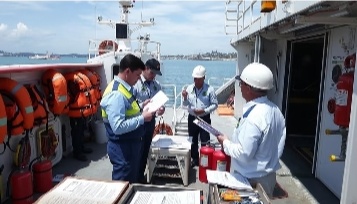
STCW certification ensures that seafarers hold appropriate qualifications on paper. It does not guarantee that crew members joining a vessel are genuinely familiar with the specific equipment, emergency procedures, and systems of that particular ship. A fire team drill that reveals hesitation, confusion, or incorrect equipment operation in front of a PSCO is a significant detainable finding. Familiarisation is not a one-time administrative event on the joining day. It is an ongoing operational responsibility that must be managed actively throughout the crew's time on board
Document and Certificate Management
One of the most operationally avoidable categories of PSC detention involves documentation: expired certificates, missing records, incomplete crew certification files, or Seafarer Employment Agreements that lack required MLC elements.
The Indian Register of Shipping's 2024 PSC Annual Report noted that one detention was attributed solely to the non-availability of original certificates and documents on board. These failures require no technical repair. They require administrative systems that actually function.
The True Cost of a Detention
Shipowners and investors sometimes assess detention risk through a narrow lens: the cost of rectifying the identified deficiencies and the port fees incurred during the delay period. This framing significantly underestimates the full commercial exposure.
For vessels operating under Paris or Tokyo MOU regimes, flag state performance on public White, Grey, and Black Lists adds a further dimension of risk. Black List flags face inspection at virtually every port call, higher detention probability for equivalent deficiencies, and the possibility of being banned after two detentions within three years.
The Black List in 2024 represented approximately 4 per cent of inspected ships but accounted for over 20 per cent of all detentions. That disproportion reflects the compounding consequences of sustained institutional failure.
Prevention Is a System, Not a Checklist
The shipping industry has no shortage of PSC preparation checklists. Most vessels carry them. The checklists are not the problem. What distinguishes vessels with strong PSC records from those that cycle through deficiencies and detentions is something deeper: an operational discipline that is consistent, structured, and genuinely embedded in how the vessel is managed every day. Effective PSC readiness operates across six mutually reinforcing dimensions.
The Role of Shore-Side Oversight
A recurring theme in PSC post-detention analyses is the gap between what management ashore believes is happening on board and what a PSC officer actually finds when they inspect. This gap is not incidental. It is a structural challenge in ship management that requires deliberate systems to address.
Shore-based superintendents, Designated Persons Ashore, and technical managers carry direct responsibility for the PSC performance of their fleets. Where that responsibility is exercised with genuine rigour, through regular vessel visits, structured vetting, systematic review of deficiency trends, and accountability for outstanding maintenance, the results appear in detention statistics. Where it is not, that data reflects it too.
The USCG's Enhanced Exam Programme
The USCG's Enhanced Exam Programme, launched in 2021, represents exactly the kind of systematic, targeted focus that operators should mirror internally. Each quarter, the programme targets specific areas. In 2024, those areas included immersion suits, engine room fire safety, SEEMP and CII compliance, and working conditions on board. Operators who read the programme announcements and conduct internal reviews of the targeted areas before port calls are making precisely the right preparation investment.
Implications for Investors and Institutional Stakeholders

PSC performance is increasingly a factor in how institutional investors, financiers, and sophisticated charterers evaluate vessel assets and shipping companies. A vessel's detention history is public record. A fleet's aggregate PSC performance is a quantifiable indicator of operational management quality, and it is being read that way.
For institutional investors in shipping assets, a pattern of PSC deficiencies or detentions signals deferred maintenance practices, organisational management weaknesses, and exposure to compounding commercial risk. Conversely, vessels and fleets with clean, consistent PSC records carry a materially lower risk profile, a factor that asset evaluations are increasingly capturing in formal due diligence processes.
Port authorities, terminal operators, and cargo interests make similar assessments. A vessel with a history of detentions faces greater scrutiny at every stage of the commercial chain. Insurance underwriters factor PSC performance into P&I and H&M pricing. Flag State administrations on the Black List create commercial disadvantages for every vessel under their registry.
The investment case for operational PSC readiness infrastructure is measurable in reduced detention exposure, lower inspection targeting probability, better charter market access, and defensible asset values over time.
Conclusion: Operational Discipline Is the Differentiator
Port State Control detentions are not, in the vast majority of cases, the result of unfair enforcement, regulatory ambiguity, or bad fortune. They are the result of known, documented, publicly available deficiency patterns that were not addressed before a vessel presented itself for inspection
The framework for PSC readiness is not complicated. What it requires is discipline: consistent maintenance practices, a living Safety Management System, competent and familiarised crew, complete documentation governance, pre-port preparation calibrated to the specific regulatory regime, and organisational accountability at the shore management level.
The vessels that are not detained are not vessels that escape notice. They are ready vessels.
For shipowners and managers who want to understand where their fleets actually stand before a PSCO board, the path forward is a structured, evidence-based readiness assessment. The data that drives detention is public. The systems that prevent it are knowable. What remains is the organisational will to implement them.
SOURCES AND REFERENCES
• U.S. Coast Guard Port State Control Annual Report 2024, U.S. Department of Homeland Security
• U.S. Coast Guard Port State Control Annual Report 2023, U.S. Department of Homeland Security
• Tokyo Memorandum of Understanding on Port State Control, Annual Report 2024
• Paris Memorandum of Understanding on Port State Control, Annual Report and Monthly Detention Lists 2024
• Indian Register of Shipping, PSC Annual Report 2024
• ClassNK (Nippon Kaiji Kyokai), Port State Control Annual Report 2024
• International Safety Management (ISM) Code, IMO Resolution A.1071(28)
• Maritime Labour Convention 2006 (MLC, 2006), International Labour Organisation
• SOLAS (International Convention for the Safety of Life at Sea), IMO
• MARPOL (International Convention for the Prevention of Pollution from Ships), IMO
• Marine Public, 2024 PSC Trends: Top Inspection Findings and Compliance Gaps
#Capt.Francis Modozie #Port State Control #The Tokyo MOU #fleet's aggregate PSC# Paris MOU # shipowners #PSC performance #Port authorities #USCG # SOLAS #Flag State administrations #STCW #Black List
You Might Also Like

Recommendation News
Marine Tech
bound4blue hits bullseye daily fuel savings on LDA Ro-Ro 14 October 2025
Marine Tech
Decisive Leadership Key to Success in a Maritime 5.0 World Says ABS Chairman and CEO 02 November 2025
Shipping Lines
2026: The gap between MSC and other liners in container hold capacity is growing 08 January 2026
Shipping Lines
The French ship CMA CGM Kribi has left the Strait of Hormuz 04 April 2026
Shipping Lines
MSC is moving its Dragon container line to Naples, connecting Asia and North America. 09 May 2026