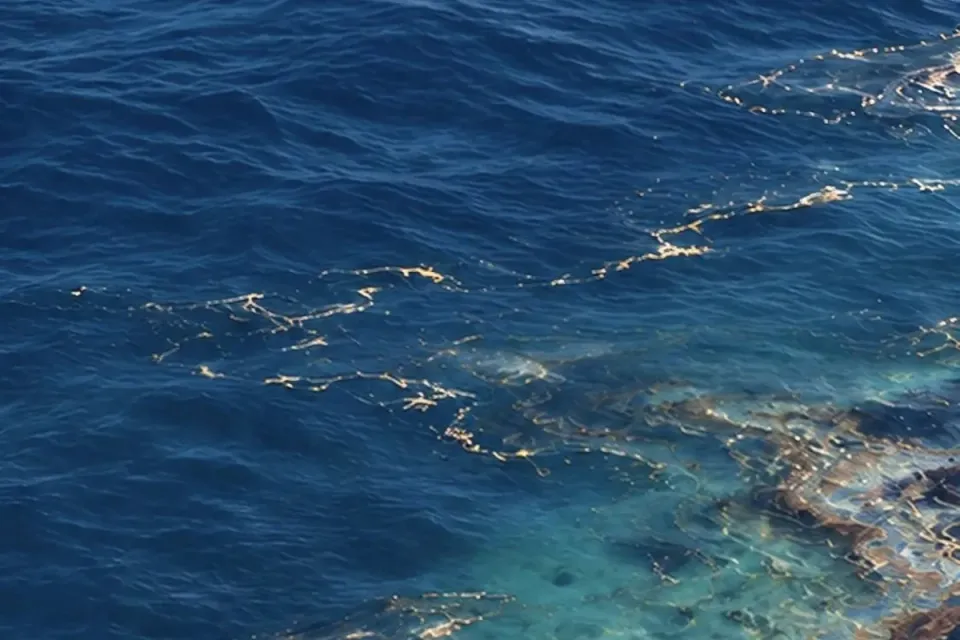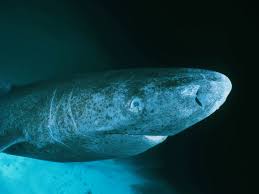
Greenland sharks have the longest lifespan of any known vertebrate, estimated to be between 250 and 500 years
In recent days, an Image of an enormous 392-year-old shark has been circulating on social media, sparking widespread interest. The image shows the "Greenland Shark," one of the longest-living marine creatures on Earth, in the waters of the Arctic Ocean. However, researchers emphasize that the age attributed to this animal has not been scientifically confirmed, and the circulating information is exaggerated.
It seems that the Greenland shark, which has not been a target of any fisheries for 50 years, is now returning to our shores. Experimental fishing performed as part of research efforts has demonstrated improved catch rates. However, this does not necessarily indicate the presence of a resource that can be sustainably harvested.
One hypothesis for the Greenland shark's extended lifespan is its ability to sustain a low metabolic rate, which is likely an adaptation to the frigid environments it inhabits. A NOAA remotely operated vehicle encountered a Greenland shark at a depth of 783 meters off New England, but these sharks are known to dive as deep as 2,200 meters. They are also the only species of shark that can withstand the cold waters of the Arctic Ocean year-round.
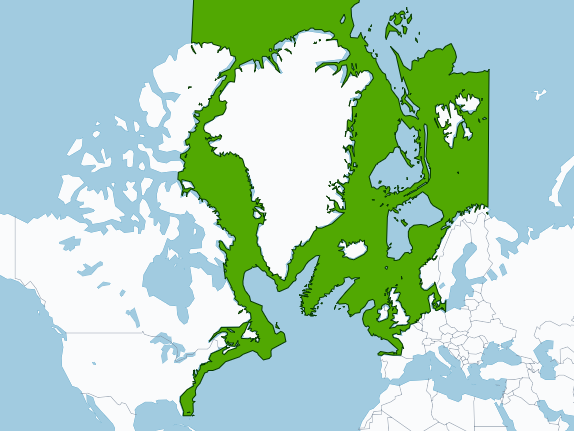
The Greenland shark, or Somniosus microcephalus, is one of many fish that live in the waters around Greenland, though this is not the only area in which the shark dwells. "Gray sharks" and "gurry sharks" are some of the names by which these sharks are sometimes referred to. The north Atlantic Ocean near Iceland, Norway, and Canada is also home to them.

1. Greenland sharks are enormous.
A solid understanding of the Greenland shark's physical dimensions is crucial . They are among the largest sharks in the world, comparable in size to great whites. These sharks have been known to grow as long as 6.4 meters (21 feet) and as heavy as 1,000 kilograms (2,100 pounds), though the typical Greenland shark weighs around 400 kilograms (880 pounds) and is about 2.44 to 4.8 meters long (18 to 15.7 feet).
2. The flesh of the Greenland shark is poisonous.
Symptoms in humans similar to severe inebriation can be caused by Greenland shark meat, and sled dogs can even be incapacitated by the neurotoxins in their flesh. This toxicity is due to trimethylamine oxide (TMAO), which helps Greenland sharks stabilize their enzymes and structural proteins against the debilitating effects of severe cold and high water pressure.
3. Humans are not attacked by Greenland sharks.
Some early Inuit legends claim that Greenland sharks have attacked kayaks, but there is not one documented case of such an encounter. Although Greenland sharks are large and strong enough to easily injure or kill a human if threatened, history has shown them to be especially nonconfrontational.
4. The Greenland shark's talent is swimming unseen.
While it's understandable that people on Greenland cruises would want to see Greenland sharks, the odds are actually rather low. This species wasn't captured on film until 1995, and it took another 18 years for someone to record Greenland sharks in their natural environment.
5. Shark feeding
A reputation for being nature's garbage disposals has been earned by vultures, and the same can be said of Greenland sharks. Although they can be found eating seals and fish, they are believed to be primarily scavengers that nourish themselves on any flesh they can find. Whether living or dead, a Greenland shark won't turn down any dish.Greenland sharks never seem to be in a hurry, perhaps because they will eat almost anything. They are so slow that they are also known as "sleeper sharks," and they can only increase their speed for short bursts. Their average pace is 0.3 meters per second (0.76 mph). Nevertheless, a Greenland shark's size helps protect it from any would-be predators.
6- The metabolism
.The shark’s slow metabolism could explain its slow growth, slow aging, and sluggish movement. Its top speed is under 2.9 kilometers per hour. Since they grow so slowly, it is thought that they do not reach sexual maturity until they are over a century old. This means that removing mature Greenland sharks from the ocean affects the species and the ecosystem for many decades. Though Greenland sharks were once hunted for their liver oil, most of those caught in fishing nets and lines now are bycatch. Reducing bycatch is critical to conserving this unique species.
7- The environment preferred by the Greenland shark
Although all sharks are cold-blooded, this particular species truly thrives in frigid environments. They prefer water ranging from 32.2 to 50°F (0 to 10°C) and migrate to the coldest areas each season. In fact, they are the only known shark species that can tolerate Arctic conditions year-round.
8- Immigration of Greenland sharks
Greenland sharks migrate on an annual basis based on depth and temperature rather than distance, although some do travel. In the winter, sharks can be found in the shallows (up to 80° north) because it is warmer there. However, in the summer, they migrate to deeper waters or even lower latitudes.
In April 2022, a large somniosus shark was caught and released at Glover's Reef, off the coast of Belize. The shark was identified as either a Greenland shark or a hybrid of a Greenland and Pacific sleeper shark. This observation is notable because it is possibly the first record of a Greenland shark in the Western Caribbean and the shark was caught in a nearshore coral reef habitat. The only other recorded sighting of this species in the Caribbean was in a deep-water habitat off the coast of Colombia.
#Greenland sharks # Arctic Ocean #Western Caribbean # Pacific sleeper shark.#A NOAA
You Might Also Like


Recommendation News

Shipping Lines
EU approves MSC-NYK joint venture for shipping to Africa 02 December 2025
Ports
Xeneta : A challenging year at London Gateway 29 December 2025
Incidents
K Line dry bulker Devon Bay search ends after January incident in South China Sea 02 February 2026
Ports
APM Terminals started building a $550 million terminal in Bangladesh for ships 31 August 2026
Marine Tech
IMO MEPC 84: Atlantic ECA was approved, giving the net-zero framework a new lease of life 05 May 2026