Many people think that automation and AI will replace human inspectors, yet the opposite is true. Advanced technologies do not eliminate the need for human inspectors; they simply redefine their roles and elevate their strategic value.
By: Mohamed Farouk
International Consultant & Expert in Logistics and TIC Services
In a world of accelerating geopolitical shifts, global supply chains are both more fragile and more vital than ever. From disruptions in the Red Sea to the Strait of Hormuz crisis, international trade flows have become a battlefield between economic stability and political uncertainty. In the face of these challenges, the Testing, Inspection, and Certification (TIC) sector has become a vital facilitator of trade continuity. It is not just a bureaucratic formality, but a crucial element in ensuring global economic security.
Concurrently, an unparalleled logistics metamorphosis is unfolding in the Middle East. Ambitious national strategies and cross-border trade routes are establishing the region as a vibrant hub connecting Asia, Africa and Europe. This development necessitates a fundamental rethink of traditional inspection systems, shifting the focus from manual, time-consuming processes to agile, technology-driven solutions.
The TIC sector must evolve into what is globally recognised as "TIC 5.0" if it is to keep pace with these rapid shifts. TIC 5.0 is the fifth generation of inspection and auditing. This paradigm integrates the expertise of field specialists with transformative Fourth Industrial Revolution 4IR technologies, elevating inspection from a reactive compliance check to a proactive enabler of secure, seamless trade.
1. Amid Geopolitical Shocks, the Importance of Supply Chain Resilience
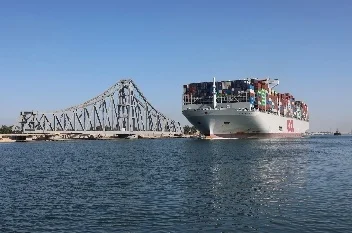
Geopolitical pressures that are reshaping maritime routes must be acknowledged if there is to be any discussion of modern trade that is both complete and up to date. In early 2026, the Strait of Hormuz, a vital oil route, became a major geopolitical flashpoint. The company's near-closure triggered a cascade of effects. Freight rates rose dramatically, shipping schedules were thrown into disarray, and insurance premiums surged by over 1,000%. The cost of a single Very Large Crude Carrier voyage increased by as much as $7.5 million.
Despite the recent US-Iran framework agreement (announced on 15 June 2026) and the anticipated reopening of the strait, expected to be formalised in Geneva on 19 June, the path to full recovery remains uncertain. War-risk premiums remain high. Major carriers such as Maersk have maintained restrictions and imposed emergency surcharges. Certain insurers have either reduced or withdrawn regional coverage in its entirety. Experts warn that it may take months, not weeks, for a full return to pre-crisis norms.
Amidst the turbulence of today's business landscape, TIC 5.0 stands as a pivotal instrument for enhancing supply chain resilience. Smart, accelerated inspection systems make up for time lost at sea. AI-driven pre-shipment verification ensures that containers clear customs without delay. Real-time cargo integrity assessments protect public health and food security without disrupting the vital flow of goods across global ports.
2. The Four Pillars of the Technological Revolution in Ports
The TIC model has evolved to do much more than just detect defects after they have been shipped. It also predicts and prevents risks before they materialise. The foundation for this transformation is rooted in four key pillars:
A. AI and Computer Vision Inspection
The advent of high-definition imaging and ultra-precise sensors has rendered manual visual inspection obsolete, particularly for bulk commodities such as grains, oils and raw materials. Powered by millions of data points and advanced algorithms, these systems scan shipments in real time, identifying impurities, moisture levels and structural defects in fractions of a second with an accuracy that surpasses human capability. The outcome: immediate compliance reports endorsed by international regulators, thus precluding the entry of substandard cargo into supply chains.
B. The blockchain is used to ensure traceability.
Full transparency is now being demanded by global corporations and investors with regard to cross-border movements. This is where encrypted ledger technology comes in. Every step, from raw material testing through manufacturing to final pre-shipment verification, is immutably recorded on a unified digital ledger and is accessible to all stakeholders. This would mean the end of document fraud, the elimination of bureaucratic bottlenecks, and the fostering of mutual trust between exporters, importers, and sovereign authorities the world over.
C. The use of digital twins and remote auditing.
A fully replicated virtual model of a facility or shipment is created using Digital Twin technology, and this model is updated in real time via IoT sensors. This enables local and international experts to carry out thorough audits, monitor quality, and verify compliance without the need for continuous physical presence. Customs clearance is reduced from days to hours, while operational and transit costs are slashed.
D. Ecological Certification and Carbon Emissions Monitoring
The global push towards sustainability has led to the inclusion of environmental compliance in the TIC sector. Emission limits are verified, the use of recyclable materials is validated, and "Green Origin" certifications are issued—a service that is increasingly demanded by major European and global markets, and a key competitive differentiator for exporters.
3. Responsible for enabling international deployment.
Using TIC 5.0 technologies on a large scale requires more than just the technology itself; it necessitates a regulatory framework that is in harmony across national borders. Across regions, cooperation between standardisation bodies, metrology institutes and quality authorities becomes essential.
Meanwhile, a legal environment that balances two priorities is required for smart systems: strict compliance and transparency to ensure security and combat fraud, alongside regulatory agility that encourages rapid adoption of scientific breakthroughs without bureaucratic deadlock.
Commercial partners gain a unified data language when regulations support the international acceptance of electronic signatures and blockchain-verified certificates. This mutual recognition of inspections is made possible; the need for duplicate testing is eliminated, and regional markets are placed at the forefront of global logistics efficiency.
4. From the laboratory to the port.
Adopting TIC 5.0 is not a theoretical luxury; it is an urgent, direct response to the huge amount of physical trade moving through global corridors. The velocity of trade between major economies has grown exponentially, leaving no room for traditional delays.
The market—both regionally and globally—needs an inspection paradigm that does not restrict technology to static laboratory settings. Instead, it must translate complex technical data into rapid and flexible 'trust and reliability' measures. Commercial parties are protected, investor interests are safeguarded, and consumer safety across borders is ensured—all while ensuring goods are kept flowing.
5. The strategy for investment in human capital
People often think that automation and AI will replace human inspectors. In fact, the opposite is true. Advanced technologies do not eliminate the need for humans; they redefine their roles and elevate their strategic value.
A new generation of inspectors, engineers and field experts who can navigate complex technological tools with international proficiency is required to operate smart cameras, analyse Digital Twin data and manage blockchain records. A huge opportunity for investment in human capital is presented by the transition to TIC 5.0, through specialised training programmes, cross-border academic partnerships and professional exchange. The only way to deliver inspection services that are both credible and respectful of emerging markets' economic and geographic nuances is to harness the synergy of artificial intelligence and human experience.
Alliances of a strategic nature are imperative
You can't spread advanced technologies across the world without understanding how things really work in the field and the logistics of geography. An urgent market need for a "smart, complementary formula" is created by this —one that bridges global technology leaders (such as Asian and Chinese pioneers in port automation) with regional entities that hold deep local trust, decades of sovereign inspection experience, and intimate knowledge of complex logistics landscapes.
We are convinced that establishing these strategic partnerships is not just a possibility—it is the foundation for ensuring global trade continues to flow. New standards are being set, and our regional markets are at the forefront of global logistics indices, all thanks to our collaborative efforts. For this future to be shaped, an agile mindset is required, with technical data being absorbed and translated into real-world protection and sustainability. It is ensured that trade remains a symbol of safety, reliability and shared prosperity on the international stage.
#Mohamed Farouk #Digital Twin #TIC 5.0 #Carbon Emissions Alliances#TIC Services #Logistic # smart technology #global trade
You Might Also Like

29 October 2025
10 October 2025
Recommendation News
Yachts&Cruises
South-East Asia in Focus: Gulf Craft Builds on Its Regional Legacy 10 April 2026
Shipping Lines
AMBREY Insight : Threat to Ports receiving Russian Crude Oil - Limpet mine attacks- Report 30 January 2026
Yachts&Cruises
The port of Civitavecchia has celebrated a new record for annual cruise traffic 17 January 2026
Seafarers
Is the seafaring profession on its way to disappearing? A WMU study reveals 02 February 2026