We are seeing a new generation of buyers approaching yacht ownership in a very smart and practical way.
My immediate priority was to make sure each brand has a clear role, a clear client, and the right distribution behind it.
A Middle Eastern yacht builder on the global stage. It was not an easy conversation to have at the time.
In the Gulf, the way clients use their boats is very closely connected to the way they live at home. A yacht is often an extension of the home, almost like a private majlis on the water.
Gulf Craft is globally recognized for pioneering massive composite production superyachts like the Majesty 175.
Distribution is one of the most important priorities for Gulf Craft because our growth also depends on what happens after a client first discovers the brand.
By: Magdy Sadek
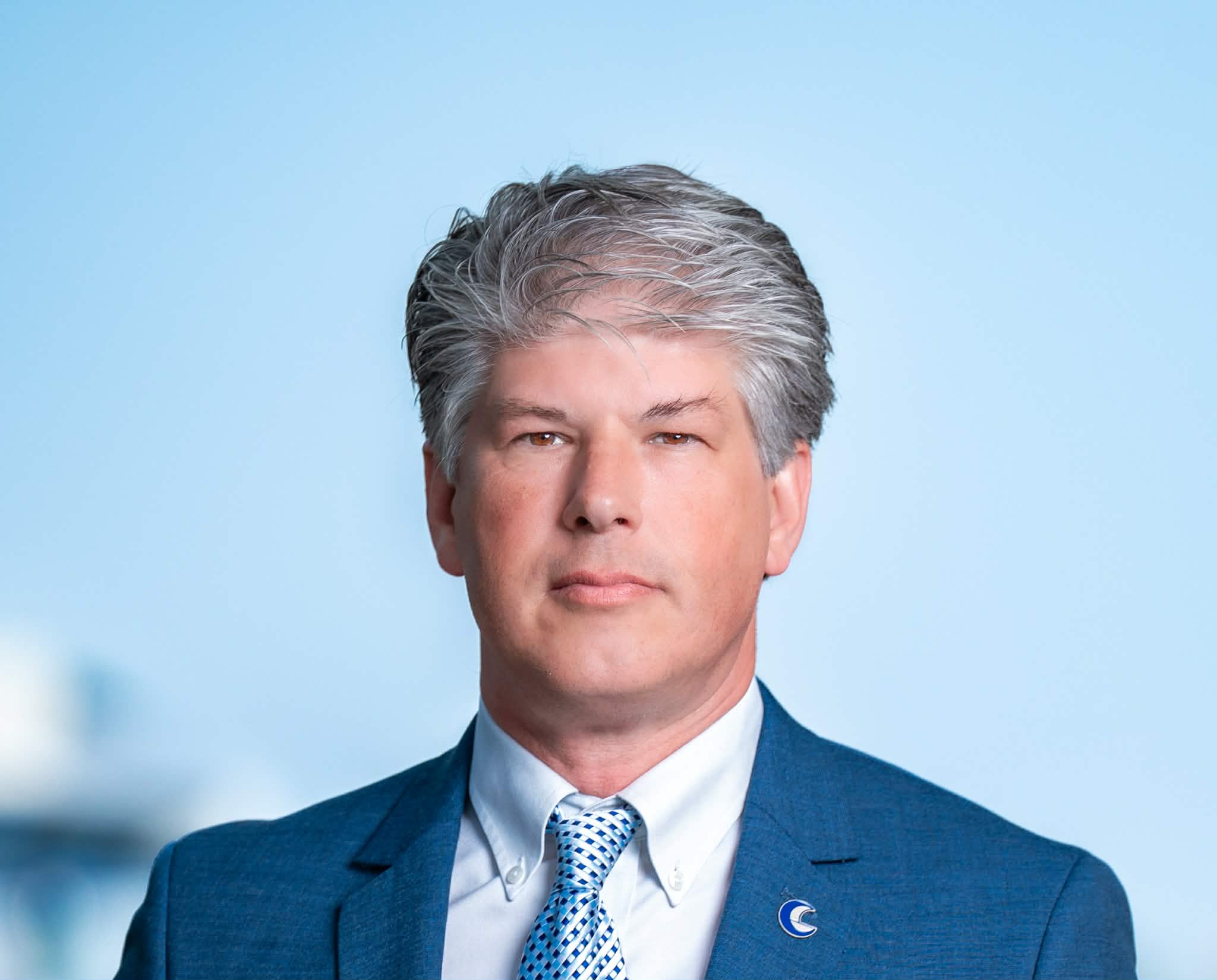
Erwin Bamps, a Belgian national, is one of the most prominent strategic figures associated with the global success and expansion of the UAE–based shipyard, Gulf Craft. His Journey with the company spans two distinct, complementary eras, giving him a unique position in leading the group today.
Bamp's managerial approach combines a deep respect for the shipyard's heritage with an advanced understanding of the global market. His key leadership strengths include in-depth alignment with the brand's "DNA". Having spent over 16 years building the company's foundations, Bamps has a comprehensive understanding of Emirati heritage values and the original vision of the company's founder, Mohamed Alshaali. This ensures that, as the company grows, it retains the unique identity that distinguishes it from traditional Western shipyards.
In addition to his deep–rooted knowledge of the Middle Eastern marine landscape, his tenure in Europe and oversight of North American, Australian, and Asian distribution channels have given him an exceptional global perspective. This international network is crucial as Gulf Craft continues to effectively compete with historic European and American Shipyards.
In an exclusive interview with Maritime Tickers, Erwin Bamps confirmed: 'My immediate priority was to ensure that each brand had a clear role, client and distribution strategy,' adding that the Middle Eastern yacht builder was a global player. It was not an easy conversation to have at the time.
He noted that Gulf Craft is globally recognised for pioneering the production of large composite superyachts, such as the Majesty 175. Highlighting distribution is one of the most important priorities for Gulf Craft because our growth also depends on what happens after a client first discovers the brand.
Returning to lead Gulf Craft was a strategic move.e
Returning to lead Gulf Craft was a strategic move at a time when the group was entering a "defining era". What are your immediate priorities for reshaping the group's five distinct brands (Majesty, Nomad, Oryx and SilverCat) and challenging legacy European shipbuilders in mature Western markets?
I would not describe the priority as reshaping Gulf Craft, because the foundations are already very strong. The priority is to bring more clarity, focus and international relevance to each part of the business.
Gulf Craft today is a house of brands, with Majesty, Nomad, Oryx and SilverCat each serving a different clientele and a different way of experiencing life on the water. Majesty is our yacht and superyacht brand, competing with the most established names in the world. Nomad speaks to owners who want longer time onboard, family use and a stronger connection to the places they explore. Oryx cabin cruisers and SilverCat power catamarans give us a very strong position in the leisure craft segment, where performance, usability and accessibility are key.
My immediate priority was to make sure each brand has a clear role, a clear client and the right distribution behind it. In mature markets, you cannot simply arrive with a product and expect the market to respond. You need local trust, service capability, after-sales support and partners who understand the client.
We are not trying to challenge European shipbuilders by imitating them. Gulf Craft’s strength is that we bring a different perspective. We build in the UAE, we understand tropical boating, hospitality-led layouts, volume, privacy and family use, and we have more than four decades of composite manufacturing experience behind us. The opportunity now is to present that capability with consistency and confidence in markets that are ready to look beyond the traditional shipbuilding centres.
For me, the defining era is about discipline. We need to keep strengthening the product, the ownership experience and the support network around each brand. If those three elements are aligned, Gulf Craft can compete anywhere.
A global vision for leading the group.
Given your deep, long-standing history with the company and your return to the helm as CEO of Gulf Craft, how has your global vision for steering the group through today's fierce yachting market competition been shaped by the extensive insights you gained during your previous international experience in Europe
My first chapter with Gulf Craft was about helping the company establish itself internationally and proving that a yacht builder from the Middle East could compete on the global stage. That was not always an easy conversation at the time. There was a perception that this region was a place where luxury was consumed, not created.
Today, the conversation is very different. The UAE has become a global reference point for ambition, design, hospitality and advanced technologies. Gulf Craft has grown with that story, from a regional boatbuilder into an international manufacturer with products from leisure craft to 55-metre superyachts.
Related: Gulf Craft Expands Leisure Craft Production with New Waterfront Facility
My experience in Europe reinforced one very important point: mature markets respect product, but they trust structure. It is not enough to build a good yacht. Clients want transparency, clear communication, strong service and confidence beyond the point of handover. They also want to know that the brand will remain present throughout the ownership journey.
That has shaped my view of Gulf Craft’s next phase. We have to combine the agility and entrepreneurial spirit that made the company successful with the structure expected by the world’s most demanding markets. That means stronger dealer representation, deeper after-sales capability and a more deliberate product strategy.
Competition today is not only about design or price. It is about relevance. Owners are more informed, more practical and more experience-led than before. They want yachts that reflect how they live, how they travel and how they spend time with family and friends. Gulf Craft’s strength is that we can respond to those shifts quickly while still maintaining the discipline of an experienced builder.
The unique requirements of these emerging luxury destinations
The spotlight is firmly on the Middle East, particularly the Red Sea and Arabian Gulf, with the rise of massive luxury coastal giga-projects. How is Gulf Craft planning to adapt its design language (such as the Majesty Terrace and Nomad Lines) to meet the unique requirements of these emerging luxury destinations?
In the Gulf, the way clients use their boats is very closely connected to the way they live at home. A yacht is often an extension of the home, almost like a private majlis on the water. It is a place for family, close friends and hospitality, but also a place where privacy and personal space are extremely important.
This has a direct influence on how we design. Clients in this region want generous social areas, shaded outdoor spaces and interiors that feel refined without being formal. They want to entertain comfortably, move easily between indoor and outdoor areas and still have parts of the yacht that remain very private.
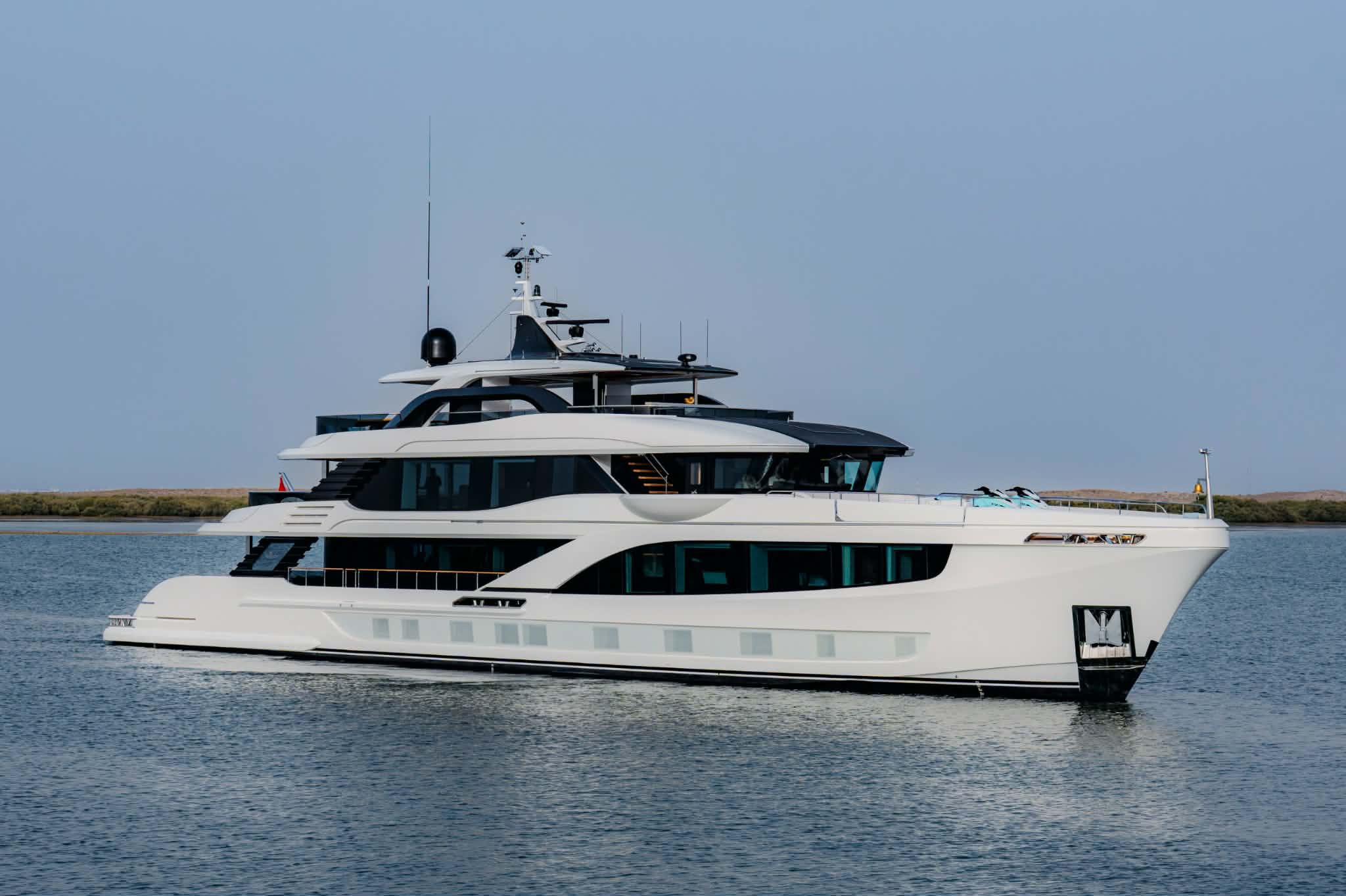
The Majesty 100 Terrace and the Nomad 101 are a good example of how two yachts in a similar size category can answer to two very different lifestyles. The Majesty 100 Terrace is designed to reflect the elegant, sumptuous luxury of a five-star hotel. It offers refined interiors, generous social spaces and, most importantly, a private owner’s terrace that gives a level of privacy usually associated with much larger yachts. That makes it very relevant for owners who want hospitality, presence and discretion in one yacht.
The Nomad 101 has a different purpose. It is designed more as a home away from home, particularly for families who want to spend longer periods onboard. It is about comfort over time, practical living spaces and the confidence to cruise further while still feeling connected to family and the sea.
For us, adapting to the Red Sea, the Arabian Gulf and other emerging coastal destinations does not mean creating a regional feature for the sake of it. It means understanding how people here actually use their yachts. The result is a design approach that reflects Gulf hospitality, hot-weather cruising and the growing desire to bring people closer to the water.
Distribution is the key to success.'
You recently emphasized that " distribution is the key to success," followed by expanding your dealer network in Southeast Asia. What is your upcoming roadmap for deepening this footprint in the Americas and Europe to guarantee premium after–sales support and build long – term client loyalty?
Distribution is one of the most important priorities for Gulf Craft because our growth also depends on what happens after a client first discovers the brand. A yacht is not a transactional product. The client needs confidence before purchase, guidance during the build, and proper support after delivery.
Related: SilverCat Appoints Sultan Al Salem & Sons as Official Dealer in Kuwait
Our approach is selective. We are not looking to simply add names to a map. We want business partners who understand the product, the client, and the level of service expected in each market. A Majesty superyacht client in the United States does not have the same requirements as an Oryx or SilverCat client in another region. The dealer has to fit the brand and the segment.
In the Americas, we are continuing to strengthen Majesty’s presence with players who already have credibility in superyachts, brokerage, charter, and after-sales support. This is essential because the United States is one of the most demanding markets in the world. Clients there expect local knowledge, fast response, and a very mature ownership structure.
In Europe, the opportunity is broader. Majesty already has recognition, particularly in the Mediterranean, but we see strong potential to develop Nomad, Oryx and SilverCat more deliberately. Europe is not one single market. The Mediterranean, Northern Europe and the UK each have different boating cultures, so the dealer structure has to reflect that.
The roadmap is therefore built around quality of representation, not speed of expansion. We want dealers who can become long-term custodians of the brand in their markets. That means client service, technical knowledge and the ability to stay close to owners year after year.
Client loyalty is built when the product performs, and the brand remains present. Distribution is the bridge between the shipyard and that long-term relationship.
Gulf Craft is a global leader in the production of large composite superyachts.
Gulf Craft is globally recognized for pioneering massive composite production superyachts like the Majesty 175. How do you balance expanding this high-tech composite manufacturing with the growing industry demand for sustainability and the circular economy through your dedicated refit and maintenance services?
Composite construction has been one of Gulf Craft’s defining strengths, and the Majesty 175 remains a very important example of what can be achieved with advanced composite manufacturing at scale. It allows us to build yachts with strength, efficiency, volume and shallow-draft capability, which are all important advantages for the way our clients use their yachts.
At the same time, we have to be honest that composites present a well-known end-of-life challenge for the wider marine industry. For us, the most effective circular economy strategy available today is to extend the service life of what has been built. Every vessel that is properly maintained, upgraded or refitted rather than replaced represents a significant saving in raw materials, embodied energy and waste.
This is where our refit and maintenance capability becomes very important. Through our superyacht service centre SYSC in Ajman, we are able to support yachts throughout their lifecycle, whether they were built by Gulf Craft or by another shipyard. Our refit activity closes part of that loop. It gives us direct feedback on how materials, systems and construction methods perform in real conditions, and that knowledge informs better design and engineering decisions upstream.
It also gives owners a practical path to improve their yachts over time. They can upgrade systems, improve energy efficiency, modernise interiors and extend the working life of their assets instead of replacing them prematurely.
In that sense, the growth of our refit business is not in tension with our manufacturing ambitions. It is the circular complement to them. We will continue to advance composite construction where it offers clear benefits, while also investing in the service, refit and lifecycle support that help yachts remain useful, valuable and relevant for many years.
A shift in the mindset of ultra-high-net-worth buyers
The superyacht sector is witnessing a shift in the mindset of ultra-high-net-worth buyers, who are increasingly favoring charter-friendly layouts and flexible ownership models over traditional private use. How is Gulf Craft re-engineering the interior volumes and layouts of its upcoming models to capitalize on this behavioral change?
We are seeing a new generation of buyers approaching yacht ownership in a very smart and practical way. For many owners, the yacht remains a private asset first, but they are also looking at ways to keep it more active throughout the year and offset part of the running costs through charter.
That shift has a direct impact on design. A yacht that works well for charter needs generous social spaces, flexible guest accommodation, practical crew circulation and enough privacy for different groups onboard. It also needs durable materials, well-planned service areas and layouts that allow the crew to deliver a high level of hospitality without disrupting the guest experience.
This is where Gulf Craft has a natural advantage. We have always placed strong emphasis on volume, space planning and usability. Across Majesty, we focus on creating yachts that feel larger than their length suggests, with strong separation between guest and crew areas. The Majesty 145, for example, combines extensive outdoor spaces, wellness features and a six-cabin arrangement that can support both private family use and charter-style entertaining.
Nomad answers this trend differently. It is less formal and more residential in spirit, designed for longer stays onboard and multi-generational family use. That makes it attractive to owners who want a home away from home, while also giving charter guests the comfort, privacy and relaxed onboard experience they increasingly look for.
The key is not to design a yacht only for charter or only for private ownership. The most successful layouts today can move between both worlds without compromise.
#The Majesty 145 #Gulf Craft#Erwin Bamps #Magdy Sadek #Majesty #SilverCat # Northern Europe #Arabian Gulf #UAE#Majesty 100 Terrace # Nomad 101 # Mohamed Alshaali.
You Might Also Like
Recommendation News


Marine News Room
Pablo Rodas-Martini writes :The centenary celebrations of the port of Gdynia 11 February 2026
Yachts&Cruises
The fourth : Cruise sector represents bulk of US$116Bn US fleet 07 October 2025
Shipping Lines
ABS Lashing Notation Provides Flexibility for Container Operators 15 October 2025
Marine Tech
MBF and ZESTAS sign MoU To accelerate zero- emission 11 October 2025