Today, Greece's 24-hour maritime strike will cause ferry cancellations.
Human Rights at Sea (HRS), alongside international maritime leaders, is urging government authorities and Port States to extend diplomatic and legal intervention for the release of unjustly detained seafarers who are victims of criminalisation.
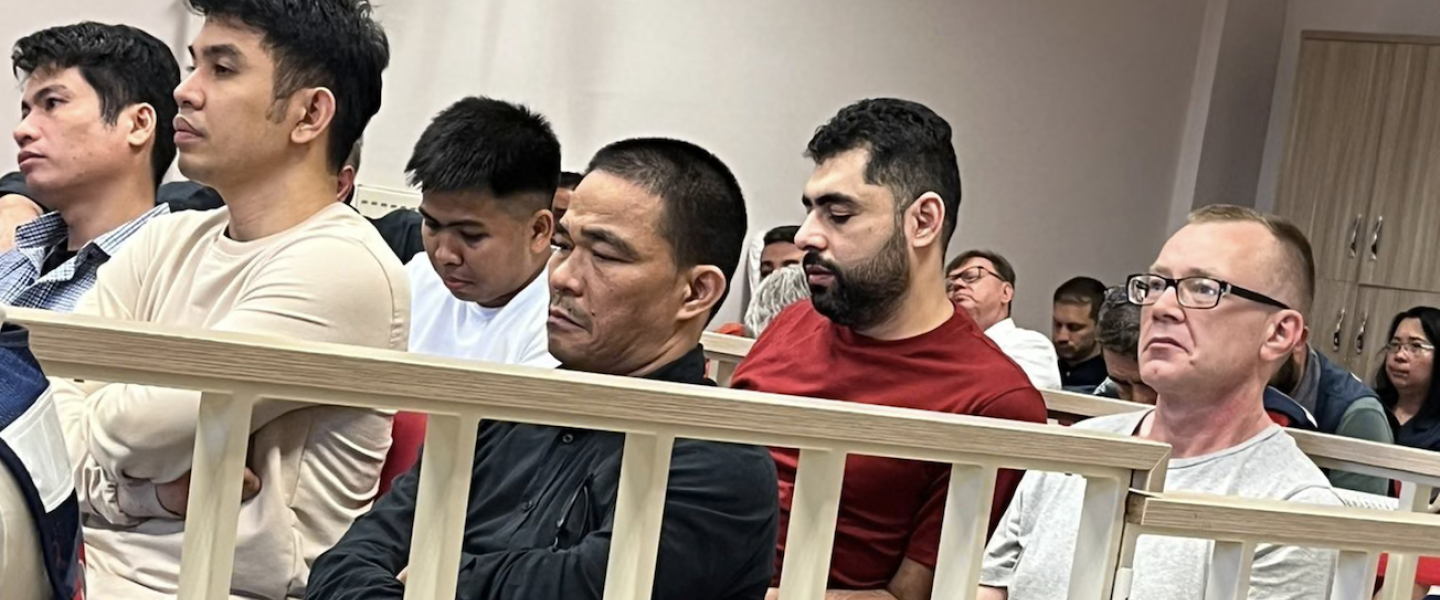
This appeal comes after recent international maritime fora where shipping stakeholders, employers, and union leaders acknowledged that the maritime industry has already exhausted all its efforts to liberate and give justice to seafarers, foremost of which were Finnish-national Chief Mate Ali Albokhari of the bulk carrier Phoenician M and the three Filipino crew of MV Harris. These seafarers remain detained in Turkish and Algerian prisons, respectively.
The case of Albokhari and the three Filipino seafarers
The case of Albokhari and the three Filipino seafarers was cited as prime examples of what maritime leaders call the ‘convenient scapegoats for failures in the global supply chain’. Unjust criminalisation of seafarers is rapidly worsening under the shadow of intensifying global conflicts. They are accused, arrested, and imprisoned for maritime incidents, pollution, or contraband over which they had no control or knowledge.
Victims of transnational crime networks
These seafarers have become victims of transnational crime networks as they continue to man the global seaborne trade, making port calls even at notorious hubs for international drug cartels. The vessels they work on were exploited by organised crime groups, and the seafarers were held criminally liable for allegations outside of their knowledge and even with the absolute lack of incriminating evidence.
The Turkish courts failed in the case of Albokhari,
Legal findings from similar past cases show that prosecutors must prove actual participation, knowledge, control, or coordination, not merely rank or command responsibility. This arguably, was where the Turkish courts failed in the case of Albokhari, citing command responsibility. This was also where consular interventions proved effective, as the Croatian government successfully negotiated for the release of the ship captain, Capt. Marco Bekevac, who, in the LADDER of command responsibility, sits at the top.
Maritime industry leaders have already exhausted all efforts for the past several years; international bodies have issued their pleas and appeals for the release of these seafarers, while employers and unions continuously provide legal and welfare assistance. None of these have worked so far, with Port States asserting their sovereignty in enforcing their national laws. In light of this, Human Rights at Sea recommends consular engagement and welfare monitoring for our imprisoned seafarers with regular in-person consular contact, prison visits, welfare checks, and structured communication.
Related: Unions ready for negotiations on the new national Seafarer CBAs
The timely judicial review
It is also highly recommended to adopt a structured approach that will focus on the timely judicial review, disclosure of new evidence, and the humanitarian implications of prolonged detention of the individual. In addition, it is suggested to continuously engage Turkish counterparts through established bilateral channels, particularly during periods of high-level dialogue. This will help ensure that the case receives the necessary attention within the broader framework of Finland-Turkey state relations.
Seafarers are formally recognised globally as key workers who keep international trade and supply chains moving. More than celebrating their contributions, it is our collective responsibility to provide them with a safe, dignified, and full protection under the law.
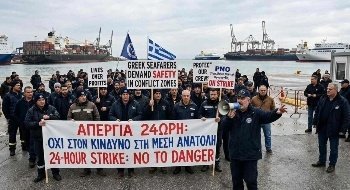
A 24-hour strike by Greek maritime workers' unions.
On the other hand, today, on Wednesday, 25 November, numerous scheduled ferry services across the country will be disrupted by a 24-hour strike by Greek maritime workers’ unions. This is due to a 24-hour strike by Greek maritime workers' unions, which will disrupt numerous services. Today, Wednesday, ferry passengers in Greece face cancellations and timetable changes as maritime unions stage a 24-hour strike over wages, collective bargaining agreements and working conditions.
Related: Eight Italian ports will stop on 30 October due to a strike.
Unified collective labour agreement
A nationwide strike covering all categories of vessels has been called by the Panhellenic Union of Merchant Marine Engineers (PEMEN) and the engine-room crews' union "STEFENSON". A unified collective labour agreement and a 12% increase in wages, allowances, and additional payments are being demanded. A seven-hour working day, a five-day week, and a 35-hour working week are also being called for, as well as increased staffing levels, lower taxation, onboard doctors, improved health and safety measures, and protection against assignments to conflict zones.
Related: Italy: Unions on strike to support the fund of the exodus of dockworkers
Press Release + Agencies
#PEMEN #STEFENSON #Strike #Seafarers #Human Rights at Sea (HRS) #Albokhari #Turkish counterparts #Filipino crew#MV Harris # ferry passengers
You Might Also Like

Recommendation News

Shipping Lines
Alphaliner : The evolution of container shipping over the last 25 years in numbers- Details 12 January 2026
Shipping Lines
Trieste, La Spezia and Genoa have been included in the new Ocean Alliance program. 22 January 2026
Marine Tech
Amasus doubles down on bound4blue eSAILs® 17 December 2025
Shipping Lines
Billions of barrels of crude oil are “stuck” at sea 15 November 2025
Shipping Lines
Aponte’s succession gift is the largest in shipping history 16 April 2026