White House maritime blueprint floats universal fee on foreign-built ships calling US ports
A Maritime Security Trust Fund (MSTF) that would be fed in large part by taxing foreign-owned vessels
The Trump administration unveiled a wide-ranging blueprint for revitalizing the US maritime sector, the financial cornerstone of which would be a Maritime Security Trust Fund (MSTF) that would be fed in large part by taxing foreign-owned vessels calling US ports.
“America’s Maritime Action Plan” Coming in at more than 30 pages, the plan calls for establishing maritime prosperity zones to bolster investment, reforming workforce training and education, expanding the fleet of U.S.-built and U.S.-flagged commercial ships, establishing a dedicated funding stream through a Maritime Security Trust Fund and reducing regulations.

Plans of Trump to levy fees on China-linked ships
It is noteworthy that the white house early last year announced plans to levy fees on China-linked ships to loosen the country's grip on the global maritime industry and help pay for a U.S. shipbuilding renaissance. The so-called Section 301 penalties followed a U.S. probe that concluded China uses unfair policies and practices to dominate global shipping The plan set indicative revenue ranges, noting that a fee of one cent per kilogram could raise about $66 billion over 10 years while a rate of 25 cents per kilogram could generate close to $1.5trn over the same period, with proceeds directed to a new Maritime Security Trust Fund.
A deal to put the levies on hold for 12 months.
Meanwhile the fees, which sparked intense pushback from the global shipping industry and intensified tensions between the world's two largest economies, hit on October 14 and were expected to generate an estimated $3.2 billion annually from Chinese-built vessels sailing to U.S. ports. But China retaliated with its own port fees on U.S.-linked ships and the tit-for-tat fees disrupted global shipping. Soon after, the two sides struck a deal to put the levies on hold for 12 months.
The document states
The document states that the plan was prepared under Executive Order 14269, Restoring America’s Maritime Dominance, signed on April 9, 2025, and is presented under the names of Marco A. Rubio, listed as Assistant to the President for National Security Affairs, and Russell Vought, Director of the Office of Management and Budget. The plan notes that several measures would require legislation and funding approval, and points to port-fee revenues as a potential
Related : China suspends "special port fees" for US ships
(SHIPS) for America Act
On Friday, Shipyard owners, investors and the bipartisan sponsors of the Shipbuilding and Harbor Infrastructure for Prosperity and Security (SHIPS) for America Act welcomed President Donald Trump's maritime plan, which landed months later than hoped.
Reinvest port fee revenues in maritime security and infrastructure projects
While it is important that the SHIPS Act establishes a maritime security trust fund to reinvest port fee revenues in maritime security and infrastructure projects, such as shipyard rehabilitation, the legislation enjoys rare bipartisan support in Washington, but has not progressed quickly.
It is noteworthy that commercial shipbuilding capacity and maritime workforce of the United States has been weakened by decades of Government neglect, leading to the decline of a once strong industrial base while simultaneously empowering our adversaries and eroding United States national security. Both our allies and our strategic competitors produce ships for a fraction of the cost needed in the United States. Recent data shows that the United States constructs less than one percent of commercial ships globally, while the People’s Republic of China (PRC) is responsible for producing approximately half.
Rebuilding America’s maritime manufacturing capabilities
This required a comprehensive approach equires a comprehensive approach that includes securing consistent, predictable, and durable Federal funding, making United States-flagged and built vessels commercially competitive in international commerce, rebuilding America’s maritime manufacturing capabilities (the Maritime Industrial Base), and expanding and strengthening the recruitment, training, and retention of the relevant workforce.
Related : Magdy Sadek :American Gorilla Wrestling the Chinese Dragon’
source : Agencies
#United States-flagged # SHIPS Act #Trump's maritime plan #China # US ports #MSTF# white house #the fees #PRC
You Might Also Like

Recommendation News

Marine News Room
Raul Villa Caro writes : Entry into force of the High Seas Treaty: a lifeline for the oceans? 13 February 2026
Ports
Port of Long Beach reported a 31.7% increase in volume to 842,030 TEU 13 June 2026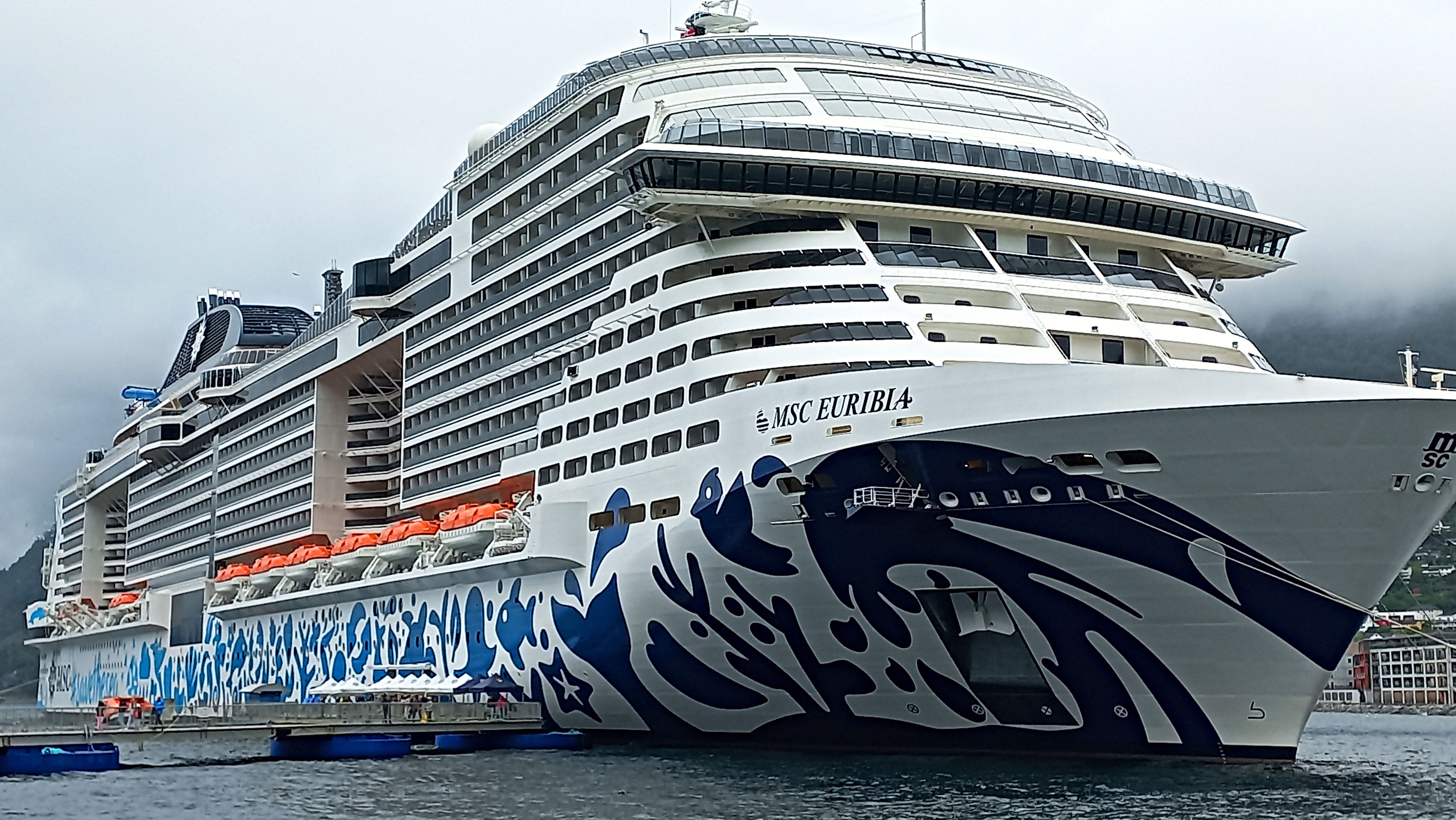
Yachts&Cruises
Vago: "Transfer seafarers stranded in the Persian Gulf to the MSC Euribia and other cruise ships." 16 April 2026
Yachts&Cruises
Fincantieri delivers the first ship for Four Seasons Yachts in Ancona. 26 February 2026
Marine Tech
MBF and ZESTAS sign MoU To accelerate zero- emission 11 October 2025