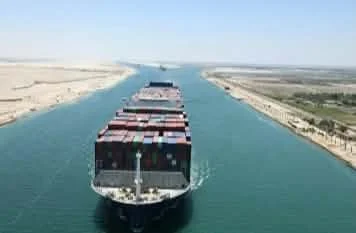
The REDMAR system was created to address the need for a sea level measurement network with real-time data access. Systematic data storage of recordings made
By : Raul Villa Caro
Secretario de la Fundación “EXPONAV”
Tide gauges are instruments that record vertical sea level movements and determine tides, which are the vertical rise and fall of water observed twice every 24 hours. These records can be obtained in graphical, numerical, or digital form.
.Spain has two tide gauge networks that monitor sea levels in real time and generate historical data for analysis. The first is the National Geographic Institute (IGN) Tide Gauge Network. The second is the State Ports Authority REDMAR Network, which has been operational since 1992 and currently has 42 stations deployed in Spanish ports of general interest.
Tide gauge network in Spain
The Tide Gauge Network consists of stations that monitor sea levels in real time and generate historical data for analysis. Spain has two main networks:
- Since 1992, Puertos del Estado (the Spanish State Ports Authority) has operated the REDMAR network, which currently has 42 stations deployed in Spanish ports of general interest. These permanent monitoring stations use advanced technology to measure sea levels and wave action in real time. However, a possible renewal, improvement, and development process has been under study for the past two years, following more than 30 years of operational service. The goal is to ensure the network's continued operation by incorporating the most efficient technology and the highest quality standards..
- The National Geographic Institute's (IGN) Tide Gauge Network: the competent body for calculating and establishing all altitude reference points across the national territories. Currently, the IGN operates a network of 10 tide gauges in Spain, some of which are 150 years old.
Average Sea Level in Alicante
.In 1857, the National Geographic Institute (IGN) started creating a topographic map of Spain and selecting the "zero elevation," or "origin," also known as the "datum." In 1870, this point was established in Alicante, in part due to the calm and favorable conditions of the Mediterranean Sea. Galicia has only one tide gauge operated by the IGN: the one in La Coruña.Additionally, each port defines its own reference level, or "zero point," for construction and dredging operations. This is known as the "port zero." The tide gauges of the REDMAR network are generally referenced to the port zero point.
.Alicante was chosen because it had a new, modern port at the time. The port featured a pier and a breakwater that protected it from inclement weather and strong currents. Additionally, the city had a Madrid-Alicante railway line. This infrastructure would facilitate future work and logistics. Perhaps most importantly, given the archaic measurement methods, a location with very small tidal ranges would contribute to reliable results. In the Levante region, for example, tidal ranges are only 20 to 50 centimeters, which is very small compared to the 3, 4, or 5 meters found along the Cantabrian coast.
After the first tide gauge was installed in Alicante in 1927, another measuring station was set up in La Coruña in 1950, at the end of the Calvo Sotelo Dock in the port. Years later, the network expanded with additional installations in Alicante (1957), Almería (1985), Tenerife (1992, 2008, and 2009), Fuerteventura (1999 and 2018), Cartagena (2005), and Alborán Island (2016).
Tide gauge installations
A tide gauge is a permanent installation that uses specialized instruments to record sea level. They are usually located in a building or small structure near the shoreline. Most tide gauge stations are located inside harbors to escape the corrosive marine environment.
The tide gauge is the most traditional measuring instrument. It consists of a graduated scale on which the sea level is measured directly. Other types include mechanical float recorders and more modern angle encoders. The latest technology, such as that installed in the REDMAR network, uses radar sensors that emit short pulses which reflect off the water and return to the sensor as echoes. The time it takes for the echo to travel is proportional to the distance traveled. This system does not require contact with the water to record variations in the sea level.

The State Ports' Sea Level and Wave Measurement Network (REDMAR).
The REDMAR system was created to address the need for a sea level measurement network that would allow for real-time data access. In 1992, systematic data storage began for the recordings made by the first acoustic tide gauges installed in 14 ports within our port system.
Subsequently, in 2001, the need arose to replace the original equipment, and pressure-based sensors were introduced. After testing radar equipment, however, the MIROS tide gauges, which are based on frequency scanning technology, were ultimately selected.
The MIROS radar provides precise individual measurements and allows users to select the sampling interval. Newer models also measure wave action and provide significant wave height and mean period data every 20 minutes. To ensure the stability of the tide gauge reference, at least two reference signals are used: one adjacent to the tide gauge and one in a more stable location that is level with the first signal (the primary reference signal).
Galicia, and Ferrol in particular, are key players in this case.
Galicia has 10 tide gauges that belong to the REDMAR network. Three are located on the coast of Pontevedra (in Vigo, Marín, and Villagarcía), six are in the waters of A Coruña, and one is on the coast of Lugo in San Cibrao.
The Tide Gauge Network in Ferrol includes three measuring stations (tide gauges) that are part of the REDMAR network of state ports. Each station monitors the sea level in real time, providing crucial data for navigation, coastal management, and scientific research. The Ferrol-San Cibrao Port Authority (APFsC) manages the tide gauges in the Port of Ferrol.
Tide Gauge No. 1 in Ferrol is located on the northeast end of the dock in the Outer Port. Measurements began on December 22, 2006, and meteorological sensors were installed on October 2, 2015. Tide Gauge 4 is also in the Outer Port, 4 meters from the northeast corner of the docking pier. It began taking measurements on May 21, 2014. Finally, tide gauge number two in Ferrol is located in the inner port at the end of the Fernández Ladreda pier next to a green beacon. For those wondering, number 3 corresponds to the gauge that was moved to San Ciprián (San Cibrao).

The Langosteira Sea Power Multi-Connector
The Galician Regional Government (Xunta de Galicia), through the Galician Institute of Energy and Environment (INEGA), recently approved the start of administrative procedures for the "INNOMAR" innovation procurement project, which aims to develop marine renewable energy. The project involves designing and constructing a prototype in the Punta Langosteira area of Arteixo. The prototype will monitor and harness the energy generated by the waves and currents near the Port of La Coruña.
The project includes designing, developing, and validating an innovative technological solution: a "sensorized floating multi-connector." This connector will allow different floating marine electricity generation prototypes to interconnect. The goal is to harness energy from all the devices through the same line and connect it to the onshore electrical grid. This is an entirely new challenge, and until now, only those in Anglo-Saxon countries—the leaders in this technology—have attempted such a feat.
The multi-connector will have various sensors that allow for the real-time monitoring of atmospheric and marine conditions, such as wind, waves, currents, and tides. These features are partially present in the REDMAR network's tide gauges. However, achieving this will require significant technological advancement. The current state of the art in wave, tidal, and current energy converters varies by area. Integrating the system will involve overcoming obstacles such as operating simultaneously with high-voltage auxiliary systems that transmit electricity to the grid and a multitude of sensors that collect necessary data

A unique tide gauge is located in the port of Celeiro (Viveiro, Lugo).
The electronics firm Lages Chavín designed a five-meter-high artistic tidal instrument with two dials: a clock and a tide gauge. One dial shows the number of hours until the next tide (either low or high), and the other shows the current sea level. This unique piece is mounted on a cast iron column. Both the dials and the base of the tide gauge are crafted from Sargadelos ceramic, giving the instrument a distinctive character
This independent instrument is equipped with an electronic control panel and measuring equipment. It is connected to two probes at the end of the pier. One probe is submerged and the other is a radar probe.
This tide gauge therefore has practical, artistic, and cultural value, representing the Mariña Lucense community's commitment to preserving its maritime heritage. Remember that tide gauge data was crucial for the development of fishing communities and the safety of their ships and boats.
Incidentally, there is another MIROS tide gauge in San Cibrao, near the port of Celeiro, operated by the APFSC and part of the REDMAR network. This gauge is located at the corner of the south breakwater of the port of Alúmina, next to the pilot boat berth..
https://exponav.org/blog/historia-naval/redmar-la-red-de-medida-del-nivel-del-mar-de-puertos-del-estado/

Related : Raul Villa Caro writes : Entry into force of the High Seas Treaty: a lifeline for the oceans?
#Tide gauges #Raul Villa Caro #REDMAR system #the sea level measurement #State Ports #.Spain#Port of La Coruña. #The MIROS radar
You Might Also Like

06 December 2025

14 October 2025
Recommendation News
Shipping Lines
Baltic Exchange congratulates SGX and EEX on a successful transfer of Panamax FFAs 02 February 2026
Yachts&Cruises
Viking XPRS resumes service on the Helsinki–Tallinn on7 February 07 October 2025
Incidents
Singapore container ship suffers explosion off Kerala coast 17 October 2025
Shipping Lines
APM Terminals and Hateco Group continue a successful partnership with new terminal in Da Nang 27 April 2026
Marine Tech
Bulgarian Shipowners Association joins ICS as an Affiliate Member 18 June 2026