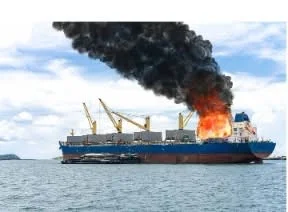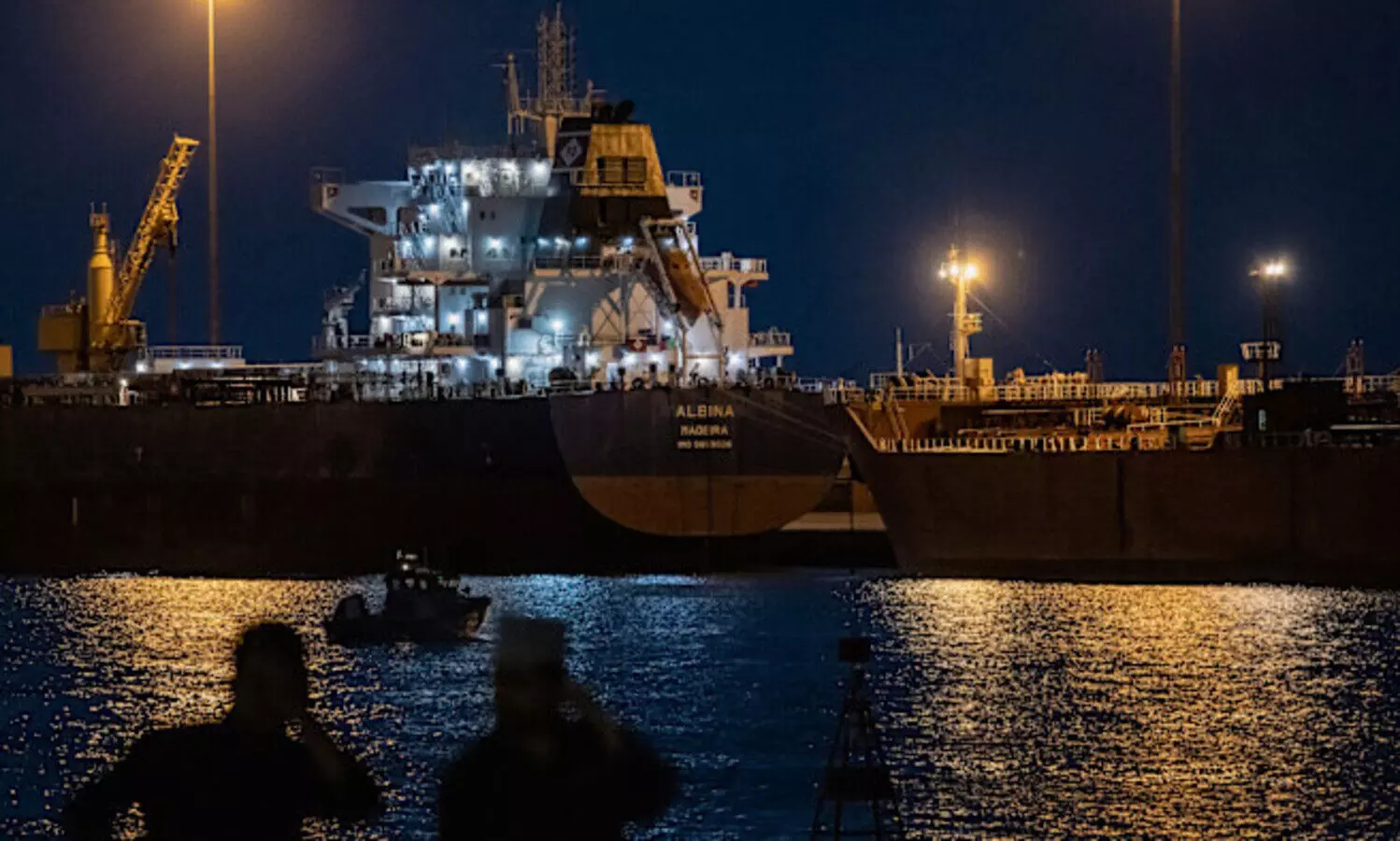
The Financial Times cites sources that report some ships paid up to $2 million to pass through the area following the 28 February attack on Iran
Emanuele Grimaldi : Around 1,100 ships belonging to countries not directly involved in the conflict are stranded in the Persian Gulf
Iran has informed the International Maritime Organization (IMO) that it will allow "non-hostile" ships to pass through the Strait of Hormuz, while maintaining restrictions against states deemed to be involved in the conflict. The Strait of Hormuz, through which around a fifth of the world's oil passes, has been partially closed by Iran following attacks by Israel and the United States.
According to Tehran, these restrictions form part of its right to self-defence and will specifically affect vessels associated with the United States, Israel and other countries deemed to be actively involved in the hostilities. The Financial Times cites sources that report some ships paid up to $2 million to pass through the area following the 28 February attack on Iran. Tehran maintains that navigation has not been suspended, but is subject to conditions imposed by the conflict.
A 15-point plan to build the agreement.
Donald Trump's proposal to end the war between the United States and Iran is a month-long ceasefire and a 15-point plan to build the agreement. According to reports in the New York Times and Israeli broadcaster Channel 12, the White House has developed a document setting out a roadmap to end the conflict. The plan could form the basis of potential negotiations in Pakistan this week, as the US has delivered the 15 points to this country. The 30-day truce would allow time to discuss and finalise the agreement.
Iran has repeatedly stated that the Strait of Hormuz remains open
Iran has repeatedly stated that the Strait of Hormuz remains open, and their letter confirmed that there has been no suspension of maritime traffic.
Related : Trump threatens to ‘obliterate’ Iran’s power plants if Strait of Hormuz is not reopened
'Navigation continues, subject to compliance with the necessary measures referenced above and the realities arising from the ongoing conflict.' The letter further emphasises that vessels, equipment and assets belonging to the aggressor parties — namely the United States, the Israeli regime and other participants in the aggression — do not qualify for innocent or non-hostile passage.
The Strait of Hormuz,
Related : IMO :Statement on the Strait of Hormuz
The Strait of Hormuz, which connects the Persian Gulf and the Gulf of Oman, is the world’s most important maritime route for oil and liquefied natural gas (LNG).According to the US Energy Information Administration (EIA), around one fifth of the world's oil supply typically passes through its narrow channel each day.
A detailed overview of the crisis affecting the Strait of Hormuz

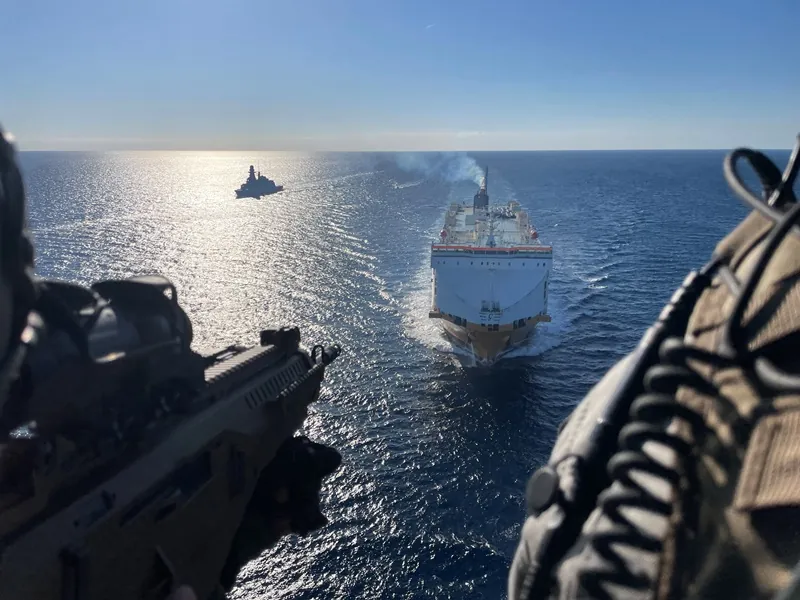
Notably Emanuele Grimaldi, CEO of the Grimaldi Group and president of the International Chamber of Shipping, recently provided ANSA with a detailed overview of the crisis affecting the Strait of Hormuz, correcting recently circulated figures. Currently, around 1,100 ships belonging to countries not directly involved in the conflict are stranded in the Persian Gulf. Despite the extent of the blockade, the impact on the Italian fleet is minimal, with only one Italian ship — the car carrier Grande Torino, controlled by the Grimaldi Group — currently blocked in the Persian Gulf. Two other Neapolitan group ships, which were initially heading for the area, were promptly diverted to alternative ports to ensure the safety of the crews and cargo, in accordance with international navigation law.
Protection of seafarers and the freedom of navigation
The uncertainty surrounding the duration of hostilities has been the main concern recently, as the real cost to the national economy will depend closely on how long transit remains interrupted. Although oil price volatility is evident, Grimaldi emphasises that Italy is not immediately vulnerable according to Shipping Italy
The president of the International Chamber of Shipping ICS remains extremely cautious, reiterating that the protection of seafarers and the freedom of navigation are universal and non-negotiable principles. This is because any obstacle to maritime traffic has a direct impact on global stability and the supply of essential goods and services
Source : Agencies + Shipping Italy.
# Emanuele Grimaldi, #ICS #Iran #Strait of Hormuz #Seafarers #Grimaldi Group #Donald Trump's proposal #Financial Times cites #a fee #non-hostile vessels
You Might Also Like
Recommendation News

Yachts&Cruises
Italy : Five Moby Ferries Sold to MSC in Antitrust-Linked Transaction 21 December 2025
Shipping Lines
Saipem and Subsea7 announced the signing of a merger agreement 13 July 2026
Yachts&Cruises
Caronte & Tourist Receives €40 Million in Financing 18 March 2026
Marine Tech
DNV Type Approval Design Certificate accelerates deployment of Econowind VentoFoils 17 July 2026