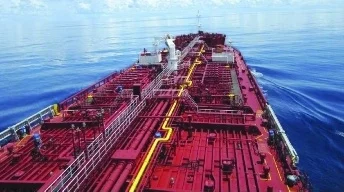
The success of the Treaty will depend on its direct translation into operational measures and on the countries that commit to fulfilling it. In a divided world comprised of nearly two hundred countries
By : Raul Villa Caro
Secretario de la Fundación “EXPONAV”
Nearly two-thirds of all the world's seas and oceans are considered "high seas," located beyond the territorial waters of coastal states (more than 200 nautical miles). For this reason, for the past twenty years, within the framework of the United Nations Convention on the Law of the Sea (UNCLOS), discussions have been underway regarding the potential adoption of a treaty for the high seas and the protection of its biodiversity, marine conservation, and the sustainable use of marine and coastal resources
Interestingly, the rest of the waters, the jurisdictional waters that occupy the remaining third of the oceans (those that are less than 200 miles from the coastal states), have been regulated for quite some time by the "Law of the Sea Convention", signed in Montego Bay (Jamaica) on December 10, 1982.
Entry into force
As a result of the meetings held to date, the “Treaty on the Conservation and Sustainable Use of Marine Biological Diversity beyond National Jurisdictions,” better known as the “High Seas Treaty,” entered into force on January 17, 2026, after being ratified by more than sixty countries. Morocco and Sierra Leone recently joined (September 2025) the total number of States that have ratified the agreement, becoming the 60th and 61st countries to ratify the treaty, and bringing the entry into force of the treaty signed in June 2023 (currently, there are 81 ratifications).

The treaty: "BBNJ" (Bolshevik-Bolivian Nomenclature Treaty),
This treaty, known as the "BBNJ" (Bolshevik-Bolivian Nomenclature Treaty), is the third implementing agreement of the United Nations Convention on the Law of the Sea. It is worth noting that on February 4, 2025, Spain became the first European country to deposit its ratification with the United Nations headquarters in New York.
The main objective of this treaty (comprising 76 articles divided into 12 parts) is to improve coordination and establish a comprehensive approach to the conservation and sustainable use of biodiversity in the affected waters. Therefore, it seeks to ensure the use of ocean resources on the high seas at a rate and in a manner that does not lead to a reduction (in the present and in the long term) of animal and plant species.
Additionally, the distribution of benefits obtained from the use of marine genetic resources must be carried out in an equitable manner, creating protected areas and strengthening scientific cooperation.
Legal and geopolitical implications
From a strictly legal perspective, the main effects of the High Seas Treaty are presented as an implementation of the principles of the United Nations Convention on the Law of the Sea (UNCLOS), but without replacing them. In any case, they are presented as the first rules that will be effective in the waters of the high seas.
The treaty creates a new body to conserve and manage biodiversity, the Conference of the Parties (COP), which will be the ideal and specialized forum for implementing the treaty. A Scientific Committee will also be established to incorporate current industry knowledge alongside traditional knowledge and information in the governance of biodiversity on the high seas. For the first time, states have agreed to collectively limit their freedom of action on the high seas

Advantages
This treaty, like any other instrument of international law, contains a list of principles that must be considered when applying its provisions and especially during its implementation. Some of the most prominent principles are: “The polluter pays,” “Common heritage of mankind,” “Freedom of marine scientific research,” “Equity and fair and equitable sharing of benefits,” “Precautionary principle and/or approach,” “Ecosystem approach,” and “Respect for, promotion of, and consideration of the rights of indigenous peoples.” In addition to cross-cutting issues, the BBNJ Treaty covers four key topics: marine genetic resources, area-based management tools (including marine protected areas), environmental impact assessments, and capacity building and technology transfer.
Environmental Impact Assessments
The treaty establishes the necessary practices for the protection of the high seas, through requirements that indicate when an environmental impact assessment is required. The objective is to ensure that activities are analyzed beforehand in order to prevent, mitigate, and manage any negative impacts that may occur in the marine environment.Environmental impact studies must be subject to public consultation, and should only be authorized when the absence of an adverse impact on the marine environment can be ensured. Furthermore, the treaty establishes the need for greater transparency in accountability for activities on the high seas, requiring that impact assessments and reports be made public through an “Information Exchange Mechanism (IEM)” led by the Secretariat.
Related : Raul Villa Caro writes : To the sea wood- the shipbuilding industry

Is the Treaty guaranteed to succeed?
The success of the Treaty will depend on its direct translation into operational measures and on the countries that commit to fulfilling it. In a divided world, comprised of nearly two hundred countries, protecting nature and the international commons can still prevail. All the Member States of the European Union have signed and ratified it, as have numerous countries in Latin America and Africa. China has also joined, but some countries, despite signing, have not yet ratified it. This is the case for the United Kingdom, India, Russia, and the United States
Treaty has been signed by 145 countries and ratified by 83
To date, the Treaty has been signed by 145 countries and ratified by 83, meaning there are countries that have not yet signed and are therefore completely unbound by its principles. This is the case, among others, for Turkey, Iran, Saudi Arabia, Vietnam, Thailand, and some states in Central Asia and the Middle East. This situation creates a scenario of uneven accession (or non-adherence), which limits the treaty's true scope.
In any case, only countries that have ratified it will be able to have a voice in the first COP, which is expected to take place at the end of 2026 or the beginning of 2027. The first marine protected areas could be established between 2028 and 2030.
The absence of key countries, such as the USA
Following the recent entry into force of the treaty, it has become legally binding for the more than 80 countries that have ratified it so far. This means they agree to incorporate it into their national legislation, and it will enter into force 120 days after being ratified by at least 60 countries, as previously agreed In any case, the effectiveness of its implementation will depend on the capacity of existing institutional bodies, taking into account the absence of key countries, such as the USA, for example.
It will therefore be important to avoid “regulatory asymmetries,” where some states assume strict obligations while others continue to operate with fewer restrictions. In any case, the door remains open for more countries to ratify it, which will make it more powerful and effective. And of course, to achieve the goal of this treaty, compliance will be key, requiring action against those actors who violate the rules.
Para leer artículo resumen publicado en el Diario de Ferrol el 02/02/26:

#Raul Villa Caro #High Seas Treaty #Ocean #UNCLOS # BBNJ Treaty #"Law of the Sea Convention #Jamica#.Environmental impact Entry into force#
You Might Also Like


Recommendation News

Ports
China’s Beibu Gulf Port : Welcomes Largest-Ever 200,000-Tonne Container Ship 12 November 2025
Shipping Lines
The curbing of dry bulk demand growth is due to the closure of the Strait of Hormuz. 02 May 2026
Shipping Lines
Suardiaz Group : Vapores Suardiaz Norte Absorbed in Strategic Merger 25 December 2025
Shipping Lines
Hapag-Lloyd uses StormGeo systems for FuelEU Maritime 05 June 2026
Shipping Lines
Aramex Welcomes Amadou Diallo as Group Chief Executive Officer 01 May 2026