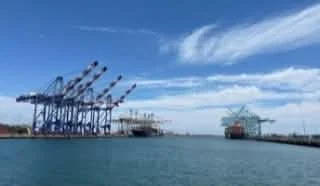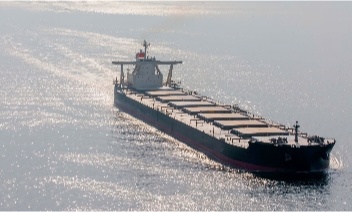
At the end of 2025, Petrofin's top 40 banks had increased their shipping loan portfolios to $300.6 billion, which was a 6% increase from the $283.6 billion recorded the previous year
The latest annual Petrofin Global Bank Research report indicates that global bank lending to the shipping industry experienced significant growth in 2025, signifying a clear recovery following years of consolidation. At the end of 2025, Petrofin's top 40 banks had increased their shipping loan portfolios to $300.6 billion, which was a 6% increase from the $283.6 billion recorded the previous year. The Petrofin Global Index of Ship Finance, which was benchmarked at 100 in 2008 before the financial crisis, increased from 61 in 2024 to 63 in 2025, reaching levels not seen since 2018
A recovery trend among banks
A recovery trend among banks is indicated by the figures, according to Petrofin. This follows a long period in which many lenders either reduced their exposure or exited shipping entirely. BNP Paribas remained the largest global ship finance bank, while Petrofin noted that there were no bank departures from the sector in 2025, with "the vast majority of banks" remaining positive towards shipping.
Europe accounts for the largest share of the top 40 banks'
The largest share of top 40 bank lending, equal to $151bn, is accounted for by Europe, which remains the largest ship finance region. APAC banks reversed their decline in 2024 with growth of 8.3%, while Japanese banks increased their share of top 40 portfolios from 22% to 26%. US banks expanded their portfolios by 6.7%.
The return of Greek banks.
A notable shift was the return of Greek banks. Greece's market share was lifted to 7.8% by the growth in the shipping loan books of Greek banks, which grew by 37% year-on-year to $23.6 billion (up from $18 billion in 2024), according to Petrofin. Scandinavian banks also made a strong recovery, increasing lending by 16.2% to $26.2 billion after a decline of 8% the previous year.

The total global bank lending to shipping,
The estimation by Petrofin of the total global bank lending to shipping, including local banks outside the top 40, is around $425 billion. Including leasing, export finance, and alternative providers, Petrofin puts the total value of global ship finance at around $680 billion. Petrofin concluded that the industry does not appear overleveraged, based on a Clarkson-estimated fleet and order book value of $2.17 trillion at the end of 2025.
Rising vessel values and a larger order book
Strong cash flows, rising vessel values and a larger order book helped the recovery. According to Petrofin, the Clarkson Price Index increased from 176 in December 2024 to 191 by the end of 2025. During this period, the total value of the fleet and order book grew from $2.03 trillion to $2.166 trillion, reaching $2.381 trillion by May 2026.
Related: In Europe, Greek banks have a higher ranking than ship finance.
US penalties and Geopolitical conflicts
It is also demonstrated by the report how finance flows were temporarily reshaped by geopolitics. US penalties threatened against Chinese owners, Chinese-linked vessels, and vessels entering the US prompted some owners, especially listed companies, to reduce their exposure to Chinese leasing structures and convert leases into bank loans. Citi, ING, and other major international banks benefited from this shift, although Chinese leasing resumed once the threat of penalties had passed.
Lending to the shipping industry,
In this context, regarding lending to the shipping industry, the National Bank of Greece is the leader among Greek banks, with Eurobank, Piraeus Bank, and Alpha Bank following closely in its wake. All four of these banks are now among the top 40 global ship finance banks. Scandinavian banks also marked a substantial increase of 16.2%, reversing the previous year's 8% reduction, reaching a total of $26.2 billion in 2025.
Vessel orders for major maritime nations
In the interim, the predominant maritime nations, including China, Greece and Japan, persist in placing orders for vessels. China is in the lead with 72.8 million GT, followed by Greece with 53.2 million GT and Japan with 27.4 million GT. Similar ratios are seen in the alternative order book, with Japan in second place ahead of Greece in GT terms. Interestingly, Japan is the most committed to alternative fuels, with 62% of its orders allocated to vessels fuelled by alternatives, compared to 33% in China and 26% in Greece
#China #Greece #Piraeus Bank #shipping industry #Petrofin #Clarkson Price Index#Greek banks #Global Bank #US banks # Scandinavian banks #US penalties #Japan
You Might Also Like


Recommendation News

Incidents
Italy Intercepts Cargo Ship Hizir Reis With Russian Metal in Sanctions 19 January 2026
Marine Tech
RINA to classify 24-meter wind-powered reefer cargo vessel 19 December 2025
Incidents
Two Traspemar ships seized in Ischia -Italy 17 October 2025
Ports
LR and Mawani partnership to enhance skills and operational performance across Saudi Ports 24 December 2025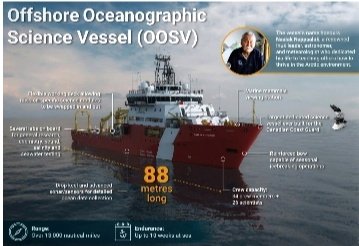
Marine Tech
Canadian Coast Guard’s Offshore Oceanographic Science Vessel 10 May 2026