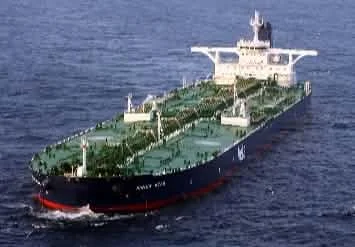
Vitol chief executive Russell Hardy estimates roughly 12 million b/d of crude and 2 million b/d of refined products are now leaving the Middle East
The Financial Times reports that tanker captains are being offered salaries of up to $100,000 a month, including bonuses of up to $50,000 per transit
Maritime and LinkedIn expert
The danger premium for crossing the Strait of Hormuz has shifted dramatically from shipowners to individual mariners. The Financial Times reports that tanker captains are being offered salaries of up to $100,000 a month, including bonuses of up to $50,000 per transit. Some lower-ranking crew members are earning salaries six times the norm. This significantly updates yesterday's Wall Street Journal report on $25,000 voyage bonuses. The FT states that at least 93 vessels have been attacked and 24 seafarers have been killed during the conflict. Some crews claim that they are under pressure to sail or risk losing their jobs.
The energy crisis and shortage of ships
The energy crisis is increasingly becoming a shortage of ships rather than a shortage of oil. The Financial Times reports that Vitol chief executive Russell Hardy estimates roughly 12 million b/d of crude and 2 million b/d of refined products are now leaving the Middle East, but tanker availability is limiting how much more can move. The shuttle system, in which vessels enter the Gulf and transfer cargo outside it, uses ships inefficiently and has pushed freight costs sharply higher. Hardy warned that without these flows, oil could reach $200 a barrel, while some North Sea barrels are already effectively costing refiners as much as $145.
The tanker squeeze
The tanker squeeze is beginning to undermine the economics of refining thousands of kilometres from Hormuz. European refining margins have turned negative as refiners pay exceptionally high prices for both crude and its transportation, according to the Financial Times. Vitol argues that the bottleneck is no longer principally about the availability of crude: Although Gulf exports have recovered substantially, insufficient tanker capacity and expensive, inefficient shuttle voyages are preventing those barrels from moving through the global system as normal.
An additional extraordinary price on the same voyage
Insurance is putting an additional extraordinary price on exactly the same voyage. War-risk cover for an individual tanker operating around Hormuz can now cost as much as $20 million, while tanker charter rates have reached about $1.3 million per day, according to the Financial Times. The result is a shipping market in which producers can increasingly get barrels out, but doing so requires simultaneously paying unprecedented premiums for the vessel, its insurance and increasingly its crew.
Related: Pablo Rodas-Martini writes: A feasible canal, hiding in plain sight!
The struggle for Bab el-Mandeb
The struggle for Bab el-Mandeb is becoming more important precisely because Hormuz remains unreliable. AP reports that Saudi-backed Yemeni forces are trying to regain the strait after recent Houthi gains at Mokha and nearby Red Sea islands, with fighting continuing around Dhubab and Taiz. The broader strategic relationship matters: Bab el-Mandeb has become an alternative outlet for Saudi energy as Hormuz has been disrupted, so Houthi control over the southern entrance to the Red Sea threatens one of the principal routes available for reducing dependence on the Persian Gulf chokepoint
Related: Pablo Rodas-Martini writes : The 'topography' of the Strait of Hormuz
.#Bab el-Mandeb #Financial Times #Insurance # tanker squeeze #Pablo Rodas-Martini # Wall Street Journal #energy crisis #tanker captains #The danger premium #individual mariners #Saudi energy #Hormuz
You Might Also Like

19 December 2025
Recommendation News
More
Indonesian Fishers launch National Policy Platform Demanding their Righting 23 January 2026
Incidents
Two Traspemar ships seized in Ischia -Italy 17 October 2025
Incidents
Fire (extinguished) in the engine room of the Grimaldi vessel Grande Roma 30 October 2025
Shipping Lines
Global shipping companies avoid many sea straits, which are important trade routes 05 July 2026
Incidents
Eight Egyptians on board: Oil tanker hijacked by Somali pirates 11 May 2026