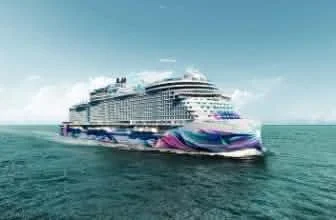
Georgia’s expanding ports can anchor a regional trade platform when maritime services, railway, customs, and inland business activity operate as one connected system.
By: Shota Gelashvili
Founder & Business Architect, ARQITEQTURA GLOBAL
Formerly with Georgia’s Ministry of Finance and Revenue Service
Georgia’s seaports and maritime terminals handled 13.7 million tonnes in January-August 2026, up 24% year on year. Container throughput reached 554,174 TEU, up 9%. These preliminary figures show growing demand on the country’s maritime infrastructure. The task now is to turn that growth into services businesses can plan around.
I spent 15 years in Georgia’s Ministry of Finance and Revenue Service, directly involved in developing, maintaining, and operating customs infrastructure and the technological systems supporting trade and transit. My work covered Customs Clearance Zones, customs checkpoints, and border operations, with regular work across the country’s transport gateways.
That experience shaped how I look at a port. I follow the cargo beyond the quay: through clearance, the railway or road connection, the inland terminal, and the business receiving it. Each connection affects the value of the maritime service. A port is the visible edge of a much larger trade environment.
Poti and the system behind the quay
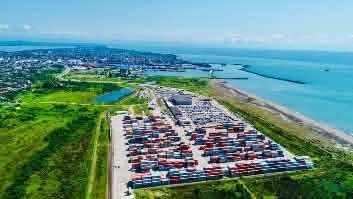
Poti remains Georgia’s main container gateway. APM Terminals Poti handled a record 636,466 TEU in 2025. The operator says it handles approximately 80% of containerised ocean cargo serving Georgia, Armenia and Azerbaijan.
On 25 June 2026, APM Terminals announced a $7.1 million investment in a multipurpose mobile harbour crane, scheduled for delivery by the end of 2026. The operator expects it to bring container-handling capacity above 650,000 TEU and increase cargo-handling capacity by approximately 500,000 tonnes.
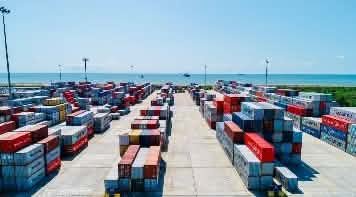
The investment addresses a physical requirement at the quay. Its wider benefit depends on the services behind it. More containers discharged from a vessel require yard space, prepared documents, available transport and a receiving facility. If the inland network cannot absorb the increase, the bottleneck moves beyond the port gate.
For a business choosing Poti, the useful question is how reliably the container can reach its next departure. Infrastructure creates capacity. Integration determines performance.
Batumi and Black Sea connections
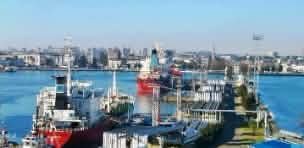
Batumi adds a complementary set of maritime services. In the first half of 2026, the port handled 70,839 TEU, 14% more than a year earlier. The Ministry of Economy also reported a 54% increase in direct ferry movements between Batumi, Bulgaria and Romania, with four vessels regularly operating on those routes at the time of its August announcement.
Batumi Oil Terminal LLC, owned by Kazakhstan’s KazTransOil, holds exclusive management rights over Batumi Sea Port. This gives the port a direct institutional connection with a Central Asian transport stakeholder.
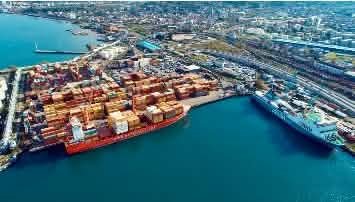
These connections give shippers additional Black Sea options. Their commercial usefulness depends on sailing frequency, cargo readiness, handling arrangements, and the inland connection on each shore. A shipment can reach Batumi on time and still miss its onward departure if those arrangements have not been coordinated.
Assessing Poti and Batumi together gives a fuller picture of Georgia’s maritime offering. The choice depends on the cargo and the complete route, including the services available after the sea crossing.
Anaklia and a new scale of maritime capacity
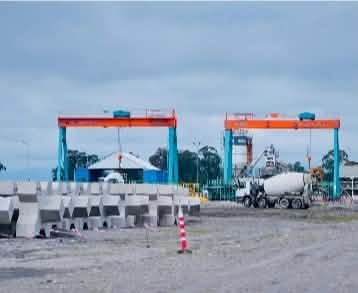
Anaklia is intended to expand the range of vessels Georgia can receive and the volume it can handle. The first phase is scheduled for completion in 2029, with planned annual capacity of at least 600,000 TEU. Jan De Nul is dredging the access channel to 17.5 metres. Vessel access will depend on the completed channel, berths, terminal specifications and operating conditions.
On 6 July 2026, the government announced a landlord port model. The state is to own and develop the core maritime infrastructure and provide road and railway access. International investors and private operators are to invest in container and bulk cargo terminals. The government presents this structure as a way to involve several participating partners.
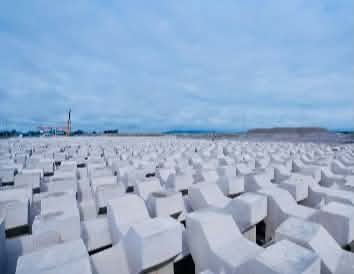
The change follows the withdrawal of the Chinese-Singaporean consortium selected under the previous model, which, according to published reporting, never signed an investment agreement. At the July briefing, the minister put the project’s estimated investment at around $1.1 billion and said the revised model required approximately $200 million in additional financing, to be mobilised through the state budget and international financial institutions.
The financing shift divides responsibilities importantly. Core infrastructure, terminal investment and access connections need funding and delivery schedules that fit together.
Implications extend inland. A larger vessel can discharge substantial volumes in a short period. Rail access, terminal equipment, storage and customs arrangements need to accommodate that concentration of cargo. The port’s development and the preparation of its inland network therefore belong to the same investment and operating plan.
Central Asian demand and the cargo base
The expansion of Georgia’s ports coincides with Central Asian interest in Black Sea access. On 3 July 2026, Uzbekistan and Georgia agreed to prepare a roadmap to raise bilateral trade to $1 billion in the coming years. The talks included greater use of Poti and Batumi and support for a logistics hub with an industrial zone and a showroom for Uzbek products.
At the Turkmen-Georgian Business Forum in Tbilisi on 16 July, Turkmenistan’s president confirmed negotiations over a Turkmen cargo terminal on Georgia’s Black Sea coast.
These proposals connect maritime access with a commercial presence around the route. Their eventual weight will be measured through the investments, services and cargo flows they generate. They also identify an opportunity for Georgia: to provide the warehouses, terminal operations and local business arrangements that make Black Sea access usable for Central Asian companies.
Railway and inland logistics
The Baku-Tbilisi-Kars upgrade expanded annual freight capacity from approximately one million to five million tonnes. Georgia’s Ministry of Economy announced the line’s full operational launch on 2 June 2026. These figures describe carrying capacity.
At Akhalkalaki, the regional 1520 mm railway network meets the 1435 mm standard-gauge network leading into Türkiye. Transfer arrangements, handling capacity and onward departures determine how effectively the line’s increased capacity can be used. The handover is part of the service a shipper purchases.
Tbilisi Dry Port forms the first phase of Tbilisi Intermodal Hub, in which AD Ports Group holds a 60% stake. The rail-linked, customs-bonded facility brings international investment into Georgia’s inland logistics network.
Georgia’s port-to-inland connection offers another practical example. In October 2025, MEDLOG announced dedicated block trains linking Poti and Batumi with Tbilisi Dry Port, in cooperation with GR Logistics and Terminals. The announcement specified four departures a week and a capacity of around 60 TEU per train. MEDLOG reported approximately 13 hours to Tbilisi, compared with two to three days previously.
That is the operator’s reported rail journey time; port handling, release, and final delivery also affect the complete shipment. A dedicated departure nevertheless gives businesses a firmer basis for planning and connects maritime access with inland distribution.
Industrial activity around the route
Free Industrial Zones in Poti, Kutaisi and Tbilisi provide locations for eligible manufacturing and related operations serving foreign markets. The Tax Code provides exemptions for profit from permitted FIZ activity and property within a zone. Customs and VAT treatment depends on the movement and transaction involved; dealings with Georgian businesses outside the zone are subject to specific rules, including 4% payments in the circumstances defined by Article 25.
A company considering production or assembly needs to assess its inputs, permitted activity, destination markets and origin requirements together. Commercial viability depends on how the production model fits the transport and regulatory environment.
For Georgia, this opens opportunities around storage, processing, assembly, distribution and re-export. A transit country moves cargo. A trade platform gives companies a reason to stay.
What customs experience adds to port development
I remember the customs environment before the transformation: physical queues, extensive paperwork and procedures that required importers and brokers to move between separate services. During my years inside the system, I saw the work required to build and sustain a more connected operating environment.
The documentary reform is recorded in Georgia’s customs presentation published by TRACECA. It records a reduction in documentary requirements for import and export procedures from 54 documents to two core documents: an invoice and a transport document. Additional documentation can be required for particular goods and controls.
Related: Georgia Ports welcomes U.S.-India trade agreement
Customs Clearance Zones in Tbilisi, Batumi and Poti brought clearance services and controls into organised facilities. Document processing, valuation, examination where required, and release could be managed within a connected environment. The same historical presentation reports average standard-procedure times of 15 minutes at customs crossing points and 30 minutes at Customs Clearance Zones, with longer times for red-channel cases. These were separate procedure times reported for that reform period.
My direct involvement was in the infrastructure and technological development supporting the system, and in the continuing work needed to keep it functioning. Facilities had to be maintained, equipment had to work, and the people responsible for each stage needed the conditions to perform their tasks. The result depended on how well infrastructure, technologies, state procedures, and people were connected.
This experience informs my assessment of Georgia’s ports. Operational development continues after a facility opens. Its performance has to be sustained through the everyday connections that allow cargo to move.
How Georgia’s gateway will compete
Georgia’s next competitive advantage can be built through the interaction of its ports, railway, inland terminals, industrial activity and customs environment. The practical measures include time from vessel discharge to inland departure, reliability of connections, waiting costs and the response when a movement is interrupted.
For an international company, the value becomes tangible when it can organise an entire operation in Georgia: bring goods through the port, complete the required procedures, move inland and enter storage, production, distribution or re-export on predictable terms.
Related: Georgia Ports: 2025 container throughput above 700,000 units
That is the opportunity I see after 15 years inside the country’s trade and transit environment. Georgia can give businesses a functioning base around its maritime connections, with the services and responsibilities needed to turn access into sustained commercial activity.
Images: Special exclusive for maritime tickers.
#APM Terminals Poti #Poti Port #Batumi Port #Georgia’s seaports # Black Sea Ports #Regional Trade Infrastructure #Shota Gelashvili # Batumi Oil Terminal LLC#Akhalkalaki, #Tbilisi Dry Port #Anaklia #Jan De Nul
You Might Also Like

Recommendation News
Marine News Room
Pablo Rodas-Martini writes : Taiwan at the heart of US–China geopolitical relations 15 May 2026
Marine News Room
Reuters -China’s bid to tame the global iron ore market 29 December 2025
Shipping Lines
GEODIS : Laura Ritchey a President & CEO of Americas Region 15 October 2025
Incidents
Malta :The fire that broke out on the Freedom Flotilla under control 17 October 2025
Incidents
Indian Court Detains More MSC Ships – Crisis MSC Elsa 3 18 October 2025