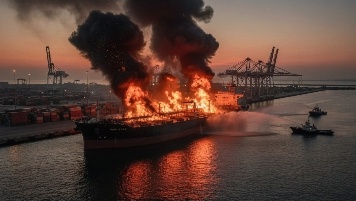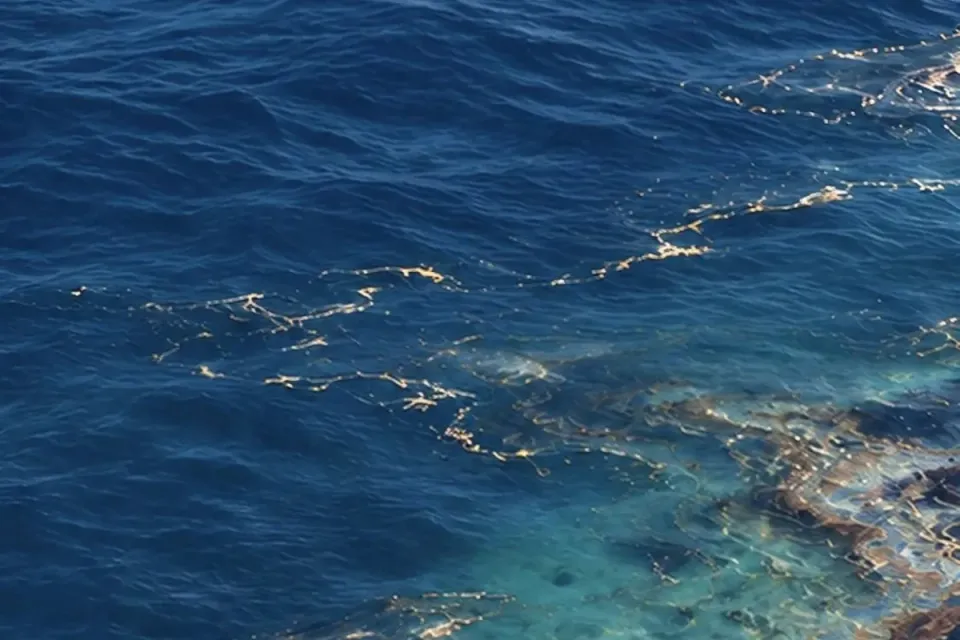
The UAE authorities have not identified the tanker involved, nor have they disclosed the volume of oil released or the cause of the leak. They have also not confirmed that the Panama-flagged GEM No. 2 was the tanker involved in the spill.
The United Arab Emirates (UAE) has detected an oil spill from a tanker that is affecting beaches in Umm Al Quwain. This has prompted the authorities to launch containment and clean-up operations, as well as temporarily closing all beaches and coastal areas in the emirate. According to the Ministry, its technical monitoring and environmental assessment system detected the spill, triggering a coordinated response involving local and federal authorities
.A tanker oil spill
A tanker oil spill has forced the UAE to close all beaches and coastal areas in Umm Al Quwain. This is because pollution reached the emirate's shoreline. This information comes from the Ministry of Climate Change and Environment. The country’s technical monitoring and environmental assessment system detected the pollution, prompting a response involving federal and local authorities to contain, cordon off, and clean up the affected area.
Avoid fishing in affected areas.
Fishermen and other users of the sea have been advised to avoid affected areas while coastal surveys, monitoring and environmental assessments are ongoing. The spill has also caused unusual odours to be reported in Sharjah, Ajman and Umm Al Quwain. The ministry has confirmed that these smells do not pose a health risk.
Oil-related odours were also reported in Sharjah and Ajman, although the Ministry assured residents that they posed no health risks. "Immediately after the pollution was detected, we began implementing measures to contain it and cordon off the affected areas in coordination with the relevant local and federal authorities," the Ministry said in a statement shared on X and reported by ANI.
Release: Sweden releases seized oil tanker suspected of being source of oil spill
Temporarily shut all beaches and coastal areas.
As a precautionary measure, the authorities have temporarily closed all beaches and coastal areas in Umm Al Quwain. These closures will remain in place until technical teams have completed their assessments and determined the necessary steps to ensure public safety and protect the marine environment.
Cleanup and remediation operations to limit environmental damage
Cleanup and remediation operations are underway to limit environmental damage. Coastal surveys, monitoring activities and technical assessments are continuing to establish the extent of the pollution and assess its impact on the marine ecosystem. Authorities are also coordinating additional measures to safeguard the affected coastline. Further action will depend on the findings of the ongoing assessments.
Concerns over Gulf coastlines are raised by tanker spills.
The latest incident comes amid a series of other oil pollution events reported in the Gulf region this year, including spills off the coasts of Oman and Iran following the outbreak of war in the region, which has severely disrupted shipping traffic and intensified attacks on tankers.
In June, the Caroline Bezengi tanker (IMO 9224439, MMSI 613271605 -sailing under the flag of Cameroon) ran aground near the Hallaniyat Islands off the southern coast of Oman, leaking Russian crude oil into the surrounding waters. By mid-August, satellite imagery showed that the oil had spread along up to 40 kilometres of coastline.
The tanker has not been identified by UAE authorities.
The UAE authorities have not identified the tanker, nor have they disclosed the volume of oil released or the cause of the leak. They have not confirmed that the Panama-flagged GEM NO.2 (IMO 9735373, MMSI 354264000) was the tanker involved in the spill. The 156,853-gt GEM NO.2 is registered in Panama and was involved in a separate maritime incident on 9 October, after which all 22 Indian crew members were rescued and confirmed safe. Its pollution liability and related insurance certificates are valid until 20 February 2027.×
(PG) is a region of great strategic importance yet ecological fragility
On the other hand, the Persian Gulf (PG) is a region of great strategic importance yet ecological fragility, which is highly susceptible to oil spill hazards due to intensive offshore petroleum activities and complex hydrodynamic conditions. The computed SRI identified the United Arab Emirates as the most vulnerable country, followed by Bahrain and Qatar. This is due to their exposure to prevailing wind and current patterns, as well as their proximity to dense offshore operations.
Source: Agencies
#Caroline Bezengi tanker#Hallaniyat Islands#UAE #A tanker oil spill#Umm Al Quwain #coastal areas #Iran # Sharjah # Ajman Beaches #GEM NO.2 #Persian Gulf (PG)
You Might Also Like

Recommendation News
Shipping Lines
A new last-minute offer from Israel for Zim. 08 May 2026
Shipping Lines
The Polish FSRU will be connected to the Polish gas system 14 October 2025
Incidents
Captain of the Russian tanker has been ordered to be detained by a Swedish court. 16 March 2026
Shipping Lines
US : Captured of Second Oil Tanker Amid Tightened Blockade on Venezuela 21 December 2025