During the period spanning from 2019 to 2026, the financial resources expended for capital acquisition experienced an escalation of 111%, for electricity a 73% surge, for diesel a 30% rise, and for labour an 18% increase.
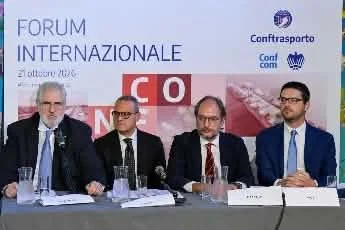
Although revenues are growing, margins are under pressure. Transport companies' turnover has reached €96 billion, but their profitability has not grown at the same rate. The Freight Insights Observatory, set up by MOST and the CSELI Foundation, revealed these findings. The Observatory's findings were presented on 21 October at the 11th International Forum of Conftrasporto-Confcommercio in Rome, according to Shipping Italy
The financial outlay between 2019 and 2026
Between 2019 and 2026, the financial outlay required for capital acquisition increased by 111%, for electricity by 73%, for diesel by 30% and for labour by 18%. Pasquale Russo, president of Conftrasporto and vice president of Confcommercio, says that the combination of high energy prices, ETS, congestion, delays in digitalisation, and geopolitical uncertainties requires a two-pronged response involving emergency management and long-term system planning.
Road transport remains key
Road transport remained key in 2025, exceeding 31 billion tonne-kilometres. Between 2025 and 2026, diesel prices increased by over 15%, while CNG and LNG prices rose by 4.1% and 3.4%, respectively. Congestion costs nearly €5 billion a year nationwide, with over €1 billion of this attributed to heavy vehicles in Lombardy, Veneto and Emilia-Romagna. Ninety percent of vehicles travel fewer than 300 kilometres per day, which limits the movement of goods to other modes of transport. In the coming years, a shortage of over 30,000 drivers is expected, partly due to an inadequate training system.
Italian ports
Italian ports rank second in Europe after Dutch ports. However, routes that avoid the Suez Canal add about two weeks to the voyage, which benefits Northern Europe. Domestic ro-ro traffic is expected to decline by 1% by 2026. With the ETS, fuel currently accounts for over 50% of the operating costs of island connections
Related: Italian ports handling leaps during the second half of 2025
On the rail network,
Construction sites on the rail network have more than offset the impact of incentives: train-kilometres dropped by 8% in the first half of 2026. However, air cargo is growing, with Rome, Brescia and Bergamo serving the cities. Malpensa is bucking the trend, though, having been penalised by the announcement of a tax on low-value packages.
Digital technology
Digital technology can reduce costs and delays. Technological monitoring and maintenance of infrastructure could save nearly €7 billion; the digitalisation of documents and logistics procedures could save up to €18 billion in the coming years; and computerising port procedures could save approximately €160 million per year. While strategic hubs and Alpine passes remain critical, ports coexist with overcapacity and underutilised infrastructure.
On transport and energy,
With regard to transport and energy, the association is calling for a shift from emergency strategies to shared ones. This would involve extending contractual indexation to LNG, making selective cuts to excise duties on commercial diesel fuel, offering tax credits and releasing €590 million to fund the technology-neutral renewal of industrial vehicles. At a European level, the regulation on heavy-duty vehicle emissions should be revised to include a 'Carbon Correction Factor', with all island connections being excluded from the ETS. Other measures include protections for transhipment ports and the postponement of ETS2.
Related: Italy: Demand for LNG could triple between now and 2030
Regarding governance
In terms of governance, the Ministry of Transport requires greater technical expertise, an inter-ministerial committee for transport competitiveness, a relaunch of the General Transport and Logistics Plan, and port reform to strengthen central coordination while safeguarding the Port Authority.
Strengthening transporters and their passengers
Finally, strengthening transporters and their passengers, investing in roads and airports that go beyond a superficial reading of the DNSH principle, and implementing measures to train drivers, train drivers and seafarers, as well as ensuring compliance with loading, unloading and payment deadlines, allocating increased resources for maritime territorial continuity, extending social security contribution relief for short-sea seafarers, implementing the dockworkers' retirement fund and revitalising the Motorways of the Sea and the combined rail network. However, the Fiumicino Development Plan, which is expected to generate approximately €70 billion in revenue, remains stalled.
Source: Shipping Italy
#Freight Insights Observatory #Italian ports #Dutch ports #Suez Canal #Domestic ro-ro traffic #MOST#CSELI Foundation #Pasquale Russo #Conftrasporto
You Might Also Like


Recommendation News

Marine Tech
ABS : Urge Greek Maritime Leaders to Align Strategy with Regulation 14 October 2025
Marine Tech
RINA signs strategic green methanol agreement in China 15 October 2025

Marine News Room
Capt. Morgan Dawicki to ALAM Al MWANI : A require transformation of maritime education. 25 December 2025
Marine Tech
ABS Approves Remote Control Functions from Hanwha Ocean for FPSOs 03 December 2025