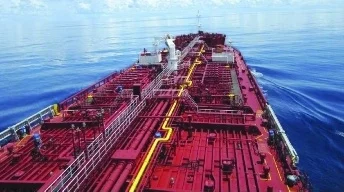
The main goal of HMI is to ensure that hazardous substances are properly identified, managed, and – ultimately – safely disposed of when the vessel reaches the end of its life

By : David Ferrer
CTO & Project Manager at bound4blue
For shipowners and operators charting a course through increasingly demanding regulatory waters, understanding Hazardous Material Inventory (HMI) is an absolute must – as is getting to grips with the potential of the latest wind-assisted propulsion (WAP) technology to simplify compliance!
What is Hazardous Material Inventory (HMI)?
In simple terms, Hazardous Material Inventory (often shortened to HMI or IHM—Inventory of Hazardous Materials) is a documented record of all potentially dangerous substances onboard a ship. These include materials that may be harmful to human health or the environment, such as asbestos, heavy metals, ozone-depleting substances, and certain types of coatings, electronics, and insulation.
The main goal of HMI is to ensure that hazardous substances are properly identified, managed, and – ultimately – safely disposed of when the vessel reaches the end of its life. But HMI isn’t just about ship recycling. It plays a key role in safeguarding crews during operation, especially in areas with a heightened risk of explosion or fire.
Why Is HMI Important?
Two key international regulations require shipowners to maintain a current and verified Hazardous Material Inventory:
- The EU Ship Recycling Regulation (EU SRR) mandates that all EU-flagged vessels, and non-EU vessels calling at EU ports, must have an HMI certificate.
- The Hong Kong International Convention for the Safe and Environmentally Sound Recycling of Ships (adopted by the IMO) also requires the development and maintenance of HMI throughout a ship’s operational life.
These regulations aim to protect both people and the planet by reducing exposure to harmful materials and ensuring vessels are dismantled safely and sustainably.
Maintaining a valid HMI involves continuous monitoring, documentation, and updates
And if your ship features equipment installed in hazardous zones – areas where explosive atmospheres may occur – you must ensure that any systems used are ATEX certified, adding an extra layer of complexity.
The challenge: compliance in hazardous zones
Hazardous zones are areas on a ship where flammable gases, vapours, or dusts may be present, such as around fuel tanks, cargo holds, or engine rooms. Any equipment installed in these areas must meet strict standards for explosion protection – typically by being ATEX-certified, meaning it complies with the EU ATEX Directive for explosive atmospheres.
For many new technologies onboard, achieving ATEX compliance means:
- Designing equipment to meet strict safety protocols
- Adding protective enclosures or specialized materials
- Undergoing lengthy and costly certification processes
This not only increases the complexity and cost of installation, but also adds to the regulatory burden when updating the vessel’s Hazardous Material Inventory.
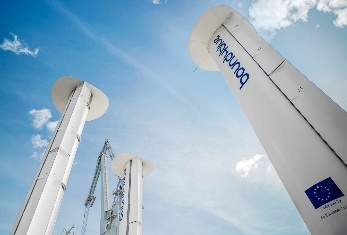
The non-ATEX advantage:
bound4blue’s eSAIL® is an advanced Type Approved wind-assisted propulsion system designed to reduce fuel consumption, cut emissions and help enable a more sustainable, profitable future for the shipping industry.
But beyond its environmental and commercial benefits, it also offers a significant advantage when it comes to compliance – and not only when it comes to headline regulations such as FuelEU Maritime and EU ETS, but also through added value in relation to HMI thanks to its non-ATEX design.
Here’s what that means in practical terms:
- Installed outside hazardous zones: The eSAIL® is typically mounted on the ship’s main deck or topside structures, far from areas with explosive atmospheres.
- No need for ATEX certification: Because it operates in safe zones, the eSAIL® avoids the added complexity and costs of explosion-proof design and certification.
- Streamlined HMI compliance: With minimal hazardous materials involved and no ATEX requirements, adding the eSAIL® to a vessel’s Hazardous Material Inventory is simpler, faster, and less costly.
In short, eSAIL® technology helps shipowners meet sustainability targets without creating new regulatory headaches.
Download the complete infographic on non-ATEX zones
Related : bound4blue : Installation of largest eSAIL® suction sails
#David Ferrer #Hazardous Material Inventory #bound4blue #eSAIL® #Streamlined HMI compliance# FuelEU Maritime # EU ETS #WAPS
You Might Also Like
Recommendation News

Marine News Room
Adam Laabs writes : A Single Oil Slick at Sea Really Cost 27 October 2025
Marine Tech
France to build New Nuclear Aircraft Carrier that will be the largest military vessel in Europe 28 December 2025
Incidents
Seven people : killed in attacks on ships in the Hormuz. - a 90% plunge in tanker traffic. 09 March 2026
Ports
Port expansion in Latin America- a strategic debate projected towards 2026 24 January 2026
Shipping Lines
Behind the scenes of Elliott Management's acquisition of the Japanese company Mitsui O.S.K. 22 March 2026