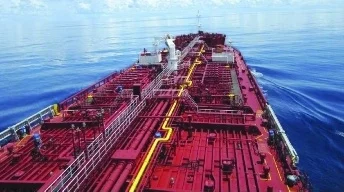
The crackdown decided across the Atlantic to hit Moscow’s exports, reducing the fleet of ‘clean’ tankers and forcing China and India to return to supplies in the Middle East, Europe, and Africa
A new increase in the prices of oil products and related transportation rates is expected, according to several analysts, following the new package of sanctions imposed by the U.S. Treasury on Russian oil producers Gazprom Neft, as well as on 183 ships that have transported Russian oil in recent months. According to Shipping Italy, in its report
Russian oil exports
Russian oil exports are expected to be severely damaged by new sanctions, which will force independent Chinese refiners to cut refinery output in the future, two Chinese trade sources told Reuters. Global oil prices hit their highest levels in months in recent days, with Brent crude trading above $81 a barrel.
143 tankers, the newly sanctioned vessels
Of the newly sanctioned vessels, 143 are tankers that carried more than 530 million barrels of Russian crude last year, about 42% of the country’s total seaborne crude exports, Matt Wright, chief freight analyst at Kpler, said in a note. Of those, about 300 million barrels were shipped to China, with most of the remainder going to India. “These sanctions will significantly reduce the fleet of vessels available to deliver crude from Russia in the near term, driving up freight rates,” Wright said.
The new sanctions will push China and India to return
In the first 11 months of last year, India’s imports of Russian crude rose 4.5% year-on-year to 1.764 million barrels per day, or 36% of India’s total imports. China’s volume, including pipeline supplies, rose 2% to 2.159 million barrels per day, or 20% of its total imports, in the same period. Analysts say the new sanctions will push China and India to return to the non-sanctioned oil market to seek more supplies from the Middle East, Africa, and the Americas.
The shadow fleet
From a naval perspective, under the latest sanctions package, around 35% of the approximately 669 tankers in the shadow fleet involved in transporting Russian, Venezuelan, and Iranian oil have been hit by sanctions from the United States, Britain, or the European Union, according to analysis by Lloyd’s List Intelligence.
Freight rates for very large crude carriers
Freight rates for very large crude carriers, which can carry 2 million barrels of crude across major routes, rose sharply after Unipec, the trading arm of Asia’s largest refiner Sinopec, chartered several supertankers on Friday. Unipec also bought several cargoes of crude from Europe and Africa.
“They have to look for alternative crude. That’s the main driver of the freight rate rally,” said Anoop Singh, global head of shipping research at Oil Brokerage. Other Chinese buyers, PetroChina and Rongsheng, have each booked one tanker to carry crude from the Middle East, the data showed.
Daily, a shipping agent told Reuters, the rate on the Middle East-to-China route, known as TD3C, rose 39 percent from Friday to $37,800, the highest since October.
Freight rates for an Aframax
Shipping rates for Russian oil shipments to China have also risen in the wake of the sanctions. Freight rates for an Aframax to ship crude from the Russian Pacific port of Kozmino to northern China more than doubled on Monday to $3.5 million, as shipowners demanded huge premiums due to the limited tonnage available for that route, according to data from S&P Global Commodity Insights.
Related :
Clarksons: Prices of new naval buildings are increasingly higher
UK shipping sanctions as Russia-loaded tanker sails for Port Said
Bimco: New record of container ships ordered so far in 2024
Source : Press - Release
#Tanker prices#US sanctions # Russia #Moscow’s exports #’ tankers#Gazprom Neft#Matt Wright #shadow fleet # Lloyd’s List Intelligence # Freight rates #Kpler
You Might Also Like


Recommendation News

Marine Tech
RINA Expands in Southeast Asia with New Open Innovation Hub in Singapore 07 November 2025
Incidents
Sharjah confirms full containment of Al Hamriyah Port fire 17 October 2025
Incidents
Iran claims an attack on another MSC ship in the Persian Gulf 03 June 2026
Ports
The Alexandria Port Receives the Largest LNG-Powered Ro-Ro Vessels 21 March 2026
Shipping Lines
New details : India’s refiners curb Russian crude as sanctions hit Rosneft and Lukoil 29 November 2025