In response to the increasing threats to maritime trade, the foreign ministers of the G7 have indicated their readiness to intervene in order to safeguard energy supplies.
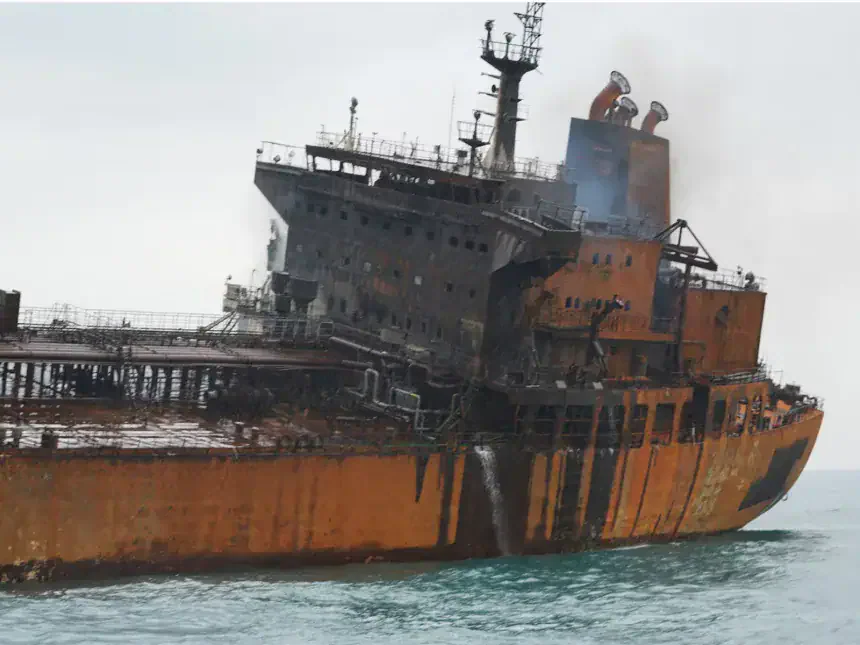
UK Maritime Trade Operations (UKMTO) said today that an explosion from an unknown projectile had been reported near a bulk carrier off the coast of Sharjah in the UAE late on Saturday. This is the latest in a series of attacks on commercial vessels in the Gulf of Iran in the vicinity of the Strait of Hormuz since the US-Israeli offensive began three weeks ago.
The incident was reported at 23:08 GMT on 21 March 15 nautical miles north of Sharjah, according to UKMTO. The blast occurred close to the vessel, suggesting that it may have been the intended target, although there was no direct hit. According to Reuters, the authority has confirmed the safety of all crew members.
The source of the projectile remains unknown
Although the source of the projectile remains unknown and no group has claimed responsibility for the incident, it follows a period of extreme regional volatility. Iran has recently targeted vessels associated with the United States and Israel, causing significant disruption to the transit of oil and gas through the waterway, through which nearly a fifth of the global energy supply passes.
The Shah oil field,
Last Monday's attack on the Shah oil field, located 180 kilometres southwest of Abu Dhabi, is one of the most significant recent events in the region. Further disruption to the UAE's energy sector is possible, given that the field is one of the world's largest sour gas reserves.
A number of projectile-related incidents involving commercial vessels,
This month has already seen a number of projectile-related incidents involving commercial vessels, including one east of Ras Laffan in Qatar on 19 March. The Sharjah incident is the latest in a series of events showing that the risk is spreading across waters around the Strait of Hormuz.
Related : Two oil tankers were attacked in Iraqi waters today.

Related : Seven people : killed in attacks on ships in the Hormuz.- a 90% plunge in tanker traffic.
Since the war began on 28 February, traffic through the strait has been subject to heavy disruption, with only a limited number of vessels passing. Iran's retaliation has also included missile and drone strikes on energy infrastructure in neighbouring Gulf states, further increasing security risks for shipowners and charterers.
The threat of Trump
On Saturday night, US President Donald Trump threatened to target Iran's power plants if Tehran does not stop attacking shipping through the Strait of Hormuz by 23 March. This followed weeks of shifting US signals over how the waterway should be protected. Trump had initially sought support from countries that rely on energy flows from the Middle East to help secure transit through the strait. However, after facing opposition from allies in Europe and the Asia-Pacific region, he announced on 17 March that Washington would act alone.
“If Iran does not fully open the Strait of Hormuz without threat within 48 hours from this exact point in time, the United States of America will attack and destroy their power plants, starting with the biggest one!” Trump stated.

In response to the growing threats
Meanwhile, Iran has suggested that passage through the Strait of Hormuz may remain open for some vessels. Iranian Foreign Minister Abbas Araqchi said that Tehran is willing to discuss transit with Japan and other countries that have not attacked it.Neither press reports nor security reports mentioned the name or flag of the ship that was shelled.
In response to the growing threats to maritime commerce, G7 foreign ministers have indicated their willingness to intervene to protect energy supplies. Following what they characterised as acts of aggression by Iran and its affiliated proxies, the ministers stated that they “stand with our partners in the region”. (ANI)
Source : Agencies
# Abbas Araqchi #Donald Trump #Strait of Hormuz #UKMTO #coast of Sharjah #Shah oil field # Qatar #bulk carrier
You Might Also Like

Recommendation News

Marine Tech
LR: New project targets low-carbon future for European short-sea trade 06 June 2026
Marine Tech
Fincantieri begins construction of the Navy’s first Fremm Evolution 11 October 2025
Shipping Lines
Will Maersk take the initiative and announce its full return to the Suez Canal on November 25th? 23 November 2025
Shipping Lines
Maritime Unions Call for American-Flag Requirement on Venezuelan Oil Imports 02 February 2026
Incidents
Maersk Containership and SFL Car Carrier Collide in Danish Straits 18 October 2025