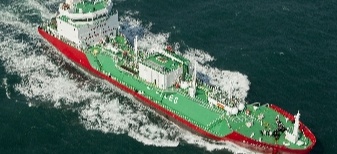
Than 1,600 LPG carriers are already in operation, and a mature global supply chain supported by over 1,000 storage facilities and terminals.
The latest version of LR's Fuel for Thought LPG report highlights LPG as a fuel option that can be used right away, is easy to expand, and has been tested a lot. It can help the maritime sector reduce emissions in a significant way. The updated edition of LR's Fuel for Thought has been published. The LPG report, which was produced in collaboration with the World Liquid Gas Association (WLGA), outlines how LPG can assist the maritime sector in its transition to lower-carbon propulsion, delivering immediate and scalable results.
LPG is a practical and credible pathway to lower-emission shipping. It combines mature technology, global availability, and established infrastructure. There are already more than 1,600 LPG carriers in operation. The global supply chain is supported by over 1,000 storage facilities and terminals.
LPG demonstrates the meaningful environmental benefits
LPG demonstrates the meaningful environmental benefits that LPG can deliver compared with conventional marine fuels. Fossil LPG emits around 97% less sulphur oxides and 90% less particulate matter than heavy fuel oil, and approximately 20% less carbon dioxide. Furthermore, lifecycle greenhouse gas emissions can be reduced by up to 17% compared with marine gas oil.
Related: LR awards its first submarine AiP to Hanwha Ocean
Its lower carbon-to-hydrogen ratio also makes it a viable option for improving compliance with measures such as the EEXI, CII, and regional regulations, including the EU ETS and FuelEU Maritime.
LPG is already proven in service.
It has been underscored by the updated report that LPG is already proven in service. Dual-fuel LPG propulsion has been firmly established in the gas carrier segment for some time, and the LPG-fuelled fleet is growing steadily, as is the order book. Furthermore, gas carriers currently account for only a small proportion of global shipping emissions, indicating significant potential for cross-segment adoption among container ships, bulk carriers, and other vessel types.
LPG is a great business opportunity for shipowners
As well as being good for the environment, LPG is a great business opportunity for shipowners looking for ways to cut costs and reduce their carbon emissions. Its appeal as a transitional fuel is strengthened by lower capital expenditure compared to other alternative fuel solutions, combined with competitive fuel pricing in key regions. Retrofit pathways are also more accessible, as a significant proportion of existing ship types across different segments are technically capable of being converted to LPG propulsion.
The strong market fundamentals
The report also highlights the strong market fundamentals that are supporting wider uptake. Global seaborne LPG trade reached a record high of 145 million tonnes in 2025, and this growth is expected to continue, driven by rising demand in major import markets and an increase in fleet capacity. At the same time, around 500 global LPG terminals could potentially serve as bunkering points for non-gas carriers with minimal additional investment, which would help to overcome one of the main obstacles to the adoption of alternative fuels.
LPG's long-term role will be shaped by the growth of renewable production
In the fullness of time, the report emphasises that LPG's long-term role will be shaped by the growth of renewable production. Renewable LPG (rLPG) and bio-LPG are chemically identical to conventional LPG, can be used as drop-in fuels without modification and offer up to an 80% reduction in emissions, depending on the feedstock used. Industry projections suggest that rLPG could account for up to 50% of global demand by 2050, providing a viable long-term solution for achieving near-zero-emission shipping operations.
The potential to pair LPG with onboard carbon capture systems
The potential to pair LPG with onboard carbon capture systems to further reduce emissions and extend vessel lifespans is also highlighted in the report. Combining LPG propulsion with carbon capture could deliver significant cost benefits, including reduced exposure to carbon pricing and lower onboard storage requirements thanks to lower CO₂ emissions.
Nevertheless, obstacles persist. The regulatory framework for LPG bunkering is still developing, and engine options, particularly beyond two-stroke applications, are not yet fully mature. The report suggests that wider adoption will depend on how quickly these technical and regulatory gaps are addressed.
Fuel for Thought report
The statement was made by Constantinos Chaelis, Global Gas Segment Director at Lloyd's Register. ‘Our latest Fuel for Thought report: LPG report reinforces what our industry has long needed: an immediately deployable, commercially viable, and technically proven cross-segment pathway to accelerate decarbonisation.” Where Nikos Xydas, World Liquid Gas Association (WLGA) Technical Director, said: 'LPG has become one of the most widely adopted alternative marine fuels globally, particularly in the gas carrier segment.'
About: Lloyd's Register
Lloyd's Register Group Limited, trading as Lloyd's Register (LR), is a technical and professional services organisation and a maritime classification society, wholly owned by the Lloyd's Register Foundation, a UK charity dedicated to research and education in science and engineering. The organisation dates to 1760. Its stated aims are to enhance the safety of life, property, and the environment by helping its clients (including by validation, certification, and accreditation) to improve the safety and performance of complex projects, supply chains, and critical infrastructure.
#Constantinos Chaelis #Lloyd's Register #Fuel for Thought report # Nikos Xydas #bio-LPG # Renewable LPG #EU ETS #FuelEU Maritime #LPG #carbon dioxide#WLGA
You Might Also Like

Recommendation News

Incidents
Oil tanker hit off Oman coast after drones strike Duqm port 01 March 2026
Shipping Lines
MSC surpasses 7 Million TEU for the first time 03 November 2025
Shipping Lines
Hapag-Lloyd Confirms Advanced Talks On Acquisition Of ZIM Integrated Shipping Services Ltd. 16 February 2026
Shipping Lines
Maritime Unions Call for American-Flag Requirement on Venezuelan Oil Imports 02 February 2026
Marine Tech
Ship recycling: Update to European List includes Germany’s first facility 03 March 2026