The Iranian navy attacked two a Crude Oiltankers, the *Al Bahyah and *Mombasa B*, resulting in the death of an Indian seafarer and injuries to eight other people.
The International Maritime Organization (IMO), a United Nations agency, has declared its opposition to transit fees in the Strait of Hormuz, following indications from US President Donald Trump that he wanted ships to pay for protection."Our position on fees has always been consistent: the IMO is firmly opposed to the imposition of charges for transit through straits used for international navigation. There is no legal basis for introducing mandatory tolls simply for passing through a strait,” a spokesperson said.
Statement of Arsenio Dominguez
Arsenio Dominguez, secretary-general of the International Maritime Organization, said the body's position had not shifted despite Trump's announcement. "We have always been consistent in our stance on fees," he said. The IMO firmly opposes the charging of fees for passage through straits used for international navigation,' he said in a statement.
A declaration of Trump
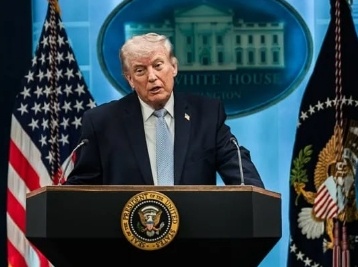
Last Monday, Trump made a declaration. He said that the U.S. military would protect shipping traffic through the Strait of Hormuz. But he also demanded reimbursement. He said that this should be equal to 20% of the value of all goods transported through the strait. He also ordered the US Navy to reinstate a naval blockade against Iranian vessels.
Would the Strait of Hormuz remain open?
Trump was clear in his statement that the Strait of Hormuz would remain open, regardless of the involvement of Iran. 'We are reinstating the Iranian blockade, which is so named because it prevents only Iranian ships and their cargo from entering or leaving. "All other countries will have fair and free use of the Strait." Iran previously required ships to pay a toll for safe passage through the Strait of Hormuz. However, Tehran agreed not to levy any tolls for 60 days under a memorandum of understanding signed with the United States on 17 June.
Violation of international law.
James Kraska, an expert in international maritime law at the U.S. Naval War College, claims that charging fees for transit through the Strait of Hormuz would violate international law. He made these statements in an interview with an American media outlet. Kraska added that the world has an unconditional right to transit the Strait of Hormuz.
Trump had a change of heart about the levy steep fees
A few hours later, Trump had a change of heart about the levy steep fees : "Following productive talks with Middle Eastern leaders, I have decided to replace the 20% U.S. reimbursement fee with trade and investment agreements that the various Gulf states will carry out in the United States."
Related: The Omani proposal for regulating navigation in the Strait of Hormuz is outlined.
Disputes regarding transit procedures through the Strait
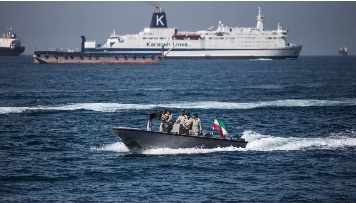
It is noteworthy that the security situation in Hormuz has deteriorated over the past week due to disputes regarding transit procedures through the Strait. Tehran maintains that all vessels must use a northern route through its territorial waters, as agreed a month ago. In response, the US Navy is assisting ships transiting a southern corridor along the coast of Oman. Following attacks on merchant ships, the United States launched several waves of airstrikes against Iran. After Tehran targeted the merchant ships in question, it retaliated by opening fire on US allies in the Gulf.
The Iranian navy attacked two oil tankers
Furthermore, in the last few hours, the Iranian navy attacked two crude oil tankers, resulting in the death of an Indian seafarer and injuries to eight other people. The UAE authorities have identified the vessels involved as the *Al Bahyah* (IMO 9937799, MMSI 636021546 - sailing under the flag of Liberia ) and the *Mombasa B*(IMO 9739501, MMSI 636017088 -sailing under the flag of Liberia). The Al Bahyah is a 299,400-deadweight-tonne VLCC built in 2023 and owned by ADNOC, while the Mombasa B is a 300,000-tonne tanker belonging to the South Korean group Sinokor Maritime. Built in 2016, it is chartered by the Emirati state-owned oil company. The fatality occurred aboard the Mombasa B. Six of the injured are Indian nationals, and two are Ukrainian; four sustained serious injuries.
A Statement of the UAE Ministry of Defence
Meanwhile, the UAE Ministry of Defence has stated that two Iranian cruise missiles hit two oil tankers while they were travelling through the southern lane of the Strait of Hormuz, which is within Omani territorial waters. The impact caused fires and structural damage on board, but the crews subsequently brought the flames under control.
The Norwegian company Stolt-Nielsen also stated that its ship, the Stolt Magnesium, was hit in the Arabian Sea at around the same time that the two UAE oil tankers were attacked. The company reported that the attack had caused a fire in the engine room. All crew members were accounted for and found to be unharmed following the incident.
Source: Agencies
#The UAE Ministry of Defence #Stolt-Nielsen #Arsenio Dominguez #IMO #Strait of Hormuz # levy steep fees #Gulf #James Kraska #Freedom navigation #Trump’s proposal
You Might Also Like

Recommendation News
Incidents
GNV: "Fire on the former Athara ship extinguished" (VIDEO) 28 May 2026
Shipping Lines
New increases (+12%) in container freight rates between China and Italy in the last week 20 June 2026
Incidents
The Houthi threat to Bab el-Mandeb and Red Sea ports is advancing. 14 September 2026
Shipping Lines
Geodis unifies its brands: SEALOGIS and XP LOG become GEODIS 02 April 2026
Ports
Rabie and Mardi discuss cooperation exchange expertise in the maritime industry 08 February 2026