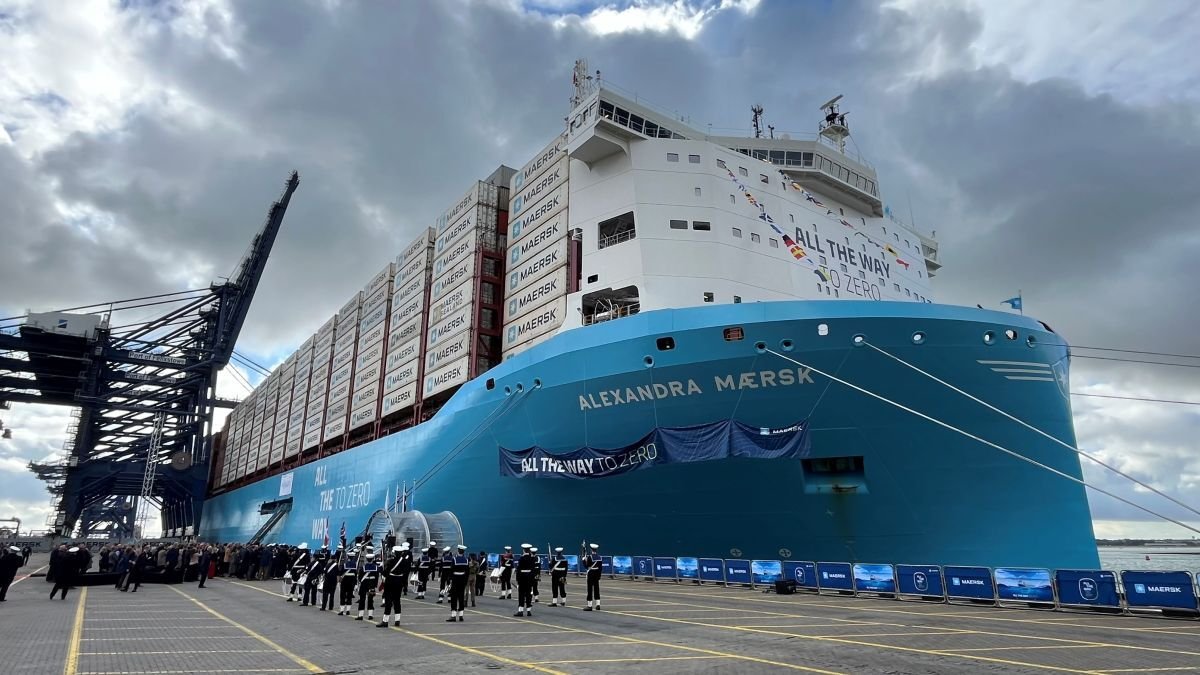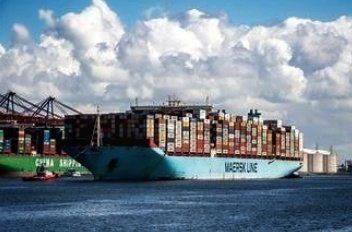
Losses increased from $153 million to $192 million in the final quarter of 2025.
Maersk's quarterly results, as reported by maritime-executive, illustrate the current health of global trade, which is a key indicator of which they are considered. The figures for the first quarter of 2026 from the largest publicly traded shipping and logistics company confirm the negative trend in the ocean segment (i.e., pure ocean freight), with losses increasing from $153 million to $192 million in the final quarter of 2025.
Maersk has initiated a diversification strategy in recent years.
The Maersk Group as a whole managed to stay afloat. It closed with a pre-tax profit (EBIT) of $340 million. This was on revenue of $6.7 billion. According to CEO Vincent Clerc, this result was due to a diversification strategy initiated in recent years. While falling rates have caused ships to lose money, APM-managed terminals and logistics services have made up for the shortfall in the shipping sector.
Related : Maersk lines up Med-Baltic SLA loop from Tangier Med
The indirect impact of geopolitical tensions on operating costs
Clerc's most significant figures relate to the indirect impact of geopolitical tensions on operating costs. Extended routes are not the only concern; fuel prices, which have reached $1,000 per tonne, are also responsible, increasing the cost by almost two-thirds compared to standard levels.

Maersk is under financial pressure.
The CEO explained that this surge is costing Maersk approximately $500 million extra each month, placing the company under financial pressure that it can no longer absorb internally. He noted that these costs would consequently be passed on to customers, describing this as a necessary move.
The growth figure for transported volumes
However, the growth figure for transported volumes, which increased by 9%, seems contradictory. Contrary to previous forecasts predicting a post-Chinese New Year decline in demand, exports from China have actually accelerated. Nevertheless, the real problem lies in tariffs, which have fallen by a further 14% this quarter.
The main reason for the rate reduction, according to Clerc, is overcapacity. The market is seeing an unprecedented number of new ships being introduced, leading to an oversupply that is driving prices down. In response, the company has maximised operational efficiency, reducing unit costs by 7% while maintaining fleet utilisation close to saturation (96%).
Notwithstanding the prevailing uncertainties, Maersk, with its long-term vision, has ordered eight new 18,600 TEU ships scheduled for delivery between 2029 and 2030, thereby continuing to modernise its fleet with vessels that are more efficient and less polluting.
Six ships are currently stranded in the Persian Gulf.
It was also confirmed by the company that six ships are currently stranded in the Persian Gulf. Regarding the forecast for the remainder of 2026, global container market growth is estimated to be between 2% and 4%, although uncertainty remains. Even if the Suez Canal were to reopen quickly, Maersk warns that the impact on fuel prices and market volatility will be felt for many months to come.
# Maersk # Suez Canal # Persian Gulf # global container market# CEO Vincent Clerc #Lsses #quarter of 2026 #-Chinese New Year
You Might Also Like


Recommendation News

Marine News Room
Pablo-Martini : An incredible collaboration is coming to an end. 24 October 2025
Ports
NMPA is aiming to reach a cargo volume of 53 million tonnes. 18 July 2026
Ports
WCO publishes Annual Report 2024-2025 and three-year Strategic Plan 30 November 2025
Marine Cultures
“The Old Man and the Sea” between Quinn and Taja 29 October 2025
Incidents
Update : Container M/V ONE HENRY HUDSON ship fire in LA 30 December 2025