IACS will actively participate in the forthcoming 12th session of the Sub-Committee on Implementation of IMO Instruments (III 12), which will meet from 20 to 24 July 2026.
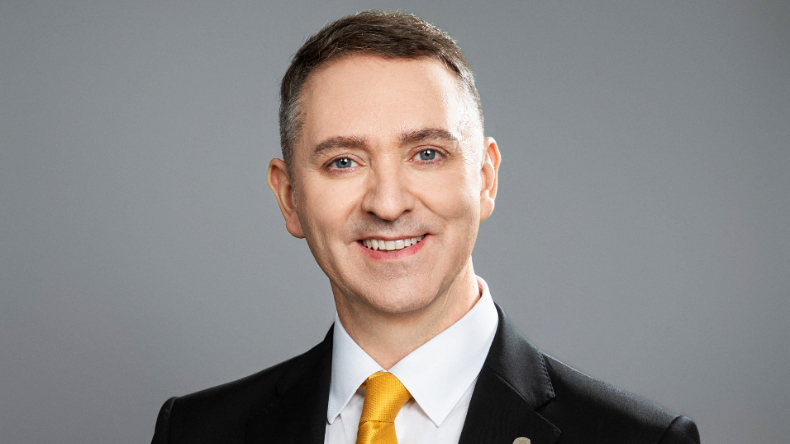
IACS is pleased to announce that, with effect from 1 July, Mr Alex Gregg-Smith, President Marine & Offshore at Bureau Veritas, has assumed his duties as Chair of the IACS Council, having been unanimously elected in December 2025.
In preparation, Alex Chaired the 93rd meeting of the IACS Council (C93), which took place in Busan on 17/18 June, where he set out his vision for his term in office. In his opening speech, Alex highlighted that increasing geopolitical upheaval and irregular operating conditions, exacerbated by disruptive technologies, reinforce the need for apolitical, technical leadership from IACS if quality shipping standards are to be upheld across the globe. By speaking with a single, powerful voice, IACS can add significant value to the many technical and regulatory debates that are currently taking place, and which will determine the future shape of the industry.
A renewed commitment to technical leadership
These priorities were reflected in the subsequent discussions at C93 with the IACS Members focusing on ensuring the highest quality of operations, including enhanced engagement with the Quality Advisory Committee and with International Quality Assessment Review Body (IQARB) a renewed commitment to technical leadership and industry engagement in the ongoing evolution of the Common Structural Rules; and enhanced digital solutions available to IACS stakeholders to be delivered via a comprehensive modernization of the structure and publication of the IACS Resolutions and other publications.
The importance of classification as a cornerstone of maritime safety
IACS Council reaffirmed the commitment of its Members to provide impartial, non-commercial advice to the IMO and other regulatory bodies, a contribution that continues to be valued by Member States, IGOs and NGOs. Council further emphasised that the role of classification as a cornerstone of maritime safety should be fully recognised, and that classification expertise should be drawn upon from the earliest design stage of maritime safety policies, and consistently across all jurisdictions, so that regulatory measures are informed by practical, in-service experience from the outset.
Rapid deployment of new technologies and alternative fuels.
C93 considered it essential for Class societies to be able to provide uniform minimum technical requirements within their individual rule sets to better assist the industry with the safe and rapid deployment of new technologies and alternative fuels. As such, regulatory oversight should respect the benefits of the Class cycle and the unique, and uniquely valuable, role of Classification in providing international shipping with a globally recognised and enforceable system of independent technical assurance.
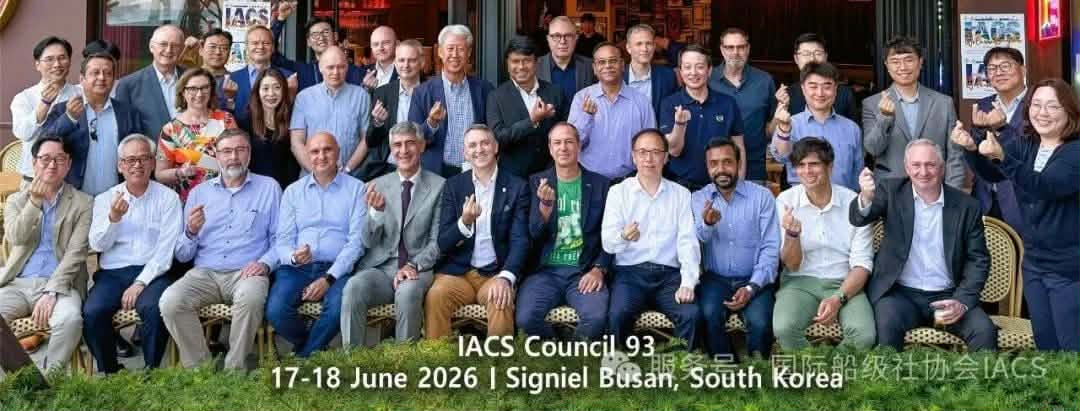
Discussions of the IACS Council
IACS Council also discussed the impending changes to the Paris MoU’s Scoring Methodology for Recognised Organisations (ROs) and highlighted the importance of maintaining confidence in PSC data, when such data are used in decision-making and performance assessment – and which is widely relied upon as a key performance indicator across the industry. Council emphasised that such confidence is best safeguarded where the underlying processes are transparent, consistent and proportionate — supported by robust quality assurance of Port State inspections, fair and accessible means for ROs to have findings reviewed where appropriate, and due regard to the limits of ROs’ responsibilities under the international regulatory framework.
The Association’s strong engagement at IMO
IACS stands ready to engage constructively with all stakeholders so that the methodology evolves in a way that strengthens, rather than diminishes, trust in this important element of the safety assurance regime.
On other matters, C93 was pleased to note the Association’s strong engagement at IMO, the substantial progress being made by IACS’s Panels on Safe Digital Transformation and Safe Decarbonisation, and IACS’ engagement with industry across a variety of Joint Working Groups.
IACS has played a vital role in the global success story that is shipping.
Commenting on his appointment and looking ahead, Alex Gregg-Smith said, ‘It is a great honour to lead IACS at this pivotal time.’Class is evolving rapidly, and IACS has played a vital role in the global success story that is shipping. While our industry is bigger – and now safer – than ever, we must grasp the opportunities of new technologies and digitalisation to develop new solutions to further drive safety, security and performance.
Related: IACS 2025 Annual Review: The role of class in driving progress on maritime safety and innovation
He emphasised the importance of safety, particularly with regard to new fuels, and noted that we are leading the way in continuously improving the structural integrity of ships through the ongoing development of the Common Structural Rules (CSRs). Above all, we need to listen to and collaborate with our key stakeholders, including shipowners, shipyards and flag states, as we develop new technical standards.
‘Shifting geopolitical realities and market dynamics
Adding: ‘Shifting geopolitical realities and market dynamics, combined with regulatory uncertainty and fast-moving technological developments, all serve to make the role of Class, and IACS, more important than ever. IACS will have to keep evolving while remaining true to our four foundational pillars of Leadership, Technical Knowledge, Quality Performance and Transparency.’
Experiences in shipowning and shipbuilding
Meanwhile, in welcoming Alex to his role as IACS Council Chair, Secretary General Robert Ashdown stated: “Alex brings a wealth of experience from his previous roles in shipowning and shipbuilding, as well as from his work within Class. As IACS’ role evolves to reflect the changing needs of the industry, his background makes him ideally qualified to lead the association as we work more closely with all stakeholders to achieve our shared goals of safer ships and cleaner seas.”
It is noteworthy that the IACS Council meets twice a year, and this was the 93rd Council meeting since the founding of IACS in 1968. This meeting took place in Busan, Republic of Korea, and was attended by senior management from all 12 Members.
12th session of the Sub-Committee on Implementation of IMO
On the other hand, in demonstrating its ongoing commitment to supporting the work of the International Maritime Organisation (IMO), and within its remit as the Organization’s principal technical advisor, IACS will actively participate in the forthcoming 12th session of the Sub-Committee on Implementation of IMO Instruments (III 12), which will meet from 20 to 24 July 2026.
#IMO #IACS Council #Robert Ashdown # Paris MoU#shipowning #Alex Gregg-Smith #Bureau Veritas #IQARB # IACS Council Chair #Global Shipping #Classification
You Might Also Like

Recommendation News

Shipping Lines
Equinor : Gas discovery in the Norwegian Sea 19 October 2025
Marine Tech
Canadian Coast Guard Launches its first of two Arctic and Offshore Patrol Ships, 30 April 2026
Incidents
Wilson Gdynia ship allides with Kiel Canal lock jetty in Germany 18 October 2025
Incidents
The Grande Avorio fire : The improper use of a Jeep Wrangler 16 October 2025
Shipping Lines
Maersk hits East Africa-Europe cargo with $500 peak-season surcharge 18 August 2026