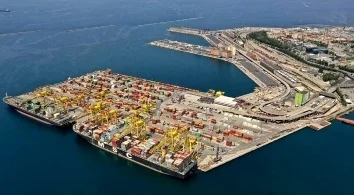
Ports of Trieste-Monfalcone and Venice-Chioggia launch two electric vessels for service.
The prospect of ships docked in Trieste and Monfalcone being able to connect to the electricity grid is becoming a reality.
The Eastern Adriatic Port Authority has started talking to companies that might be interested in running the cold ironing service in the ports of Trieste and Monfalcone in the future. This consultation marks the first stage in preparing the documents for a subsequent concession award procedure.
The consultation is not a contest and does not involve the selection of any operators. Its purpose is to gather information on energy needs, operating conditions, the impact on port activities and the economic sustainability of the service, in order to identify the most suitable management model.
The preliminary survey includes six electrification projects.
The preliminary survey includes six electrification projects. In Trieste, berths 29 and 30 at Molo dei Bersaglieri are included, with a planned power output of up to 20 MVA; the South Quay of Molo VII (7.5 MVA); and berths 31, 31bis, and 32 at Molo V and Riva Traiana (3.5 MVA). The other two projects concern the Logistics Platform, with two independent 2 MVA lines, and the Timber Yard, which has a 4 MVA system integrated with the 8 MVA Logistics Platform. In Monfalcone, the project covers berths 4, 5 and 6 at the Portorosega quay and includes provisions for subsequent berths 7, 8 and 9, with an estimated power output of up to 2 MVA per vessel.
Related: Italian ports are second in Europe after Dutch ports
The structure of the concession
One of the main aspects yet to be finalised is the structure of the concession. The Authority has yet to decide whether to opt for a single concession for both ports, separate concessions for Trieste and Monfalcone, or to divide it into lots for individual facilities or docks. This decision must consider economies of scale, market contestability, the number of interested operators, and service continuity.
Concessions under Article 18 of Law 84/1994
The consultation is intended for terminal operators who hold concessions under Article 18 of Law 84/1994, state concessionaires, port companies that are authorised under Article 16, logistics and railway operators, shipping companies, and shipping agents. Energy distributors are involved. So are Terna, electricity industry associations, technical-nautical services, port authorities, and firefighters. Potentially affected by the individual interventions are the Trieste Marine Terminal, HHLA PLT Italy, Samer Seaports & Terminals, and Trieste Terminal Passeggeri, as well as operators operating in Portorosega.
Related: Trieste, La Spezia and Genoa have been included in the new Ocean Alliance program.
Report potential interference with yards.
Terminal operators must report potential interference with yards, roads, cranes, tracks, storage areas, and moorings, including how they will share space and coordinate operations. Shipowners are required to provide a survey of vessels arriving in 2025 and expected in 2026, including call frequency, average length of stay, power and electricity consumption, compatibility with connection standards, and actual availability to use the service. In addition, energy operators will be expected to play a part in determining procurement methods, costs, and potential long-term supply contracts.
The financial terms of the concession
The financial terms of the concession will be a key part of the investigation. The Port Authority is requesting proposals for the tariff structure, which may include a fixed fee per berth, a time component, and the cost of energy and contracted power. The following will also be assessed: operating costs, maintenance, personnel, insurance, the duration of the concession, service levels, and tariff review mechanisms. Stakeholders will have 45 days to submit comments, data, and proposals.
Procurement procedure documents
The procurement procedure documents will be prepared using an investigation report into which the contributions will be included. It is only after this phase that the Authority will define the scope of the service, any division into lots, the duration of the concession, the requirements for operators and the financial conditions. Upon motivated request from the participants, confidential commercial documentation may be protected.
Two new electric vessels
In contrast, two new electric vessels destined for the Trieste-Monfalcone and Venice-Chioggia port systems were launched in Fusina, Venice. The launch of the AP01 and the Elettra signifies a significant milestone in the journey towards innovation and sustainability for the Eastern and Northern Adriatic Sea Port System Authorities (AdSP MAO and AdSP MAS), who are collaborating on a project that demonstrates the tangible results that can be achieved through administrative cooperation.
The two vessels were built by Cantieri Mancini, an Italian shipyard.
The two vessels were built by Cantieri Mancini. They are an example of technological innovation. This was developed thanks to the expertise of a local company. Each of the approximately 10-metre-long B1000 Electric vessels is equipped with two 150 kW electric motors powered by lithium iron phosphate batteries with a total capacity of around 330 kWh. Electric propulsion eliminates direct exhaust emissions during navigation and reduces the noise typically associated with combustion engines.
Source: Shipping Italy + Media of Italy
#Venice-Chioggia port #Eastern Adriatic Port Authority #Cantieri Mancini # ports of Trieste #Monfalcone #cold ironing tender #new electric vessels
You Might Also Like
Recommendation News

Marine News Room
Strengthening cooperation between Egypt and FONASBA in London 01 December 2025
Incidents
Under Investigation : Somali Pirates Hijack Yemeni Fishing Vessel 16 October 2025
Shipping Lines
Scorpio Tankers has clinched a trio of tanker sales and chartered a pair of LR2s. 06 March 2026
Shipping Lines
GEODIS places an order for 110 new electric heavy-duty trucks 06 October 2026
Marine News Room
An Interview with the Chairman of Gulf Craft, Mohamed Hussein AlShaali, for Maritime Tickers 23 July 2026